

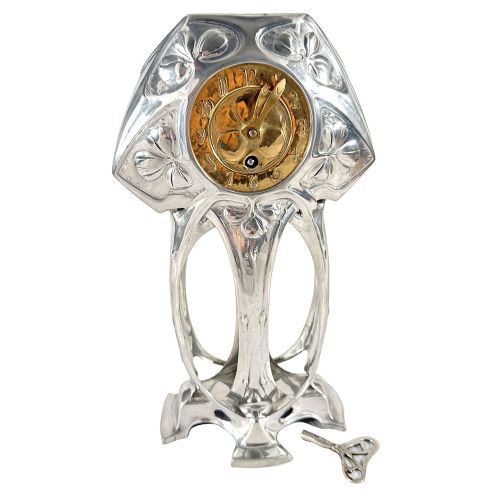


Silvered Metal Timepiece
A silvered metal timepiece brings industrial character and precision engineering into a room through clean metallic dials and sculptural forms.
Silvered Metal Timepiece
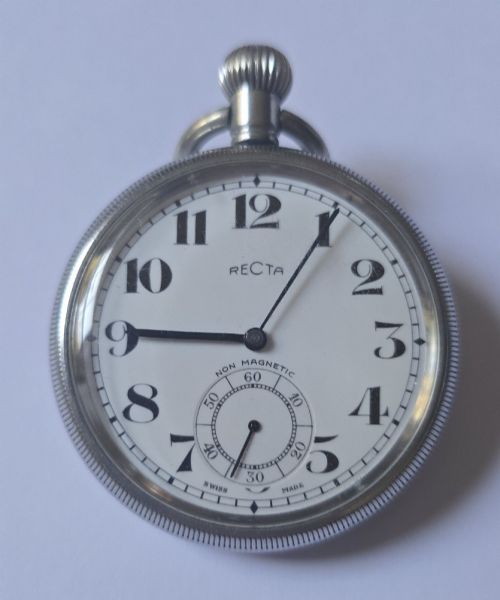
A silvered metal timepiece is a clock or watch featuring a metallic dial treated to achieve a reflective, silvery finish. The listings span a broad range of forms, from modest bedside alarm clocks to substantial desk and mantel clocks.
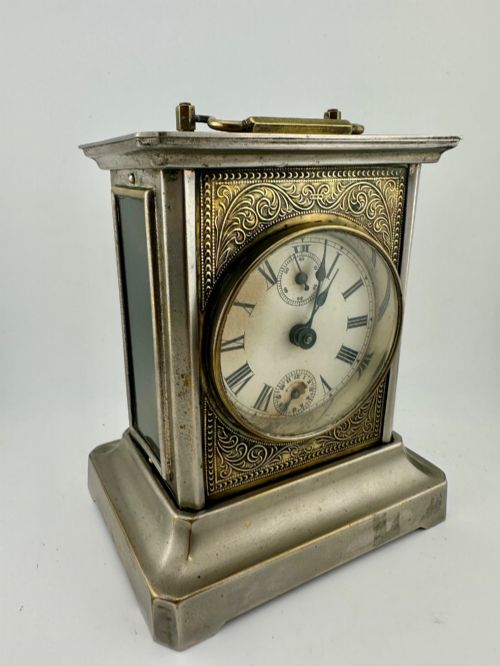
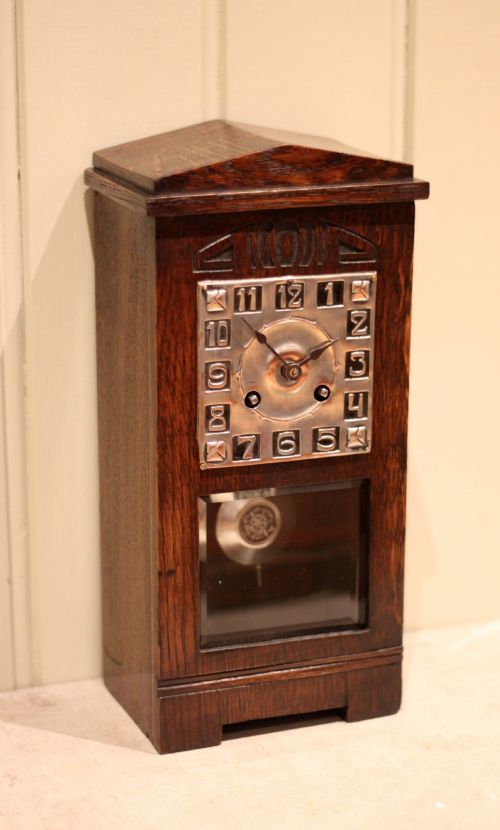
Buyers will encounter several distinct designs here, heavily influenced by early twentieth-century aesthetics. Art Deco and Arts & Crafts pieces dominate the selection, alongside Edwardian carriage clocks and Victorian industrial examples.
The materials paired with the silvered metal surface vary considerably across the inventory. Oak, brass, chrome, nickel, glass, and steel frequently frame the dials, anchoring the metallic surfaces in more substantial housings.
How they were made
Makers constructed these clocks using durable base metals such as brass, steel, and chrome, often plating or finishing components for a bright aesthetic. Glass protects delicate dials, while wooden elements like oak provide sturdy structural casings for mantel pieces.
Surface treatments such as silvering were applied to metal dials to enhance legibility and catch the light. Intricate engraving or minimalist modernist layouts were then stamped or etched onto these treated metallic faces.
Silvered Metal Timepiece Retail Price Guide 2026
Typical asking prices for silvered metal timepiece among the pieces listed under this phrase on Sellingantiques today, from the lower quarter to the upper quarter. They describe what is for sale here now, not the wider market.
The listings here span five distinct periods, from the nineteenth century through the 1940s.
What varies in quality
Quality in a silvered metal timepiece rests largely on the crispness of the dial markings and the integrity of the metallic finish. Faded or unevenly tarnished silvering alters the legibility and aesthetic balance of the face.
The sophistication of the outer housing distinguishes standard production from finer examples. Heavier gauge chrome, robust brass mountings, and well-fitted oak or glass elements elevate the overall presence of the object.
Friedrich Adler for Osiris·Elgin·A.L. Davenport·Newport·Bayard·Blangy
The Silvered Metal Timepiece Glossary
- Silvered metal
- A metal surface treated with a silver compound to produce a bright, reflective finish. This technique improves dial contrast and readability in various lighting conditions.
- Art Deco
- A design style emerging in the 1920s and 1930s characterised by sleek geometric shapes and modernist lines. It heavily influences the chrome and metal clocks of this period.
- Carriage clock
- A small, portable spring-driven timepiece originally designed for travelling officers and gentry. They often feature brass frames inset with glass panels.
- Chronograph
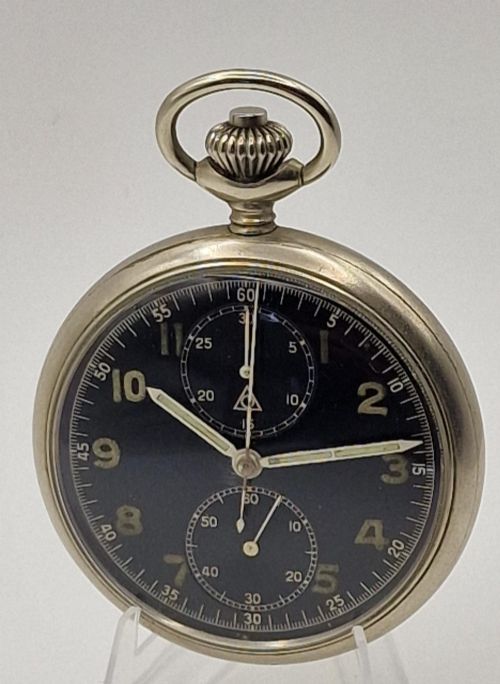
- A watch or timepiece with a function for measuring elapsed time alongside normal timekeeping. These are frequently associated with military or scientific applications.
- Industrial series
- A category of decorative and functional objects celebrating mechanical themes and heavy engineering. These pieces often mimic machinery or nautical instruments.
Silvered Metal Timepiece: Frequently Asked Questions
How do I identify Art Deco clocks?
Art Deco clocks are defined by clean geometric lines, streamlined metal cases, and minimalist Arabic or Roman numerals. Chrome and silvered metal surfaces are typical of this aesthetic.
These pieces usually date from the 1930s and favour symmetry, contrasting materials like glass and dark wood, and industrial forms.
Where should I place a desk clock?
A desk timepiece suits study spaces, mantelpieces, or prominent side tables where its mechanical presence can be appreciated. Ensure it sits on a stable, level surface away from excessive moisture.
Positioning the clock where natural light can catch the silvered metal dial enhances the readability and visual appeal of the piece.
How do I care for silvered dials?
Silvered metal surfaces require gentle treatment to preserve the delicate finish and original markings on the dial. Avoid using abrasive metal polishes or harsh chemical cleaners.
A soft, dry cloth is usually sufficient for removing dust from the glass and exposed metal components without damaging the treated surfaces.