

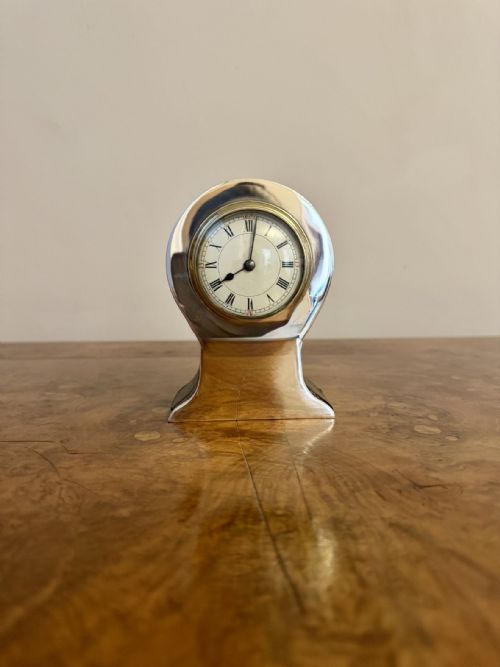


Silvered Carriage Clock
A silvered carriage clock brings mechanical precision and polished elegance together, offering a portable timepiece that sits comfortably on a desk or mantel.
Silvered Carriage Clock
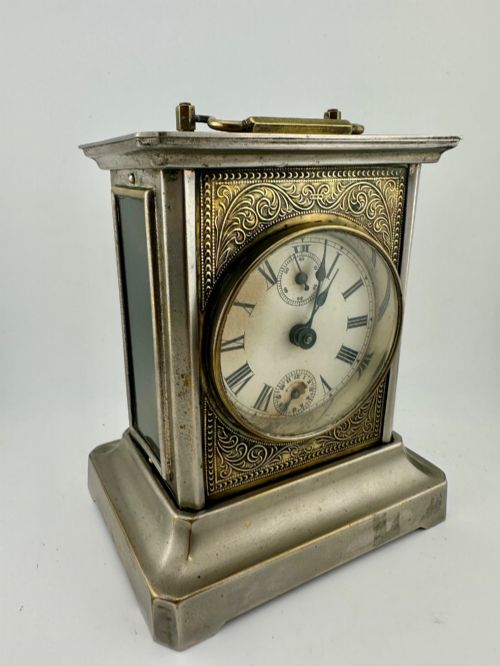
When you search for a silvered carriage clock, you encounter portable timepieces housed in cases of silver, silvered metal, or brass with silvered dials, spanning periods from the nineteenth century through the Edwardian era and the 1920s. These objects range from standard desk clocks and travel clocks to ornate musical alarm mantel clocks and miniature boudoir pieces.
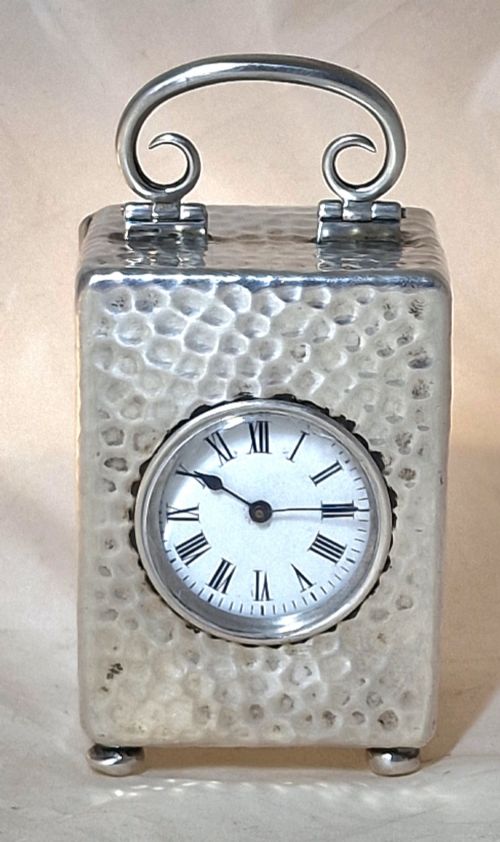
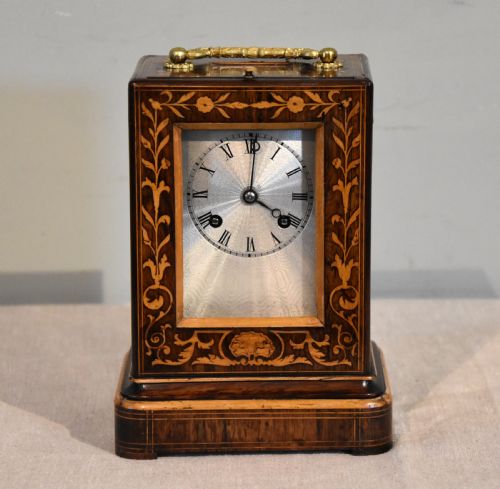
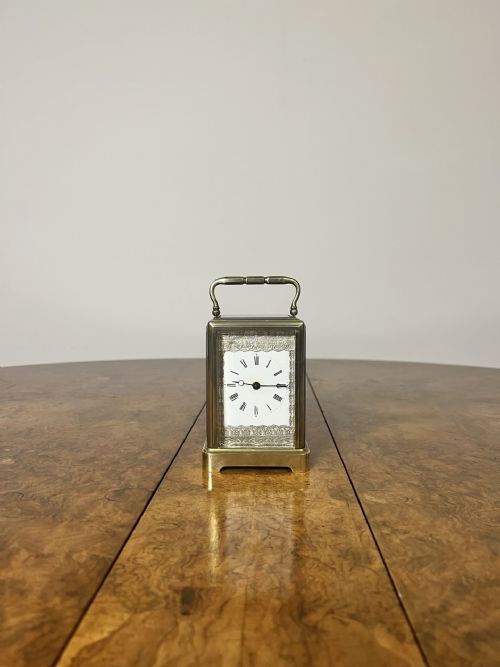
The versions most frequently met on this page are Edwardian and 1900s silver-cased carriage clocks and miniature timepieces, often bearing hallmarks from London or Birmingham. Alongside these, French carriage clocks and specialised designs incorporating enamel, tortoiseshell, or wood inlay appear regularly across the listings.
Materials and construction
The construction of these pieces relies on a combination of precious metals, glass, and intricate movement engineering. Cases are fashioned from sterling silver, silvered metal, brass, and occasionally tortoiseshell or rosewood, frequently complemented by glass panels that reveal the internal escapement and gear trains.
Surface decoration involves hand-hammered finishes, chased silver details, and delicate guilloche enamel work. Makers housed these complex movements - ranging from simple timepieces to fusee mechanisms and repeating strikes - within robust metal and glass frameworks designed for travel.
Silvered Carriage Clock Retail Price Guide 2026
Typical asking prices for silvered carriage clock among the pieces listed under this phrase on Sellingantiques today, from the lower quarter to the upper quarter. They describe what is for sale here now, not the wider market.
Listings span multiple eras from the mid-nineteenth century through the 1930s, encompassing Victorian, Edwardian, Arts & Crafts, Art Nouveau, and Art Deco styles.
Distinctions in quality
Quality in these timepieces rests upon the sophistication of the movement and the execution of the exterior metalwork. Clocks featuring complex complications, such as quarter-striking mechanisms, musical alarms, or fusee movements, sit at a different level from standard timepieces.
The refinement of the casing also dictates the tier of the piece, distinguishing plain brass or simple silver boxes from heavily chased silver, detailed enamel work, or tortoiseshell integration by noted makers and retailers.
Georg Adam Scheid·William Comyns·J Batson & Son·Thomas Cole and James Cole·Hunt And Roskell·Paul Garnier·Clerke Royal Exchange London·A Delépine·Delépine Barrois·Le Roy et Fils à Paris·Archibald Knox for Liberty & Co·Henry Matthews
The Silvered Carriage Clock Glossary
- Carriage clock
- A small, portable spring-driven clock originally designed for travelling by horse-drawn carriage. They typically feature glass panels in the sides and top to view the movement.
- Fusee
- A conical pulley used in mechanical clocks to maintain an even tension on the gear train as the mainspring unwinds. This mechanism improves the accuracy of the timepiece.
- Guilloche
- An intricate decorative technique where a precise, repeating pattern or design is mechanically etched into an underlying metal surface. It is frequently seen beneath translucent enamel on dials and cases.
- Hallmark
- An official stamp applied to precious metals, indicating the purity of the silver, the assay office, and the year of manufacture. British examples often provide specific town and date markers.
- Repeating carriage clock
- A specialised clock equipped with a mechanism that chimes the last hour or quarter-hour on demand when a button or pendant is pressed.
Silvered Carriage Clock: Frequently Asked Questions
What is a silvered carriage clock?
A silvered carriage clock is a portable mechanical timepiece enclosed in a metal case, often featuring a dial finished with silvering. These clocks were originally built for travellers who required accurate timekeeping on journeys.
Over time, they evolved into decorative desk and mantel pieces, incorporating materials like glass, enamel, and tortoiseshell alongside brass and silver structures.
How do you wind a carriage clock?
Most carriage clocks require a dedicated winding key inserted into an arbor on the backplate or underneath the base. Turning the key tensions the internal mainspring that powers the movement.
Care must be taken not to overwind the spring, stopping gently as soon as resistance is felt to protect the historical mechanism.
Where were carriage clocks made?
The majority of traditional carriage clocks originated in France during the nineteenth century, particularly in workshops located in Paris. British makers and retailers also produced or imported them, adding domestic hallmarks and specialised movements.
German workshops similarly contributed distinct musical and alarm variations during the Edwardian period.
How do I date a silver carriage clock?
Dating a silver-cased carriage clock relies heavily on official hallmarks stamped onto the metal components, which indicate the specific assay office and year of production. Stylistic markers, such as Art Nouveau enamel work or Edwardian proportions, also offer clear chronological clues.
Examining the complexity of the escapement and the signature of the maker engraved on the backplate helps narrow down the manufacturing era.