



Silver Writing Desk Stand
A silver writing desk stand organises a correspondence table, bringing fitted inkwells and pen rests together in sterling silver, plate, oak, and cut glass.
Silver Writing Desk Stand
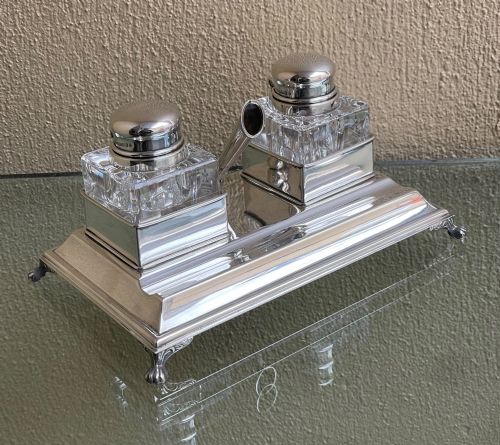
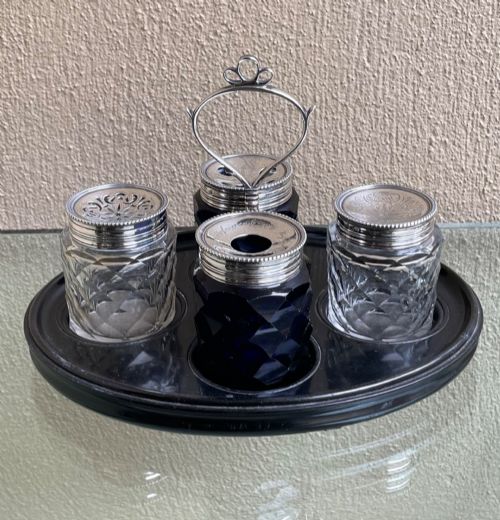
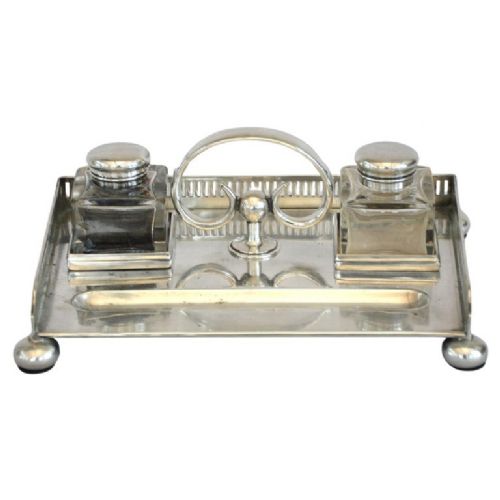
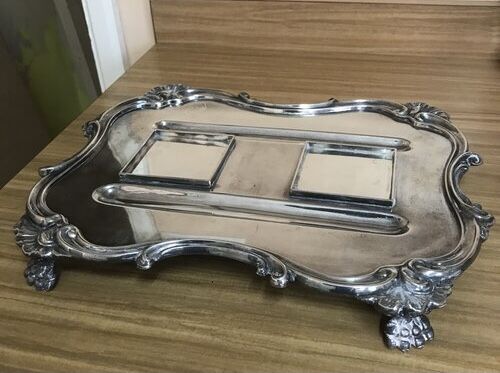
A silver writing desk stand takes several forms across the Georgian, Victorian, and Edwardian periods, appearing as simple trays, heavy double inkstands with chambersticks, or fitted novelty pieces. Buyers encounter capstan-shaped inkwells, rectangular trays with pen rests, and elaborate desk tidies that incorporate stationery boxes or clocks.
Materials span sterling silver, silver plate, and Sheffield plate alongside organic elements like Scottish oak, coromandel, satinwood, horn, antler, and onyx. The variety reflects the demands of nineteenth-century and early twentieth-century writing habits, where a desk stand held the necessary tools for daily correspondence.
Materials and Construction
Silversmiths constructed these stands using solid sterling silver or applied silver plate over base metals, often mounting the metalwork onto dense timbers such as oak, coromandel, and satinwood. Glass cut-bottles and inkwells sit securely within fitted trays or metal rims, frequently accompanied by secondary materials like horn, antler, and semi-precious stones.
Manufacturers employed casting, chasing, and detailed silver-mounting techniques to join disparate elements like glass inserts and wooden bases. Hallmarks stamped into the silver components record the assay offices of London, Birmingham, Sheffield, and Manchester alongside specific date letters.
Silver Writing Desk Stand Retail Price Guide 2026
Typical asking prices for silver writing desk stand among the pieces listed under this phrase on Sellingantiques today, from the lower quarter to the upper quarter. They describe what is for sale here now, not the wider market.
Listings feature silver writing desk stands spanning the Georgian, Victorian, and Edwardian eras, utilising sterling silver, silver plate, cut glass, and oak.
Distinctions in Quality
Quality reveals itself in the weight of the metal and the integration of fitted components, where heavy gauge sterling silver and substantial wooden or stone bases provide stability on the writing table. Finer examples feature fully articulated accessories, such as matching tapersticks or bells, and cleanly cut glass inserts that fit their mounts precisely without excess movement.
The distinction between standard production pieces and masterworks rests on the crispness of the chasing, the execution of novelty designs like fruit shapes or capstan forms, and the selection of secondary materials such as satinwood or lapis lazuli. Maker marks from established workshops indicate higher standards of silversmithing and design ambition.
Walker And Hall·Harrods·Robert Garrard·Rupert Favell·Robert Hennell·Zimmermann·Maurice Dufrene·Elkington·Martin Hall
The Silver Writing Desk Stand Glossary
- Inkstand
- A tray or stand designed to hold one or more inkwells, pen rests, and sometimes a sander or bell. These desk accessories formed the centrepiece of nineteenth-century writing furniture.
- Capstan Inkwell
- An inkwell shaped like a ship's capstan, featuring a wide circular base tapering upward to a hinged lid. This form proved popular during the Edwardian period.
- Chamberstick
- A low portable candlestick fitted with a handle and a nozzle, occasionally integrated directly into Victorian double inkstands for sealing letters by candlelight.
- Sheffield Plate
- A composite material made by fusing a thin sheet of silver to a thicker copper base before rolling and forming. It predates modern electroplating and appears on eighteenth and nineteenth-century pieces.
- Desk Tidy
- A larger desk accessory that combines inkwells with compartments for stationery, letters, and pens. They frequently incorporate wooden bodies mounted in silver.
Silver Writing Desk Stand: Frequently Asked Questions
What is a silver writing desk stand?
A silver writing desk stand is a fitted tray or heavy base designed to hold inkwells, pens, and related writing equipment on a desk or table.
They range from simple silver-plated trays to elaborate Victorian double inkstands incorporating chambersticks, clocks, and stationery compartments.
How were desk stands used historically?
They served as the central organising accessory for writing letters, signing documents, and managing correspondence before the widespread use of fountain pens.
The fitted inkwells held wet ink, while pen rests kept quill or steel-nib pens close at hand during daily writing tasks.
How do I date a silver desk stand?
Dating relies primarily on the hallmarks stamped into the silver mounts, which indicate the assay office, standard of metal, and a specific date letter.
Stylistic cues such as Rococo Revival scrolls, Art Nouveau motifs, or Edwardian capstan shapes also help narrow down the period of manufacture.
What materials are found on these stands?
While the primary metal is typically sterling silver or silver plate, many examples incorporate cut glass ink bottles and wooden bases made from oak, coromandel, or satinwood.
Some unusual pieces feature organic materials like horn, antler, and lapis lazuli alongside silvered bronze.