

Silver Watch Chain with Fob
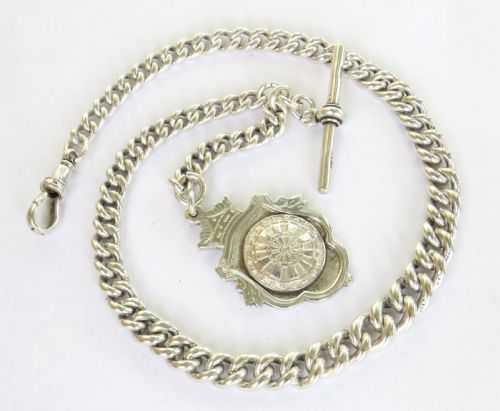
A silver watch chain with fob is a wearable piece of history, combining practical timekeeping links with decorative pendants to anchor a waistcoat.
Silver Watch Chain with Fob
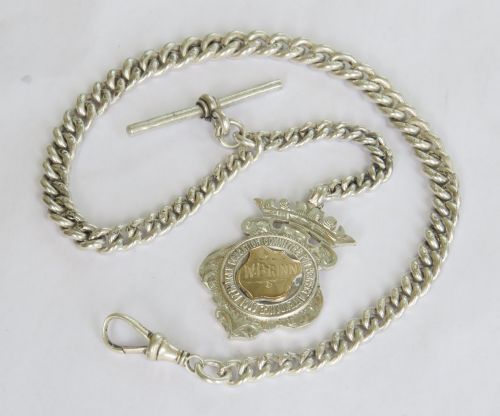
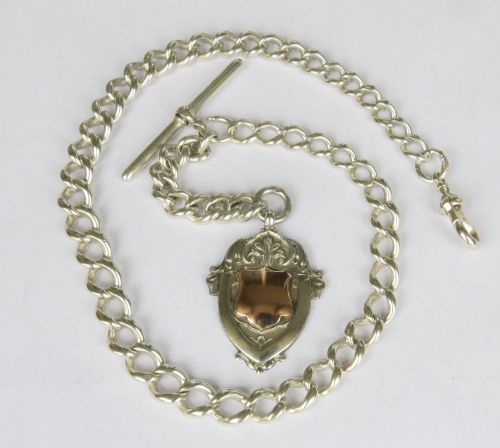
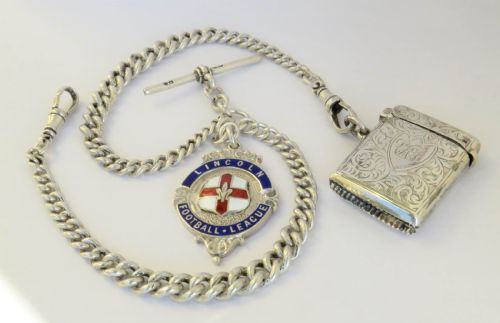
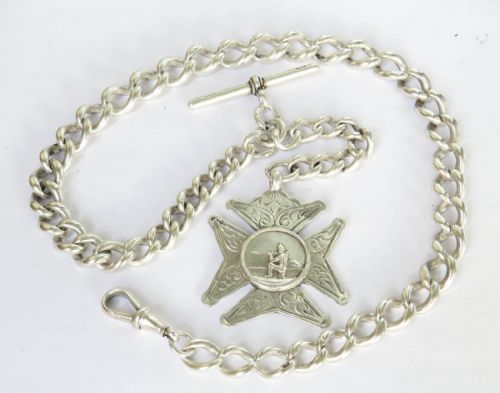
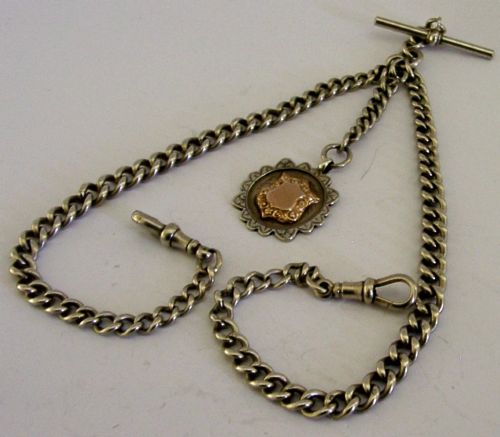
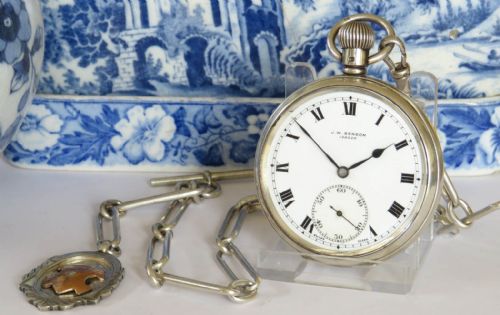
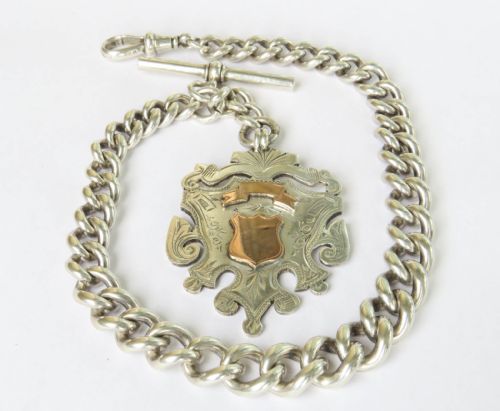
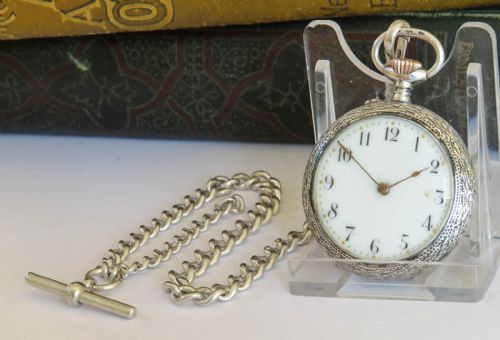
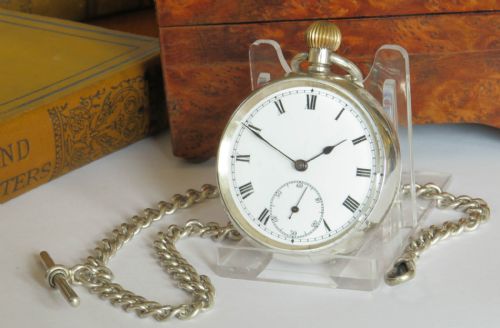
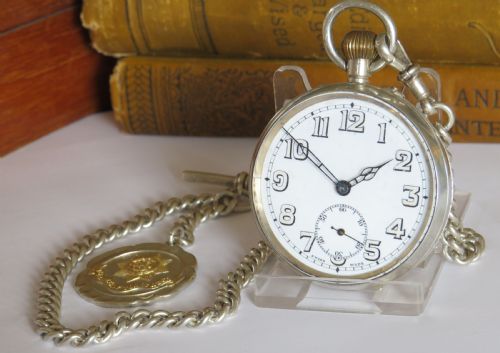
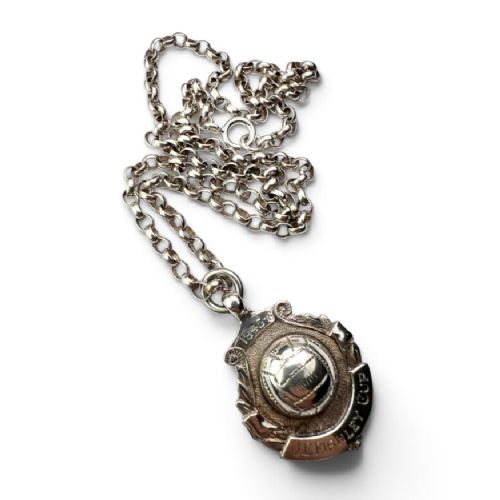
A silver watch chain with fob brings together linked metal strands and hanging charms designed to secure and adorn a pocket watch. Buyers search for these items to wear as necklaces or display as traditional pocket watch accessories.
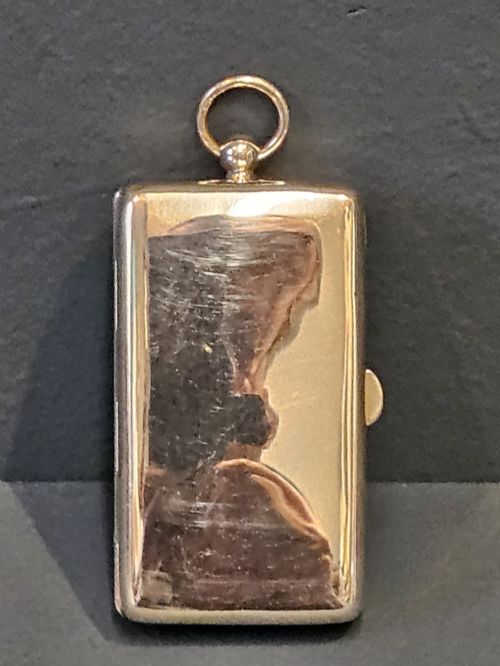
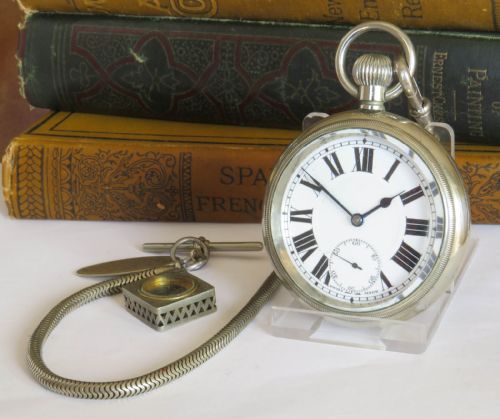
Most examples found here date from the Victorian period through to the nineteen thirties, encompassing Edwardian and Art Deco designs. These pieces often include functional additions such as compasses, keys, dog clips, T-bars, and swivel fobs.
The most common configurations feature sterling silver or silver-plated links accompanied by bloodstone or enamel elements. Surviving specimens range from simple lengths of chain to complex trombone and love knot patterns.
Materials and construction
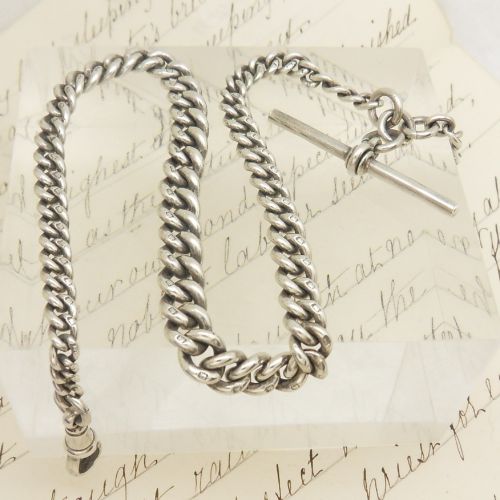
Craftsmen built these chains using sterling silver, silver-plate, nickel, brass, and standard metal links shaped into distinct patterns like the trombone and love knot. These metal components were joined securely to withstand daily use attached to a waistcoat or garment.
Fobs incorporated decorative materials such as enamel and glass alongside hardstones like bloodstone. Metalwork techniques involved stamping, wire-forming, and setting stones into swivel mounts to create versatile hanging pendants.
Silver Watch Chain with Fob Retail Price Guide 2026
Typical asking prices for silver watch chain with fob among the pieces listed under this phrase on Sellingantiques today, from the lower quarter to the upper quarter. They describe what is for sale here now, not the wider market.
Listings span four distinct periods: Victorian, Edwardian, nineteen twenties, and nineteen thirties.
Judging quality in watch chains
Quality rests in the weight of the metal and the complexity of the link construction, distinguishing heavy sterling silver structures from lighter nickel or brass alternatives. Finer pieces demonstrate precise engineering in their swivel mechanisms, dog clips, and T-bars.
The presence of integrated accessories like compasses, keys, and bloodstone fobs elevates the completeness of an object. Superior examples retain uniform patination and intact decorative elements across every attached component.
Omega·Horos·Doxa
The Silver Watch Chain with Fob Glossary
- Albert chain
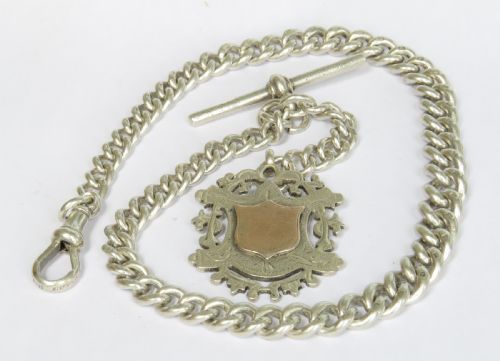
- A heavy watch chain designed to go across a waistcoat, named after Prince Albert. These typically feature a T-bar at one end and a drop for a fob.
- T-bar
- A short transverse bar attached to the centre of a watch chain. This bar passes through a buttonhole to secure the chain safely to a garment.
- Dog clip
- A spring-loaded swivel clasp used to fasten a pocket watch to the chain. This mechanism allows the watch to be detached easily while preventing the chain from twisting.
- Swivel fob
- A small rotating pendant mounted on a pivot so both sides can be displayed. These frequently hold hardstones such as bloodstone or engraved initials.
- Trombone link
- A specific elongated chain link style resembling the slides of a musical instrument. This pattern is characteristic of sturdy Edwardian and Victorian silver chains.
Silver Watch Chain with Fob: Frequently Asked Questions
How do I wear a pocket watch chain today?
Many people wear these chains as necklaces by fastening the ends together, or thread the T-bar through a buttonhole on a jacket or waistcoat.
The attached dog clips and swivel fobs hang downward as decorative pendants when worn around the neck or across the chest.
What is the difference between silver and silver-plate?
Solid silver pieces contain precious metal throughout the links and are often marked as sterling silver. Silver-plated items consist of a base metal core coated with a thin layer of silver.
Over decades of handling, plated items may show base metals beneath worn spots, whereas solid silver maintains consistent material depth.
How do I identify a Victorian watch chain?
Victorian examples frequently incorporate substantial links, bloodstone swivel fobs, and characteristic T-bars designed for nineteenth-century waistcoats. These pieces often feature heavier gauge wire and intricate craftsmanship compared to later twentieth-century designs.
Examining the construction style and accompanying charms helps distinguish Victorian items from Edwardian or Art Deco pieces.
What are the compasses and keys used for?
Keys were necessary for winding and setting older mechanical pocket watches before stem-winding movements became standard. Compasses served as practical navigational pocket tools or novelties integrated into the watch chain ensemble.
These hanging additions functioned as both useful daily instruments and decorative elements on the fob.