
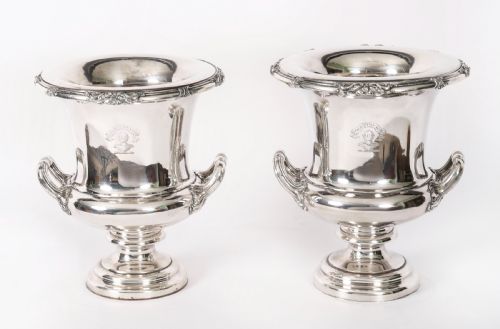
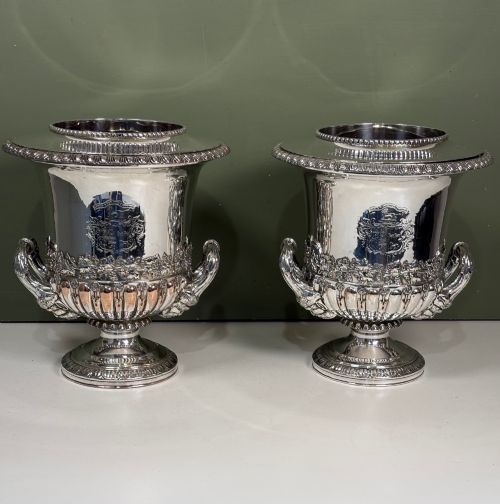


Silver Urn Wine Cooler
A silver urn wine cooler brings monumental neoclassical presence to the dining table, offering a stately vessel for chilling bottles in the grandest style.
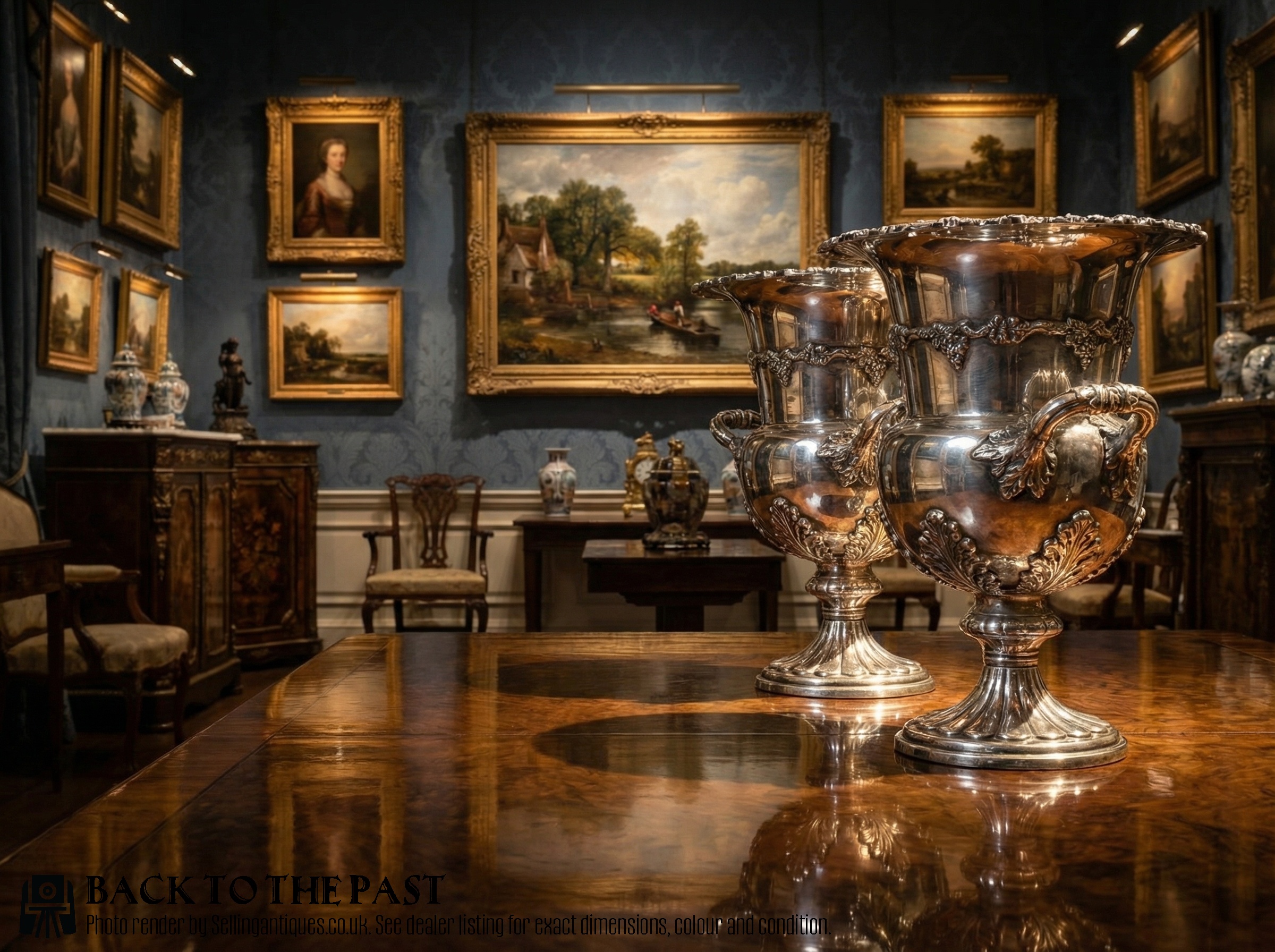
Silver Urn Wine Cooler
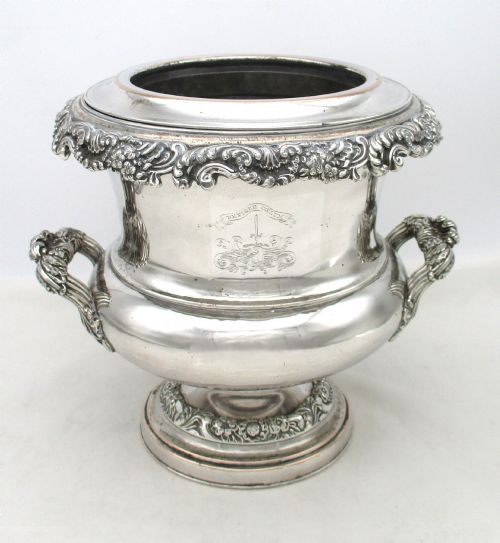
When you search for a silver urn wine cooler, you encounter grand vessels designed to chill bottles for the dining table. These pieces predominantly take the classical campana shape, drawing inspiration from antiquity to anchor the formal dining room.
The selections span from the late eighteenth century through the nineteenth century, with strong representations of Regency and Georgian periods. You will frequently find Old Sheffield Plate and silver plated examples alongside sterling silver and electroplated nickel silver.
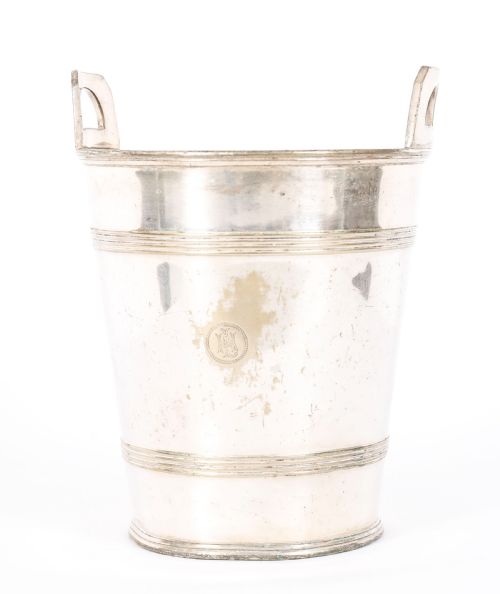
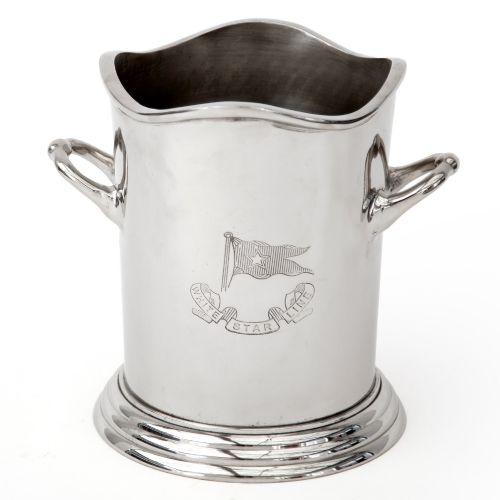
Many of these vessels arrive in matched pairs, while others appear as single monumental items, sometimes bearing family crests or military inscriptions. Alongside traditional wine coolers, the forms extend to champagne buckets and ice pails.
Materials and construction methods
Makers utilised Old Sheffield Plate extensively during the Georgian and Regency periods, fusing a thin sheet of silver to a copper core. This technique created durable vessels that aged gracefully as the underlying copper subtly showed through high points.
Later nineteenth and twentieth century production turned towards silver plating over base metals, including electroplated nickel silver and standard metal alloys. Sterling silver examples represent the highest tier of manufacturing, shaped and chased by hand.
Details such as twin handles, cast crests, and lidded pails with figural motifs like cherubs and dolphins demonstrate specialised silversmithing techniques. These decorative elements were cast separately and soldered securely to the main urn body.
Listings feature items spanning the Georgian, Regency, and Art Deco periods, created in materials from Old Sheffield Plate to sterling silver.
Judging the quality of the vessels
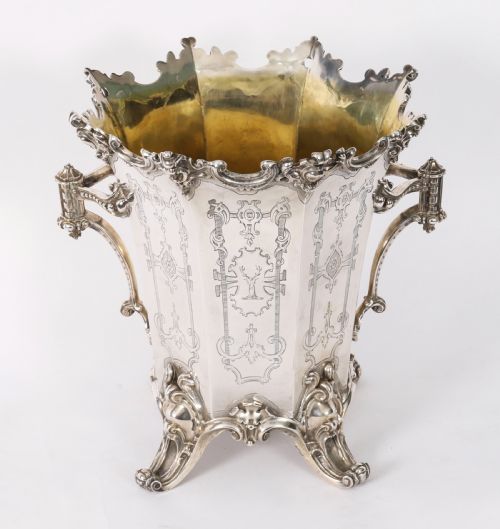
The distinction between standard items and exceptional pieces rests upon the crispness of the chased ornament and the integrity of the metalwork. Master silversmiths achieved deep, sharp relief on foliate borders and classical motifs that lesser workshops rendered softly.
In Old Sheffield Plate items, the preservation of the silver skin over the copper core dictates desirability. Pieces retaining their original armorial crests or engraved inscriptions command greater interest from collectors seeking historical provenance.
Elkington Mason And Co·Matthew Boulton And Co·James Dixon And Sons·Hutton Sheffield·Elkington
The Silver Urn Wine Cooler Glossary
- Campana
- A bell-shaped vessel with a flared rim and footed base. This classic silhouette defines the traditional wine cooler form.
- Old Sheffield Plate
- An early fusing technique where a sheet of silver is fused to a copper base before shaping. This method creates distinct edge seams visible upon close inspection.
- Electroplated Nickel Silver
- A base metal alloy of copper, nickel, and zinc coated with a thin layer of pure silver through electrolysis. This process replaced older plating methods in the nineteenth century.
- Sterling Silver
- A silver alloy consisting of ninety-two point five percent pure silver and seven point five percent other metals, usually copper. It represents the standard for solid silver tableware.
- Crest
- An heraldic design engraved or applied to the surface of the silver. It denotes the original family ownership of the piece.
Silver Urn Wine Cooler: Frequently Asked Questions
How do I date an old silver wine cooler?
Dating relies on stylistic clues like neoclassical campana proportions, manufacturing methods such as Old Sheffield Plate fusion seams, and any engraved hallmarks or maker marks. Examining the weight and the way handles are attached also helps narrow down the decade of production.
Eighty-year shifts in dining fashions left distinct markers on these vessels. Georgian and Regency pieces favour classical restraint, whereas Victorian examples often embrace heavier, more ornate Rococo revival ornamentation.
Can I still use these coolers for wine?
These vessels remain entirely functional for chilling wine and champagne at the modern table. Simply fill the urn with ice and water just as hosts did centuries ago to maintain optimal bottle temperatures.
Care should be taken to line delicate interiors if required and to dry the metal thoroughly after use. Hand washing with mild soap preserves the antique surfaces without causing modern chemical damage.
What is the difference between Old Sheffield Plate and silver plate?
Old Sheffield Plate involves physically fusing a layer of silver to a copper core by heat and pressure before hammering or rolling into sheets. This historic technique results in copper showing through worn high points over generations of polishing.
Standard silver plate typically uses an electrical current to bond a thin coat of silver over a base metal like nickel silver or Britannia metal. This later process creates a more uniform finish that lacks the characteristic copper bleeding of Old Sheffield pieces.
How do I care for antique silver plated coolers?
Maintenance requires gentle cleaning with non-abrasive silver polishes designed specifically for plated items. Avoid harsh dips that strip underlying layers or damage the character accumulated over centuries.
Store the pieces in stable environments away from direct sunlight and high humidity. Regular, soft dusting prevents tarnish buildup and keeps the decorative chased details defined.