

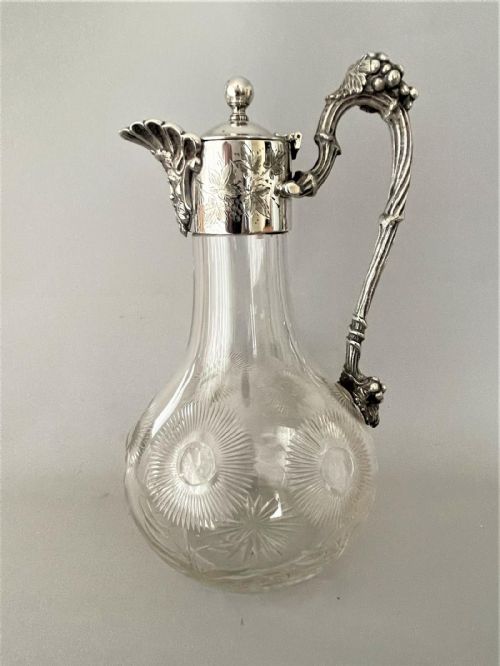
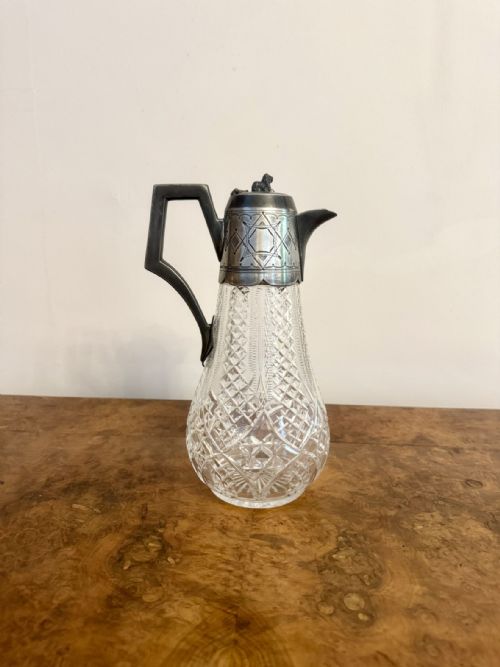
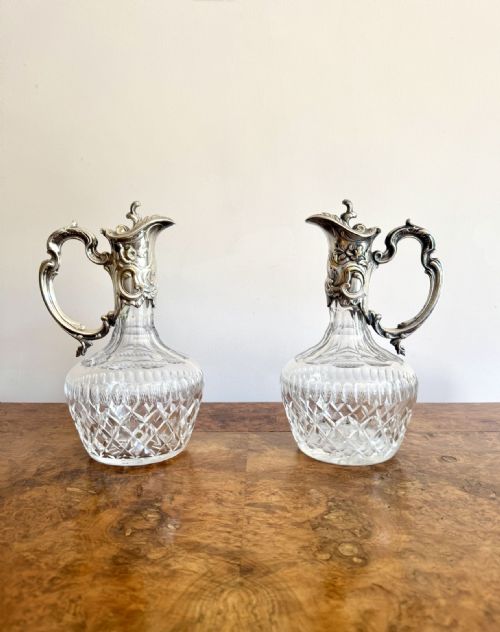


Silver Topped Wine Decanter
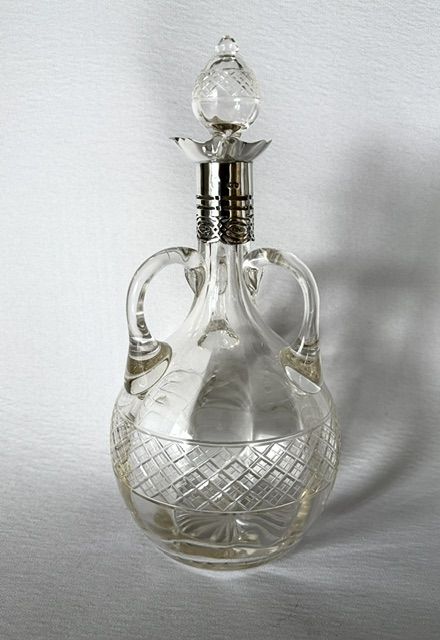
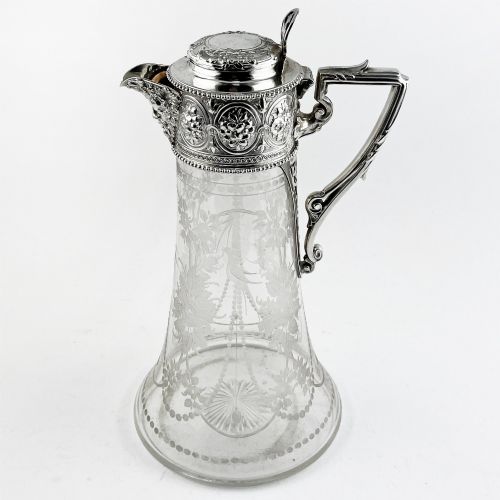
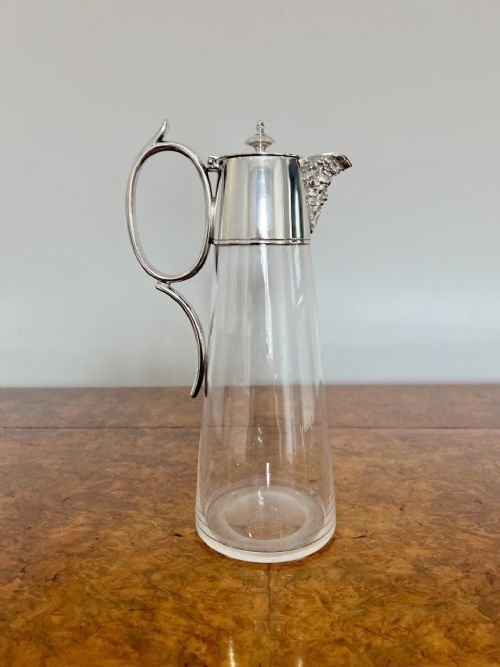
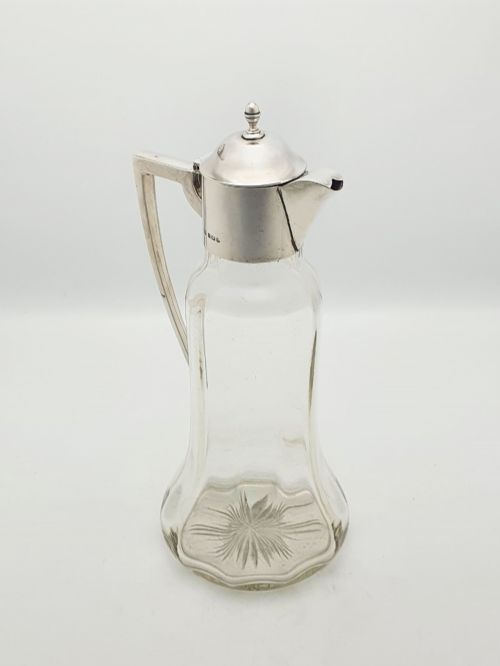
A silver topped wine decanter brings heavy cut glass and polished metal together for the dinner table.
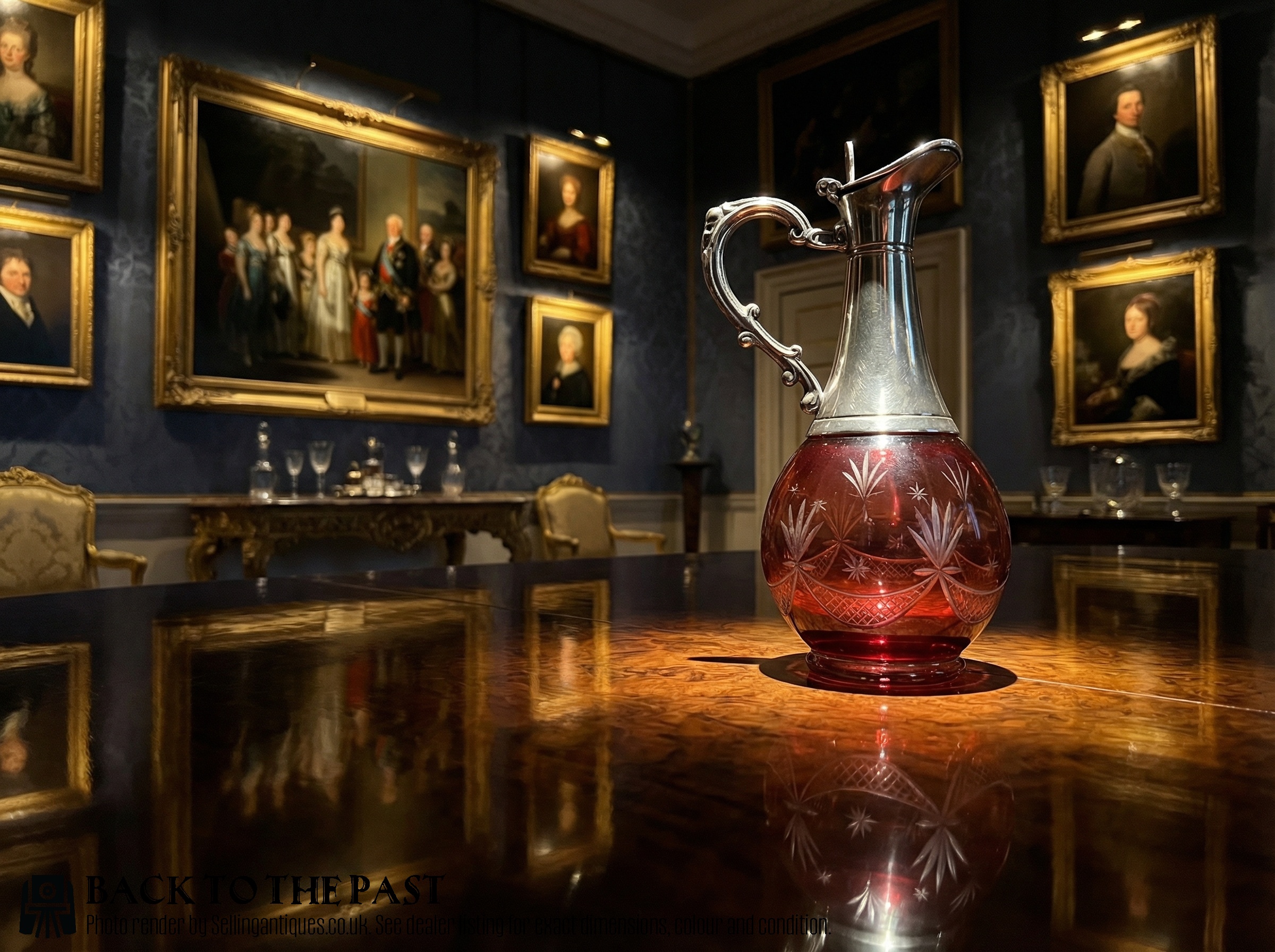
Silver Topped Wine Decanter
A silver topped wine decanter serves claret, port, and dessert wine from bodies of cut glass, crystal, or coloured glass fitted with metal collars, covers, and handles. These vessels appear primarily in Victorian and Edwardian forms, spanning the nineteenth and early twentieth centuries alongside later mid-century examples.
The objects take shapes including claret jugs, ewers, and whisky noggins, often featuring etched or deeply cut patterns across the glass. Buyers encounter both sterling silver mounts bearing London hallmarks and silver plate over base metal.
Victorian and Edwardian versions dominate the selection, ranging from plain cylindrical bottles to elaborate revival styles and Arts and Crafts designs. Blue, amethyst, cranberry, and clear glass bodies demonstrate the variety produced by nineteenth and twentieth-century makers.
Materials and Manufacture
The glass bodies are formed through blowing and heavy cutting or etching, creating deep facets and floral motifs that catch the light. Crystal and standard glass provide clear or coloured vessels designed to hold wine securely.
Metal mounts are cast, chased, or plated in silver, then fitted precisely to the neck of the glass bottle with hinged covers and sturdy handles. Makers incorporate sterling silver or silver plate to secure the top and pour the wine cleanly.
Listings feature Victorian and Edwardian periods alongside materials including cut crystal, sterling silver, and coloured glass.
Factors of Quality
The crispness of the glass cutting and the weight of the metal mount determine the distinction between standard vessels and finer examples. Deeply faceted crystal paired with substantial silver or heavy plating shows superior craftsmanship.
Design complexity also divides the range, moving from plain collars to Bacchus masks, engraved floral panels, and distinct stylistic movements like Arts and Crafts or Victorian Rococo Revival.
Asprey and Co. Ltd·Hukin and Heath
The Silver Topped Wine Decanter Glossary
- Claret jug
- A specialised pouring vessel designed for red wine, typically featuring a glass body and a hinged silver or silver-plated top with a handle.
- Sterling silver
- A silver alloy containing substantial pure silver content, frequently stamped with British hallmarks indicating the assay office and year.
- Silver plate
- A layer of silver fused to a base metal core, used widely for mounts and handles on nineteenth-century vessels.
- Cut glass
- Glass decorated by grinding facets and patterns into the surface using wheels, creating light reflections across the vessel body.
- Ewer
- A large jug with a wide spout and curved handle, often utilised for serving wine or water at the dining table.
Silver Topped Wine Decanter: Frequently Asked Questions
What wine goes in a silver topped decanter?
These vessels suit red wines such as claret and port, alongside dessert wines and whisky.
The historical forms were designed specifically to aerate and serve table wines while holding back sediment.
How do I clean a glass decanter?
Warm water and non-abrasive cleaning beads remove residue from the interior without scratching the glass.
Harsh detergents can damage older glass surfaces and dull the finish of the metal mount.
How do I date a silver mount?
British silver mounts often carry hallmarks showing the assay office, date letter, and maker's mark.
Comparing these stamps against official records reveals the exact year of manufacture.
Are silver plate and sterling silver different?
Sterling silver consists of solid precious metal throughout, while silver plate applies a thin coating over a base metal.
Hallmarks help distinguish between solid silver components and plated metal mounts.