
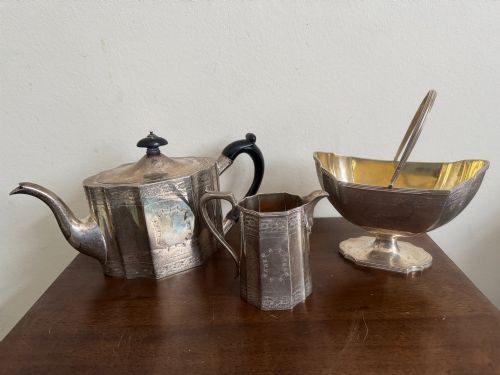
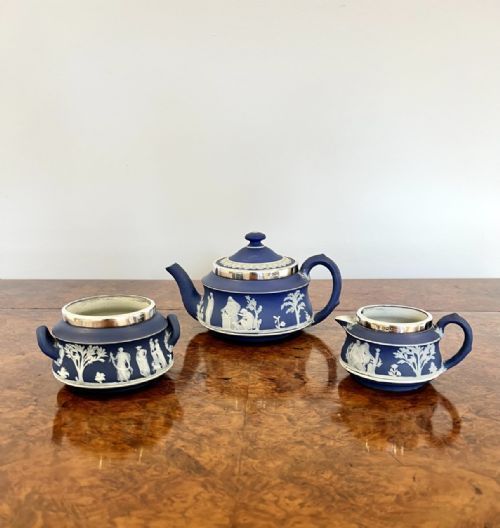


Silver Teapot Sugar Creamer
A silver teapot sugar creamer set unites table service through matching metals and shared design across Victorian, Edwardian, and Art Deco periods.
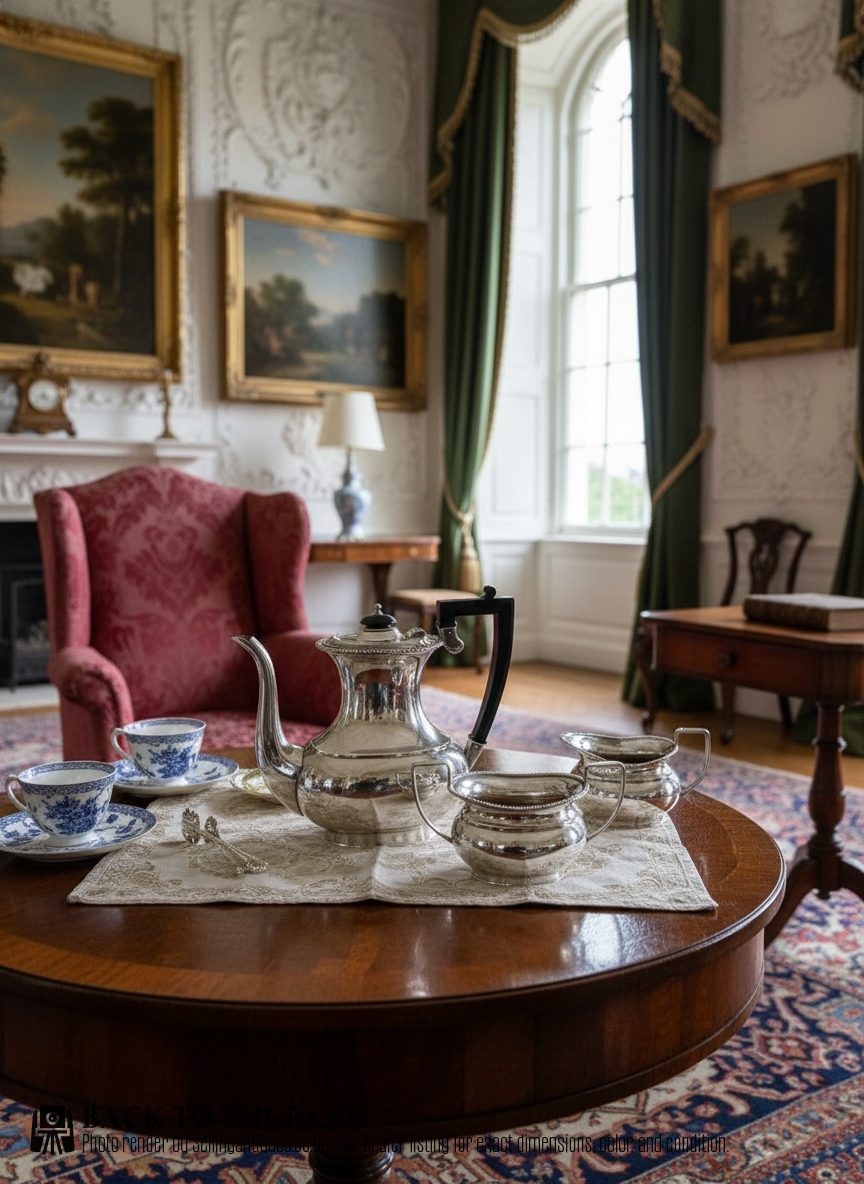
Silver Teapot Sugar Creamer
A silver teapot sugar creamer ensemble comprises matching vessels designed to serve tea or coffee together in a unified style. Buyers searching for a silver teapot sugar creamer encounter matched services spanning the nineteenth and twentieth centuries.
The services appear in configurations ranging from three-piece sets to four-piece tea and coffee services. Most examples on this page date from the Edwardian and Victorian eras, alongside William IV and Art Deco periods.
Forms include traditional rounded bodies, cylindrical shapes, and distinct designs such as The Cube tea and coffee set. Materials vary from sterling silver to silver plate, occasionally incorporating ceramic bodies like Wedgwood jasperware.
Materials and construction
Silversmiths constructed these services using sterling silver or silver plate over a base metal foundation. Handles frequently incorporate ebony insulation to prevent heat transfer during use.
Certain sets integrate stoneware and jasperware components mounted in silver frames. Gold gilding appears on the interior surfaces of select creamers and sugar bowls.
The Cube set reimagined Victorian geometry into a compact stacking form, proving that even tea-makers indulged in early twentieth-century spatial puzzles.
Assessing quality in tea services
Quality rests upon the weight of the metal, the balance of the handles, and the crispness of chased or embossed ornamentation. Makers such as Joseph Craddock or retail houses like the Goldsmiths and Silversmiths Co. indicate distinguished production standards.
Complete four-piece services retaining matching teapots, coffee pots, sugar basins, and cream jugs demonstrate greater coherence than assembled groupings. The integration of materials like ebony and gold gilding marks higher grades of manufacture.
Joseph Craddock·Goldsmiths & Silversmiths Co·Wedgwood·Glasgow Rait
The Silver Teapot Sugar Creamer Glossary
- Sterling silver
- An alloy containing 92.5 percent silver by weight, widely utilised for British domestic hollowware and tea services. It carries hallmarks indicating the assay office and date.
- Silver plate
- A layer of silver bonded to a base metal substrate, forming the primary material for many Edwardian and later sets. It offered an accessible alternative to solid sterling.
- Jasperware
- A type of fine stoneware developed by Wedgwood, featuring applied white relief ornaments against a coloured ceramic ground. It appears mounted in silver within specific Victorian tea sets.
- Gold gilding
- A thin decorative coating of gold applied to the interior surfaces of sugar basins and cream jugs. This technique protected the silver from tarnishing when exposed to acidic contents.
- Ebony
- A dense, dark wood utilised for insulating handles on teapots and coffee pots. It prevented heat from reaching the user's hand.
Silver Teapot Sugar Creamer: Frequently Asked Questions
What pieces comprise a complete tea service?
A standard set includes a teapot, a sugar basin, and a cream jug. Larger services frequently add a matching coffee pot to the ensemble.
Matching configurations ensure a uniform aesthetic across the tea table during formal entertaining.
How do I distinguish silver plate from sterling silver?
Sterling silver items display official hallmarks denoting the standard of the metal, the maker, and the assay office. Silver plate pieces typically lack these specific sterling marks and may show base metal beneath worn areas.
Examination of the hallmarks provides definitive identification of the metal composition.
How should I clean antique silver services?
Clean silver surfaces using a specialised non-abrasive silver polish and a soft cloth to preserve the underlying metal and any engraved decoration. Avoid harsh chemical dips that strip the natural patina accumulated over decades.
Store the pieces in dry conditions to minimise tarnishing between uses.
Can I use these antique sets for daily tea service?
Solid sterling silver and sturdy silver-plated services remain durable enough for regular domestic use when handled with care. Proper maintenance ensures the structural integrity of hinged lids and delicate handles endures.
Hand washing prevents damage to organic elements like ebony handles or gilt interiors.