


Silver Tazza Dish
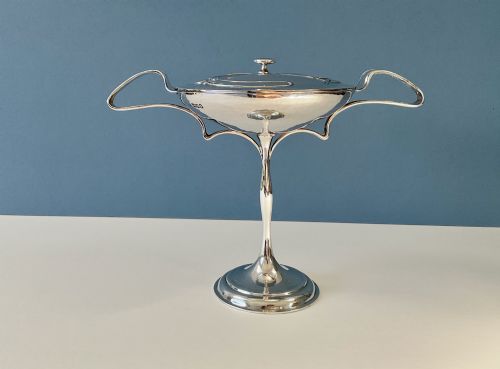
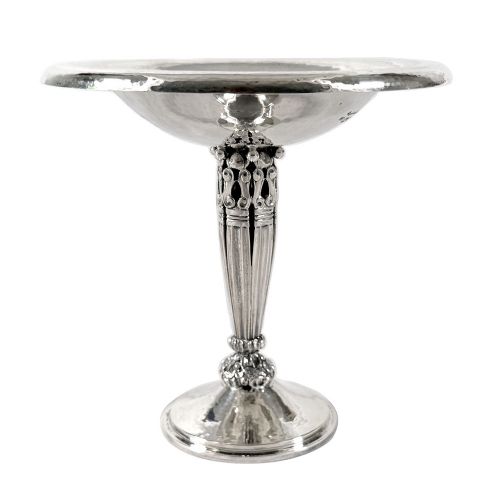
A silver tazza dish elevates fruit or confectionery upon a pedestal, bringing formal display to any table.
Silver Tazza Dish
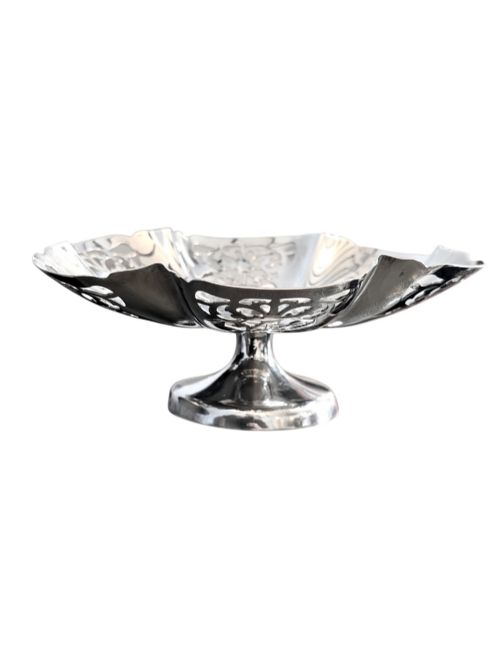
A silver tazza dish combines a shallow vessel with a raised foot, functioning historically as a centrepiece or footed bowl for formal dining. Collectors encounter forms ranging from simple Edwardian pedestal dishes to elaborate Victorian centrepieces.
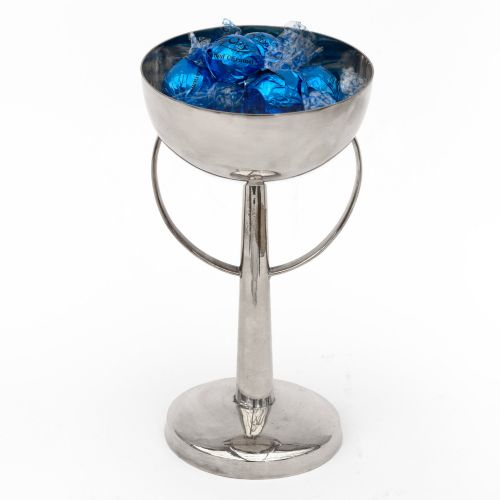
The category encompasses diverse profiles including bonbon dishes, comports and fruit bowls raised on pedestals. Pieces appear in solid sterling silver, silver plate, Britannia metal and bronze, frequently paired with cut glass.
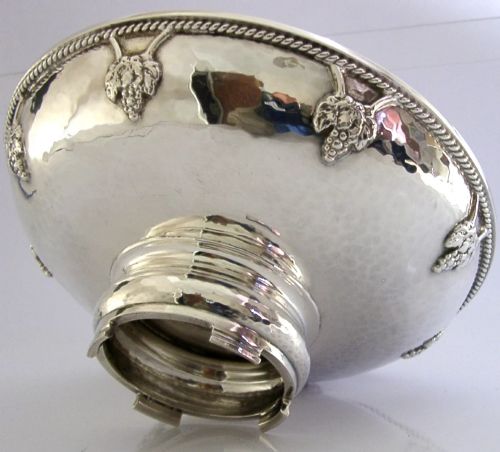
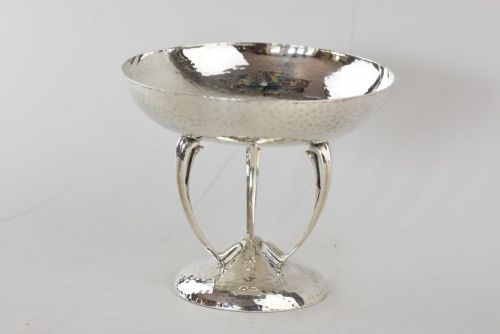
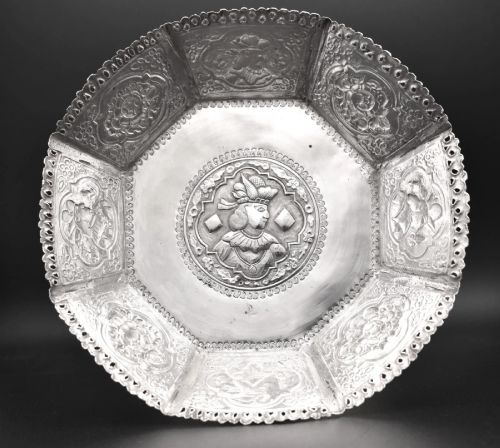
Stylistic influences span Georgian formality, Victorian ornamentation, Art Nouveau fluidity, Art Deco geometric precision and Arts and Crafts hand-hammered textures. Regional variations extend to Anglo-Indian repoussé work and Chinese silver.
Materials and construction methods
Makers utilised sterling silver, silver plate and Britannia metal as primary structural materials, often incorporating cut glass inserts or gilt interiors known as vermeil. Bronze and chrome also appear in specific modernist and continental designs.
Techniques range from traditional hand-hammered arts and crafts construction to detailed repoussé work, wirework and piercing. Pedestals and bowls were cast, spun or raised by hand before being assembled and finished with applied borders or lattice details.
Listings feature works from the eighteenth through the twentieth century, spanning Georgian, Victorian, Edwardian, Art Nouveau, Art Deco and Arts and Crafts styles.
Assessing craftsmanship and execution
Quality rests in the weight of the metal and the crispness of decorative detailing, whether through hand-hammered surfaces or deep repoussé relief. Substantial gauge silver and robust pedestal joints distinguish superior examples from lighter plated alternatives.
The harmony of proportion between the shallow bowl and the supporting foot dictates visual success. Finer pieces demonstrate careful attention to interior gilding, structural piercing and clean hallmarks.
A E Jones·Goldsmiths and Silversmiths Company·Charles Boyton·Walker and Hall·W M F·James Dixon and Sons·Mappin and Webb·Charles Reily and George Storer·James Weir·Woodside Sterling Co·Asprey
The Silver Tazza Dish Glossary
- Tazza
- A shallow bowl or dish mounted on a stem and foot. This form originates from Renaissance dining traditions.
- Comport
- An ornamental dish raised on a high foot, typically used for serving fruit or sweets at dessert. It serves the same display function as a tazza.
- Repoussé
- Metalwork hammered into relief from the reverse side. This technique creates tactile, raised patterns across the bowl.
- Vermeil
- Gold plating applied over sterling silver. This finish provides a warm contrast to the silver exterior.
- Pierced
- Metal perforated with decorative cut-out patterns. This method lightens the visual weight of wide rims.
Silver Tazza Dish: Frequently Asked Questions
What is a tazza used for?
These elevated vessels traditionally held fruit, sweetmeats or small cakes for formal dining and dessert courses. They served as ornamental centrepieces that drew the eye toward the middle of the table.
In modern settings, they function effectively for decorative display or holding everyday items in a hallway or living space.
How do I date a silver tazza?
English silver pieces generally carry hallmarks indicating the assay office, standard of metal and date letter. Examining these stamps alongside stylistic indicators like Art Nouveau curves or Art Deco angles provides an accurate timeline.
Unmarked pieces or continental items rely entirely on stylistic context and construction methods for dating.
What is the difference between a tazza and a comport?
The terms are largely interchangeable within antique silver, both describing a shallow dish raised upon a single pedestal foot. Regional preferences and maker terminology often determined which word appeared in catalogues.
Both forms share the primary purpose of lifting food or ornamentation above the table surface.
How do I clean antique silver?
Gentle washing in warm soapy water with a soft cloth removes everyday dust without harming the metal surface. Specialised silver dips or abrasive pastes should be avoided to preserve original patination and fine engraving.
Regular, light dusting prevents heavy tarnish accumulation on detailed repoussé or pierced areas.