


Silver Table Condiment Vessel
A silver table condiment vessel brings grace to dining, offering functional elegance through historic forms crafted in precious metals and glass.
Silver Table Condiment Vessel
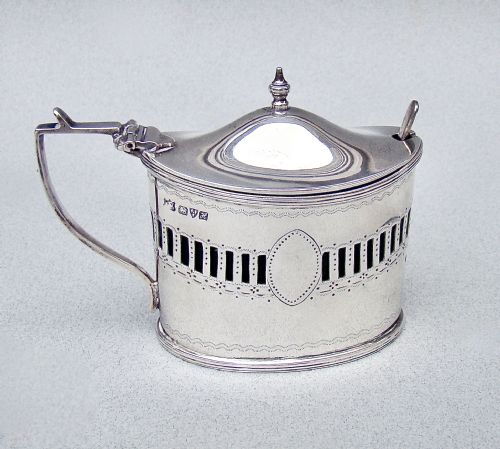
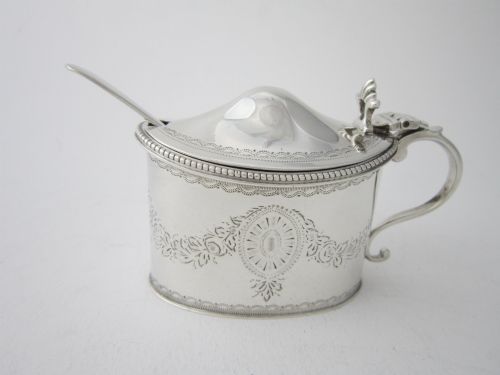
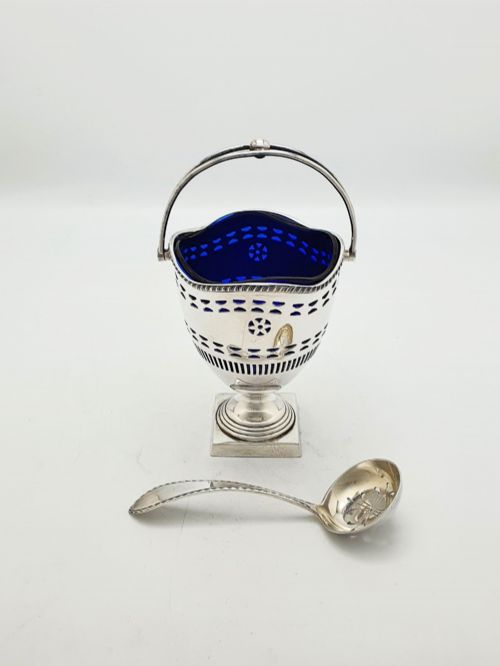
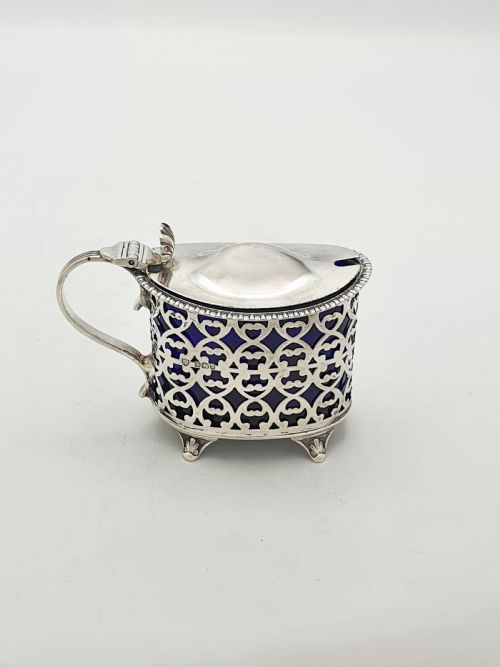
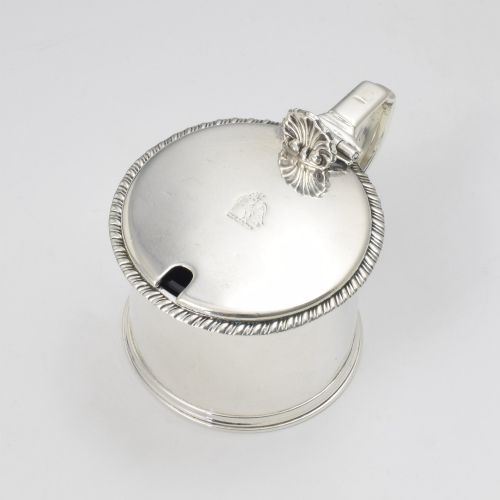
A silver table condiment vessel encompasses tableware items designed for mustard, sugar, and sauce, appearing predominantly in sterling silver and silver plate alongside glass liners. Buyers examining this category encounter mustard pots, sugar bowls, and decorative dishes dating from the Georgian period through the mid-twentieth century.
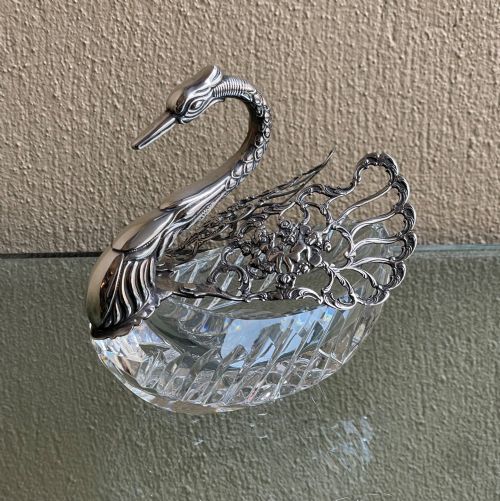
The selection ranges from plain George III and George V designs to elaborate Victorian pierced work and Rococo Revival ornamentation. Edwardian and Georgian Revival examples sit alongside Art Deco polygon shakers and novelty items like swan dishes and squirrel sugar boxes.
Makers such as Charles Fox II, Charles Stuart Harris, Alfred Marston, Roberts & Belk, and Omar Ramsden contribute to the diverse forms available in this category. These vessels demonstrate the evolution of dining table accessories across multiple stylistic eras.
Materials and construction methods
Makers utilised sterling silver and silver plate for the primary bodies, shaping them through techniques such as piercing, casting, and polygon forming. Structural integrity often relied on solid metalwork combined with hinged lids and scroll handles.
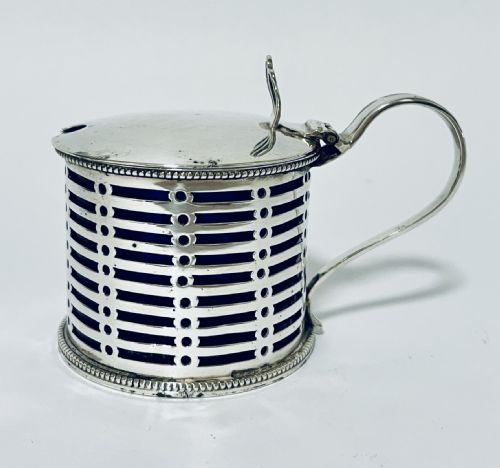
Many vessels integrate contrasting elements, most notably cobalt glass and cut glass liners housed within pierced silver frames. Walnut wood and wirework also appear in specific sauce holders, adding texture and variation to the material palette.
Design influences span Georgian Revival, Rococo Revival, and Art Deco across the listed production periods.
Assessing quality in condiment vessels
Quality differentiates through the heaviness of the metal gauge, the precision of pierced decorative patterns, and the integration of internal glass liners. Superior pieces exhibit crisp chasing, robust hinges on lids, and maker marks that denote reputable silversmiths.
The sophistication of the design dictates overall merit, moving from utilitarian plain forms to intricate figural motifs like cherubs and birds. The retention of original components, including matching spoons or glass inserts, elevates the standing of an individual piece.
Alfred Marston·Charles Fox II·Roberts and Belk·Charles Stuart Harris·Omar Ramsden
The Silver Table Condiment Vessel Glossary
- Sterling silver
- An alloy containing 92.5 percent silver by mass, forming the primary metal standard for fine British tableware.
- Silver plate
- A base metal coated with a layer of silver, providing the appearance of solid silver at a different cost point.
- Cobalt glass
- Deep blue glass commonly utilised for removable liners inside pierced metal condiment pots.
- Pierced work
- Metal perforated with decorative cut-out patterns, frequently seen on Victorian and Edwardian mustard pots.
- Drum mustard pot
- A cylindrical form of mustard container popular during the Georgian period.
- Sugar shaker
- A tall vessel with a perforated top used for sprinkling sugar over food.
Silver Table Condiment Vessel: Frequently Asked Questions
How do I clean antique silver condiment vessels?
Use a soft cloth and specialised silver polish, avoiding abrasive materials that can damage surface details or hallmarks. Rinse glass liners separately in warm soapy water.
Ensure hinged lids are dried thoroughly after cleaning to prevent moisture retention in the pivots.
Are original glass liners important?
Original blue glass or cut glass liners add completeness and historical accuracy to pierced silver vessels. Replacements exist, but matching period glass preserves the intended aesthetic.
Check whether the liner sits flush within the metal frame without wobbling.
What periods do these silver vessels cover?
The inventory spans from Georgian and Victorian eras through Edwardian, Art Deco, and mid-century modern designs. Each period introduces distinct stylistic traits, from plain drum shapes to elaborate Rococo revival curves.
Date letters on hallmarks help pinpoint the exact year of manufacture for British pieces.
How were mustard pots used historically?
Mustard pots sat on dining tables to serve prepared mustard alongside meats and other dishes. They typically included a small spoon and a fitted lid to keep the condiment fresh.
Wealthier households utilised matched sets of condiment vessels to organise various table sauces.