

Silver Table Condiment Set
A silver table condiment set brings structured elegance to dining, gathering salt cellars, mustard pots and pepper shakers into one coordinated display.
Silver Table Condiment Set
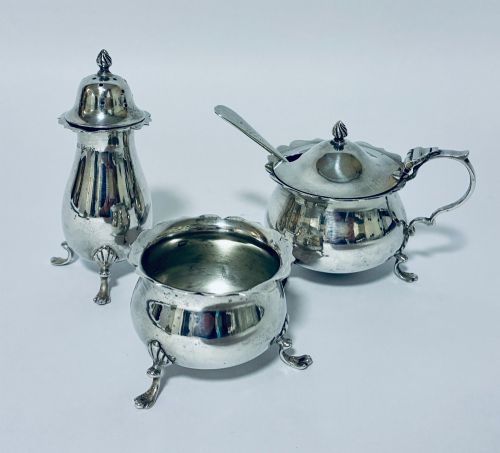
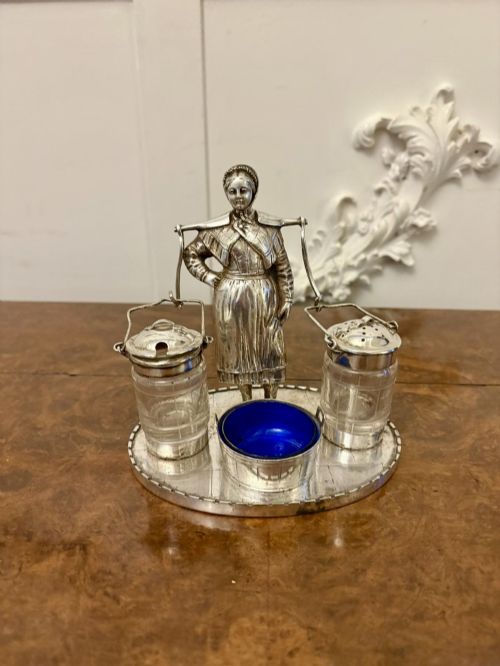
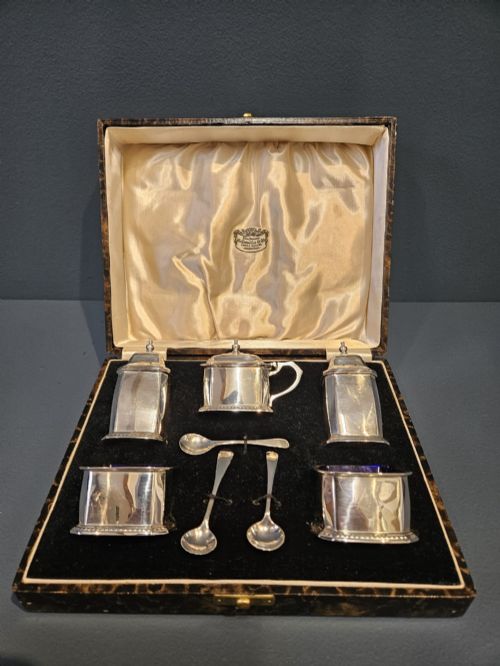
A silver table condiment set gathers essential dining seasonings into dedicated vessels housed within stands or arranged as matched groupings. These arrangements incorporate salt cellars, mustard pots, pepper pots, and cruet bottles designed for the dining table.
The pieces encountered on this page span several stylistic periods, with Edwardian silver plated multi-bottle cruet frames and Victorian sterling silver salt cellars appearing frequently alongside Art Deco settings and Georgian designs.
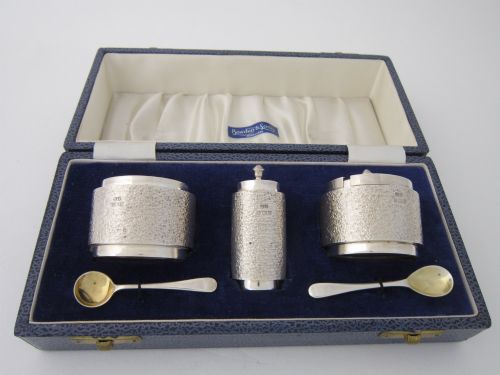
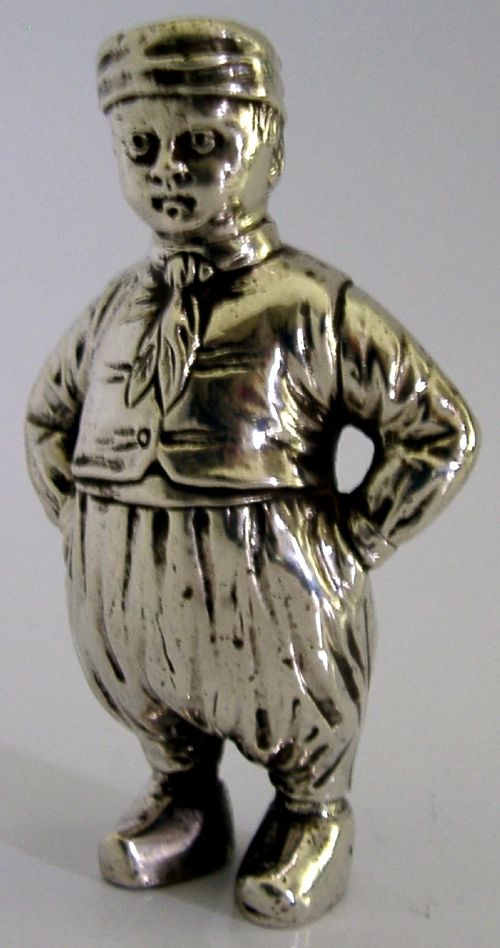
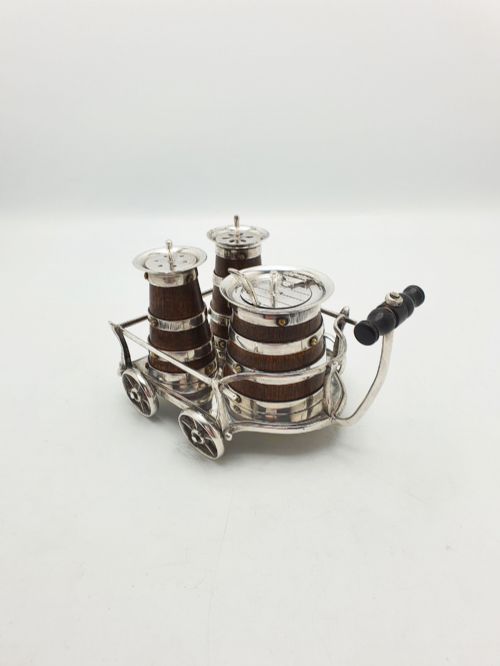
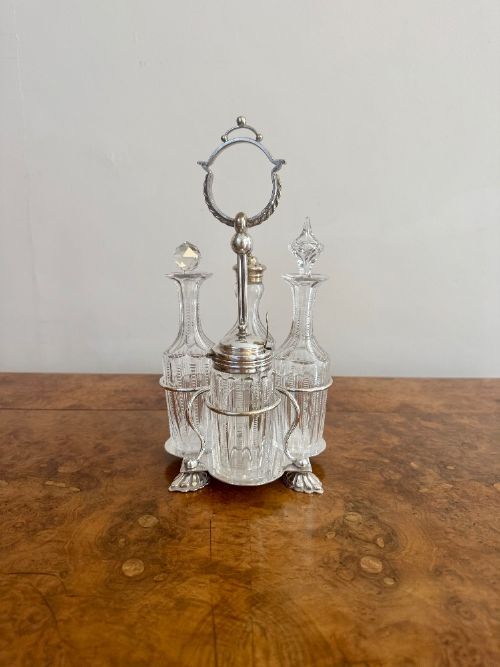
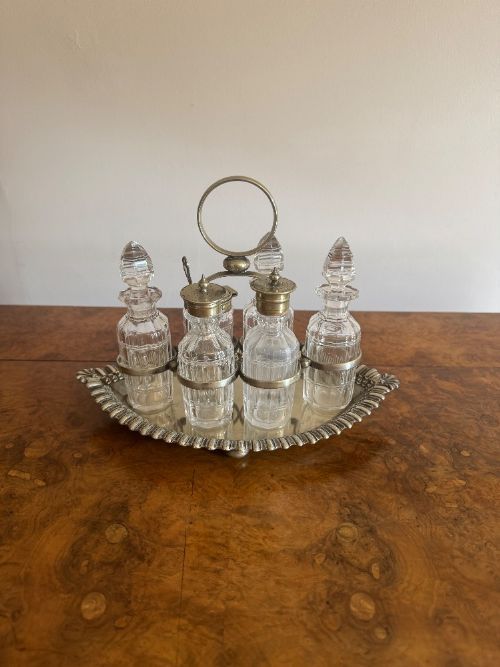
Compositions range from compact three-piece salt, mustard, and pepper sets to large framework stands holding six or seven bottles alongside specialised novelty pieces shaped as animals or household objects.
Materials and construction methods
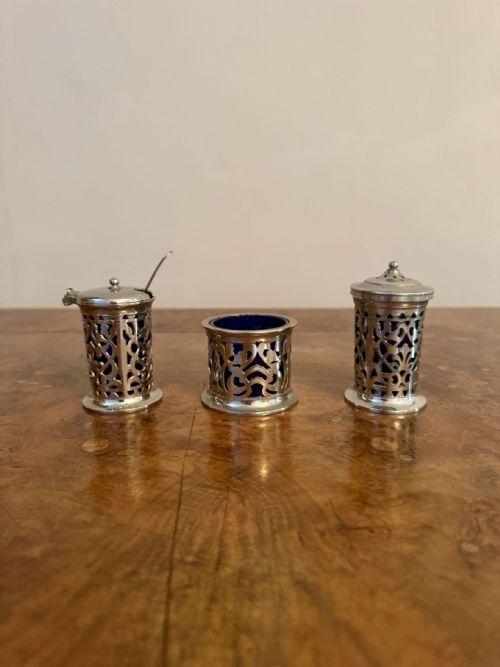
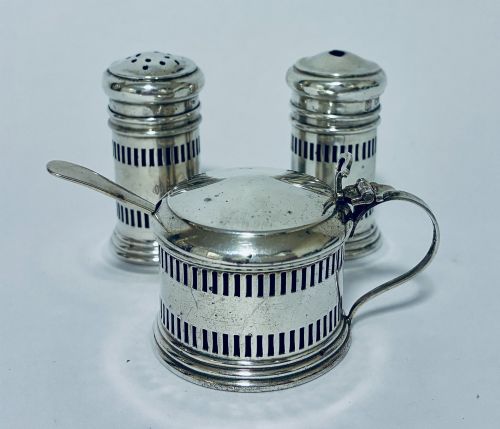
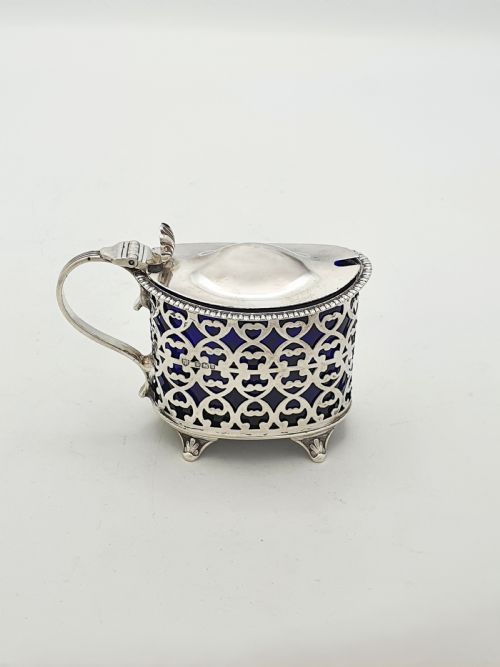
Silversmiths constructed these sets using sterling silver, solid 800 silver, and silver plate over base metals, frequently incorporating fitted glass liners in cobalt blue, cranberry flashed, or clear cut glass.
Manufacturing techniques combine traditional silversmithing methods such as piercing, casting, and hand-hammering with specialised glass cutting and mounting in wooden frames made from walnut or oak.
Silver Table Condiment Set Retail Price Guide 2026
Typical asking prices for silver table condiment set among the pieces listed under this phrase on Sellingantiques today, from the lower quarter to the upper quarter. They describe what is for sale here now, not the wider market.
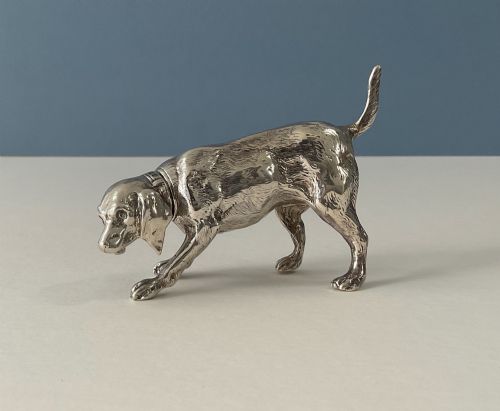
Dogs and farmyard animals make charming appearances as novelty pepper pots waiting to be unstoppered for dinner.
Distinguishing quality across the range
Quality reveals itself in the weight of the silver, the precision of pierced gallery work, and the inclusion of original matching glass inserts rather than later replacements.
Maker attribution and the presence of clear hallmarks elevate certain sets, while the complexity of multi-bottle frames and specialised novelty forms demonstrate superior craftsmanship.
Goldsmith & Silversmith's·Mappin Brothers·Bateman George III·Hester bateman·Bricks & Sons·Ashbury
The Silver Table Condiment Set Glossary
- Cruet set
- A fitted stand holding glass bottles, cruets, or castors for oil, vinegar, and seasonings. These sets often include handles for passing around the dining table.
- Salt cellar
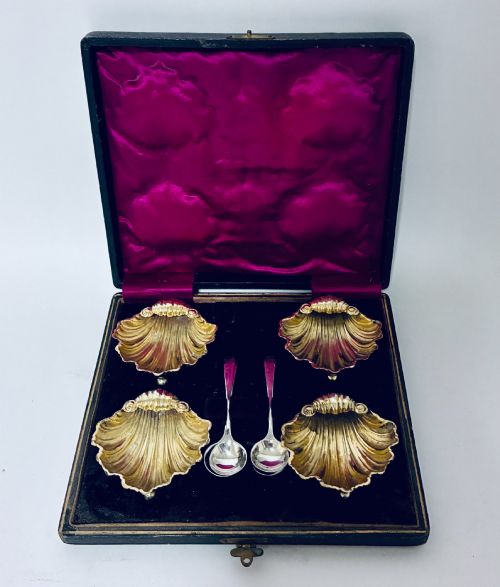
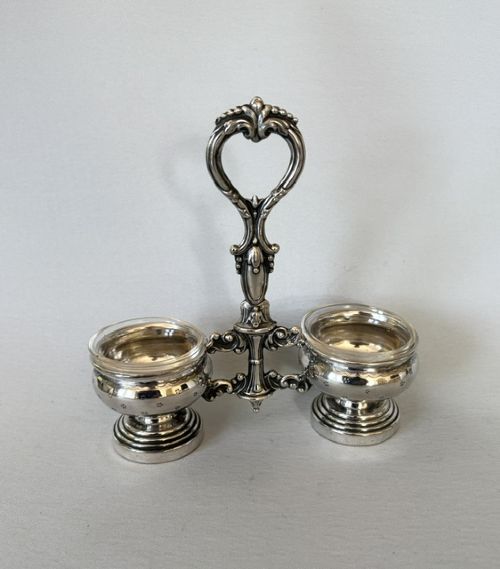
- An open vessel used to hold salt before the invention of the shaker. They frequently rest on three feet and require small spoons.
- Mustard pot
- A small covered jar designed to hold prepared mustard, usually accompanied by a matching spoon and a fitted glass liner to protect the metal.
- Pepperette
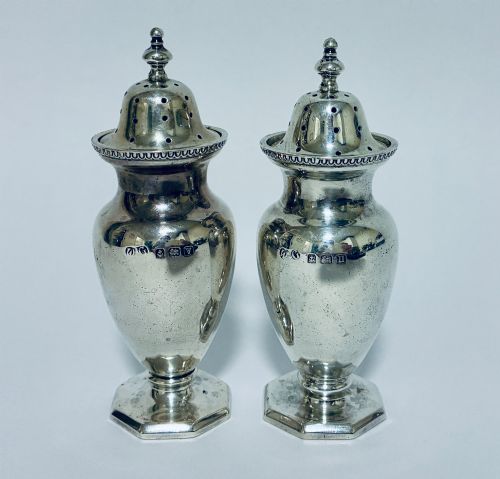
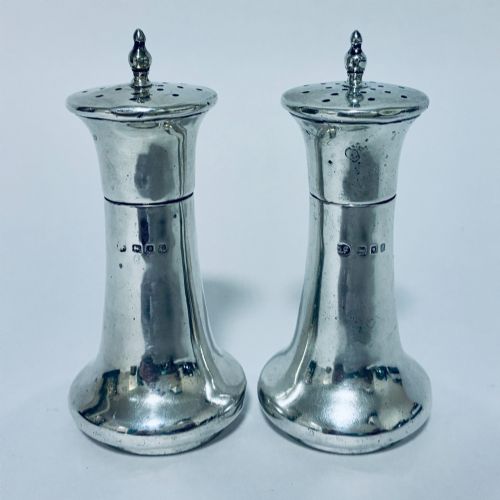
- A small shaker designed for dispensing ground pepper. Pairs of these pots often accompany salt cellars in matching condiment configurations.
- Cobalt glass
- Deep blue glass used for liners within open salt cellars and mustard pots. This material provides a striking visual contrast against pierced sterling silver frameworks.
Silver Table Condiment Set: Frequently Asked Questions
How were condiment sets used at the dining table?
These sets held essential seasonings like salt, pepper, mustard, oil, and vinegar within easy reach of diners during formal meals. Multi-bottle cruet frames sat centrally or were passed between guests.
Smaller three-piece groupings rested directly on the dining table or were assigned to specific seating areas for shared use.
What is the difference between a cruet and a condiment set?
A cruet specifically refers to a stand holding liquid bottles and powder casters, whereas a condiment set is a broader term encompassing salt cellars and mustard pots.
Many period terms overlap, as manufacturers often marketed multi-bottle frames under both descriptions interchangeably.
How do I care for silver condiment sets with glass liners?
Remove glass liners before cleaning the silver framework to prevent moisture from becoming trapped between the glass and metal. Wash glass liners separately in warm soapy water.
Polish the silver gently using appropriate cloths, avoiding abrasive cleaners that might damage hallmarks or delicate pierced work.
How do I identify Edwardian silver condiment sets?
Edwardian sets frequently exhibit revival styles, substantial silver plating, and elaborate multi-bottle oak or silver frames intended for large dining arrangements. Hallmarks and registration numbers stamped on the metal provide precise dating.
The presence of cranberry flashed cut glass and heavy wirework stands also points toward this period of production.