





Silver Table Bell
A silver table bell brings a sharp, clean ring to a desk or dining surface while carrying the weight of centuries past.
Silver Table Bell
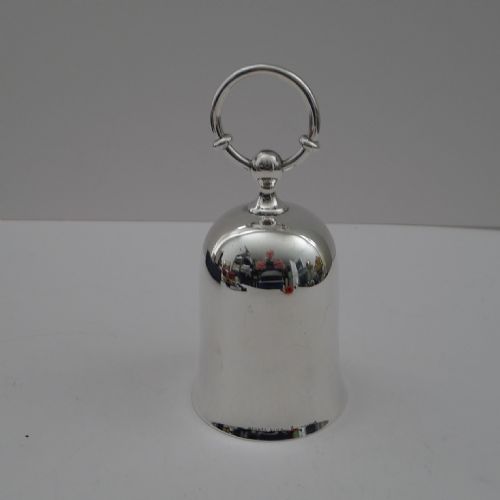
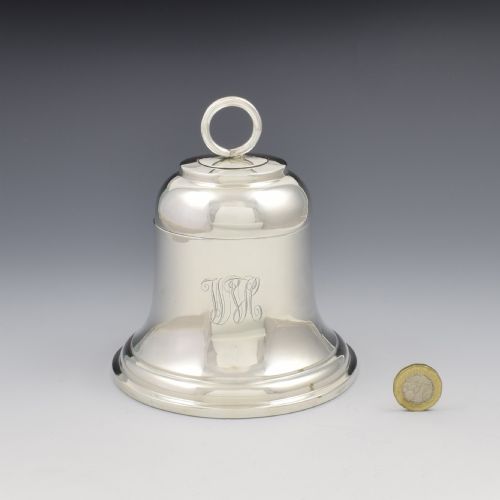
A silver table bell is a functional object designed to summon assistance in a home, shop or office. When searching this phrase, you encounter forms ranging from simple domestic call bells to heavy mechanical desk bars and novelty figures.
The pieces on this page span the Victorian and Edwardian eras into the mid-twentieth century. Most examples are executed in sterling silver or silver plate, frequently paired with glass, brass or ebonised wood.
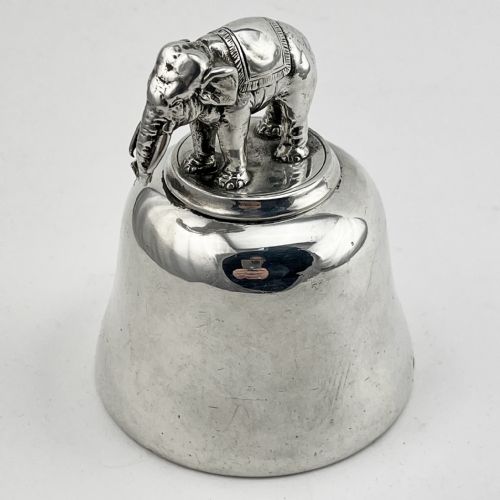
Traditional dome shapes and push-plunger bar bells dominate the selection. Alongside these sit novelty models shaped as animals, human figures or specific decorative styles from Georgian to Mid-Century Modern.
Materials and construction
Makers shaped sterling silver and silver plate through casting, hammering and spinning to form the resonant dome or body. Brass, bone and ebonised wood often provide contrasting structural support or insulated handles.
Internal mechanisms rely on coiled steel springs and weighted clappers to produce a crisp note when pressed or shaken. Glass and ceramic inserts occasionally combine with the metalwork to house the striking parts.
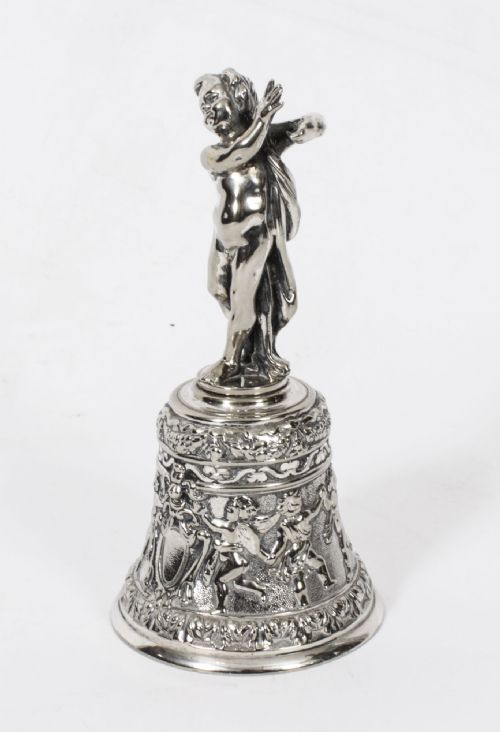
Detailed handles often feature figural casting, such as horse bits or crinoline figures, soldered securely to the main body. Hallmarks stamped directly into the silver record the assay office, date and maker.
Among the collection, a mechanical polished pig model from eighteen-ninety waits to grunt its metallic summons across the desk.
Assessing the range
Quality rests primarily on the gauge of the metal and the clarity of the ring produced by the dome. Heavier solid silver gauges and well-balanced mechanisms produce a sustained tone and resist dents from frequent daily use.
Design complexity also separates standard utility items from higher workshop output. Finely chased surface decoration, cast figural handles and intact internal spring mechanisms distinguish superior examples from plain domestic versions.
George Unite·Lee and Wigfull·Richard Peckover·Joseph Lum·Jaeger Le Atmos·Le Coultre
The Silver Table Bell Glossary
- Hallmark
- A set of official marks stamped on precious metals indicating the maker, standard of purity and year of assay. These stamps allow collectors to trace the exact origin of a silver table bell.
- Silver Plate
- A thin layer of silver fused or electroplated onto a base metal such as copper, brass or nickel silver. This technique offered the visual appeal of solid silver at a lower production cost.
- Bar Bell
- A type of desk bell featuring a horizontal metal tube mounted on a stand that rings when struck or pushed at either end. They were common on nineteenth and twentieth-century reception counters.
- Novelty Bell
- A bell formed into an amusing or unusual shape, such as an animal, character or mechanical figure. These pieces were popular conversation items in Victorian and Edwardian drawing rooms.
- Clapper
- The internal tongue or ball that strikes the inside of a bell to produce sound. Its weight and material directly influence the resonance of the tone.
Silver Table Bell: Frequently Asked Questions
How do I clean an antique silver table bell?
Use a soft microfiber cloth with a mild, non-abrasive silver polish to remove tarnish gently. Avoid harsh chemical dips that can strip away original patination and damage delicate internal springs.
Take care around hinged parts, wooden bases and glass inserts to prevent moisture from becoming trapped inside the mechanism.
What is the difference between a hand bell and a desk bell?
A hand bell incorporates an upright handle designed to be lifted and shaken manually to summon service from another room. A desk bell or bar bell sits stationary on a surface and operates via a push plunger or striking bar.
Stationary desk models were typically utilised in shops, hotels and large reception halls where staff needed to remain behind a counter.
How can I tell if a bell is solid silver or plated?
Examine the piece closely for hallmarks, which indicate solid sterling silver standards rather than plated layers. Look along the edges or wear points for any base metal showing through the silver surface.
Testing with appropriate non-destructive methods or consulting an expert can confirm the underlying metal composition.
Are mechanical desk bells still functional?
Many vintage mechanical bells remain fully operational if their internal springs and strikers are clean and undamaged. Regular use should be gentle to preserve the historic metal components.
If a mechanism sticks, a professional horologist or silver specialist can sometimes service the internal spring without altering the exterior.