
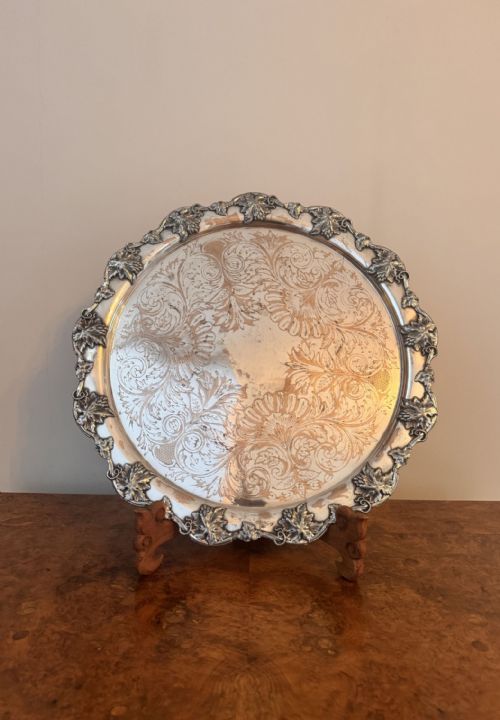
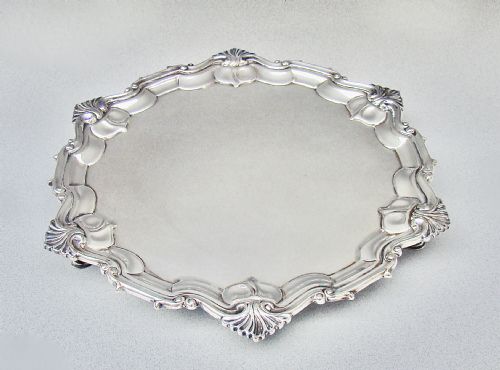
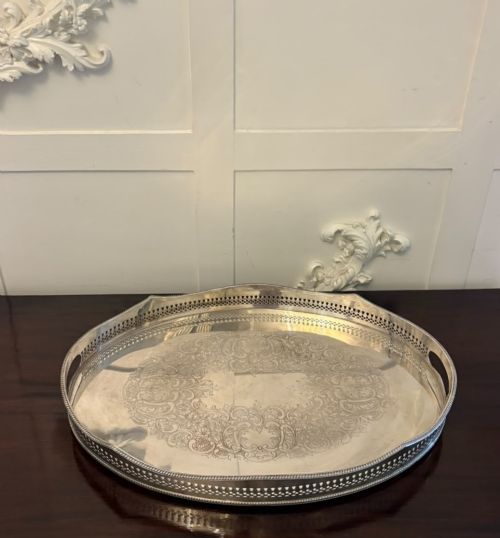
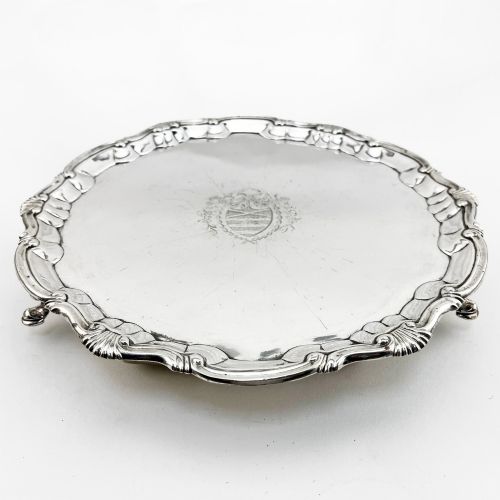


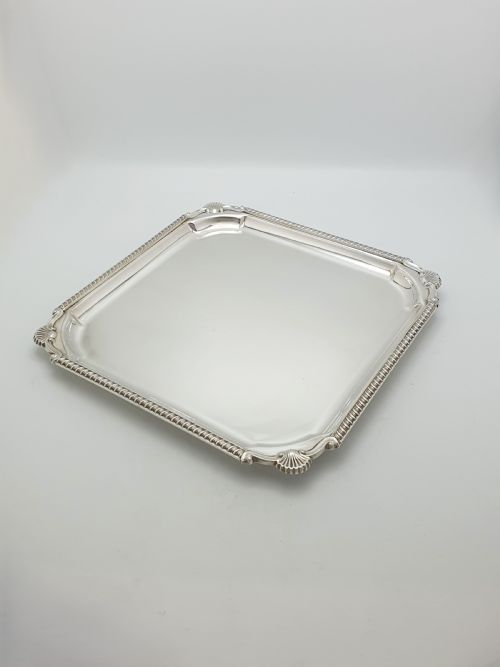

Silver Serving Salver
A silver serving salver brings undeniable presence to a table, offering a polished stage for drinks and afternoon tea.
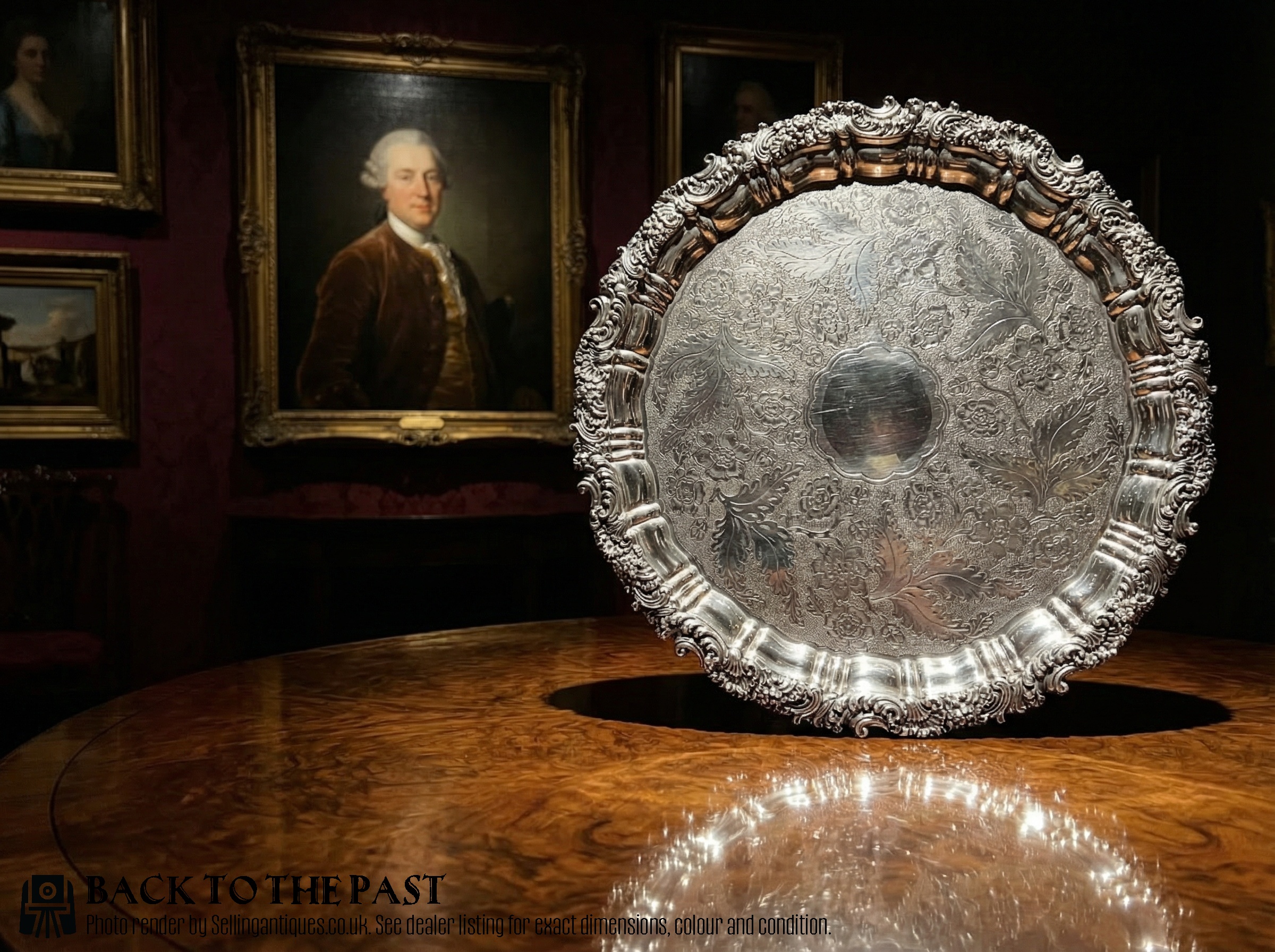
Silver Serving Salver
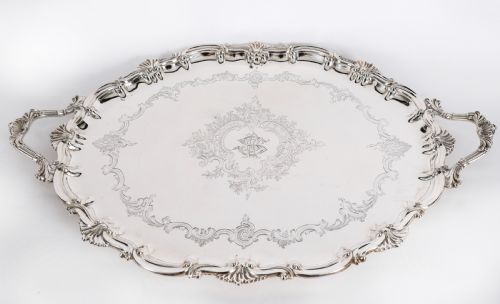
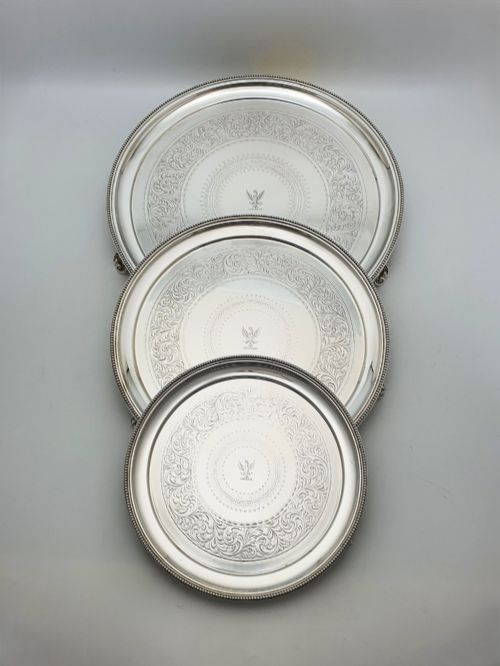
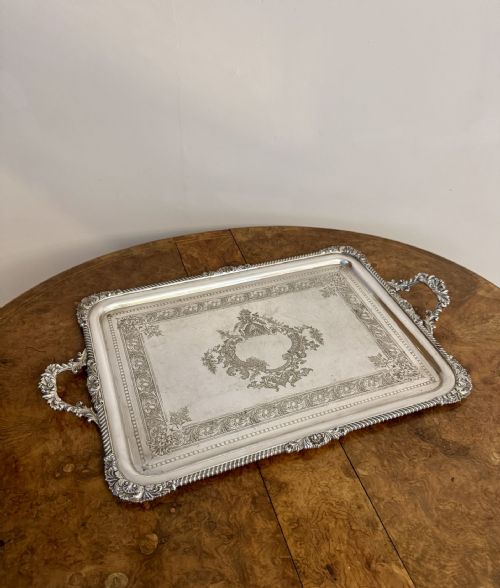
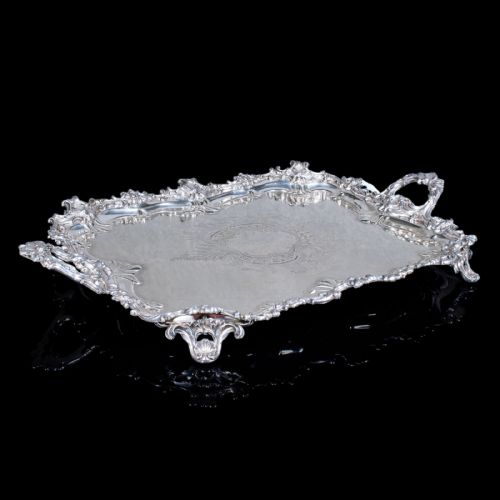
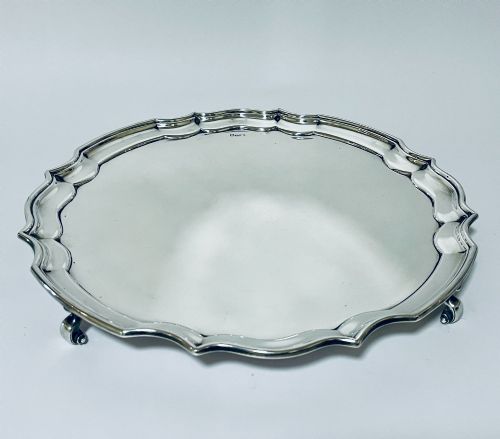
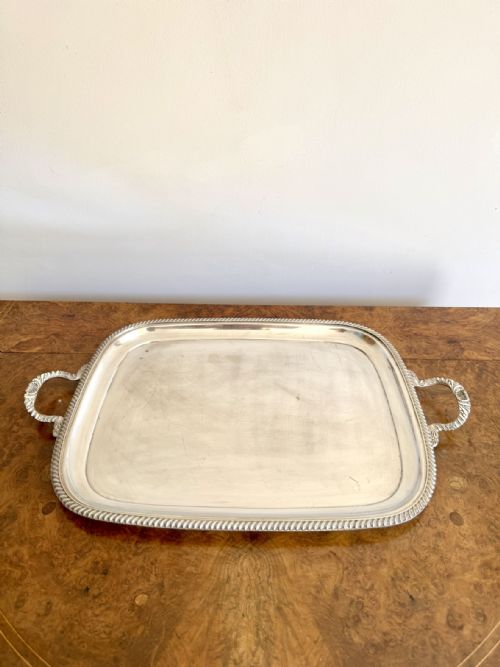
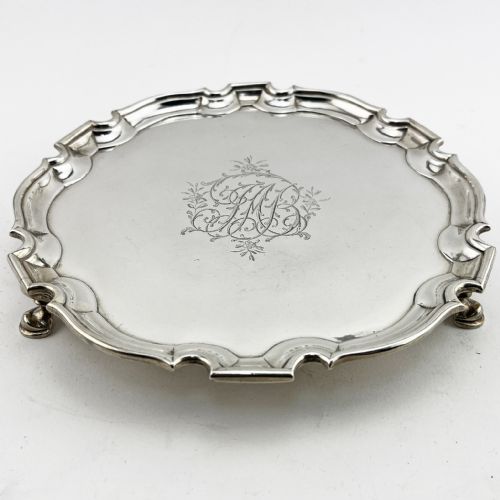
A silver serving salver is a formal tray designed for presenting beverages, calling cards or food items. Buyers searching this phrase encounter circular, oval and square forms produced across the Georgian, Victorian, Edwardian and Art Deco periods.
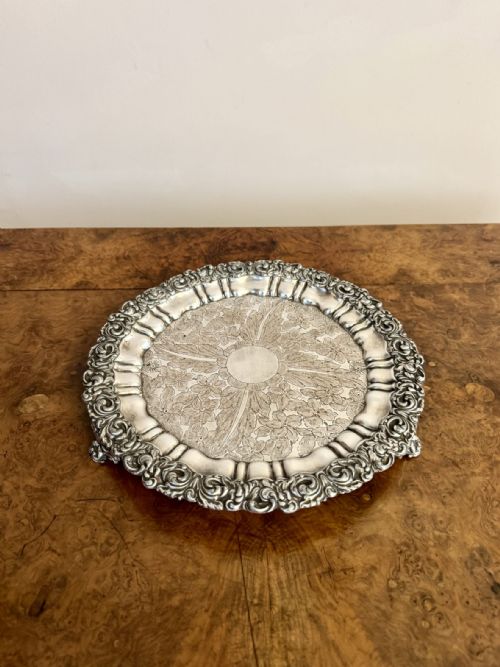
The pieces on this page span styles from ornate Rococo Revival engraving to geometric Art Deco lines. Most examples meet the eye as silver plated or sterling silver objects, often featuring raised decorative rims and detailed surface chasing.
How They Were Made
Many items utilise silver plate, EPNS, or Old Sheffield Plate, applying a thin layer of silver over base metal, copper or nickel silver. Artisans also fashioned substantial pieces entirely from solid sterling silver.
Decoration relied on hand engraving, applied cast borders and soldered details. Makers formed the trays through spinning, stamping or hand beating before polishing the metal to a reflective finish.
Listings span the 18th, 19th and 20th centuries, covering Georgian, Victorian, Edwardian and Art Deco periods.
What Varies in Quality
Quality rests in the weight of the metal and the crispness of the chased or engraved decoration. Finer salvers display deep, hand-cut surface patterns rather than shallow machine stamping.
The construction of the rim and feet indicates the maker's care. Superior examples feature robustly cast borders securely attached to heavy gauges of silver or plated metal.
William Hutton & Sons·Mappin & Webb·Thomas Bradbury & Sons·Elkington & Co.·John Harrison·Harrison Bros·Padley Parkin·Walker & Hall·James Dixon & Sons
The Silver Serving Salver Glossary
- Salver
- A flat tray, typically with feet, used for serving food or drinks. This term often applies to smaller, circular presentation trays.
- Old Sheffield Plate
- An early fusing technique where a sheet of silver is fused to a copper core. It remains distinct from later electroplating due to its sandwich construction visible at the edges.
- EPNS
- Electroplated nickel silver. This denotes a base metal of nickel, copper and zinc coated with a layer of pure silver via electrolysis.
- Chasing
- A metalworking technique where the artisan pushes the metal from the front with a hammer and punch to create raised surface designs. It differs from engraving, which removes metal.
- Gallery tray
- A tray featuring an openwork or pierced gallery railing around the perimeter. These were typically utilised for serving glassware.
Silver Serving Salver: Frequently Asked Questions
What is a silver serving salver used for?
These pieces traditionally served drinks, calling cards or afternoon tea items in formal households. Today, they function both as decorative centerpieces and practical trays for serving cocktails.
Their reflective surfaces bring light into a room while providing a stable platform for glassware or decanters.
How do I clean a silver serving salver?
Maintenance requires a soft cloth and a dedicated silver polish designed to remove tarnish without scratching the metal. Gentle circular motions preserve the engraved details and surface finish.
Silver plated items demand particular care to avoid wearing through the thin silver layer to the base metal beneath.
How can I tell sterling silver from silver plate?
Sterling silver pieces typically bear hallmarks indicating the standard of purity, the maker and the assay office. Silver plated items carry marks such as EPNS or display base metal where the coating has worn.
Weight and temperature also offer clues, as solid silver feels heavier and warms to the touch more slowly than plated base metals.
How do I date an antique salver?
Dating relies on hallmarks for sterling silver pieces, which include date letters and monarch duty marks. Stylistic cues such as Rococo Revival scrolls or geometric Art Deco borders also narrow down the era.
Maker marks and manufacturing techniques, such as Old Sheffield Plate construction, further pinpoint the decade of origin.