

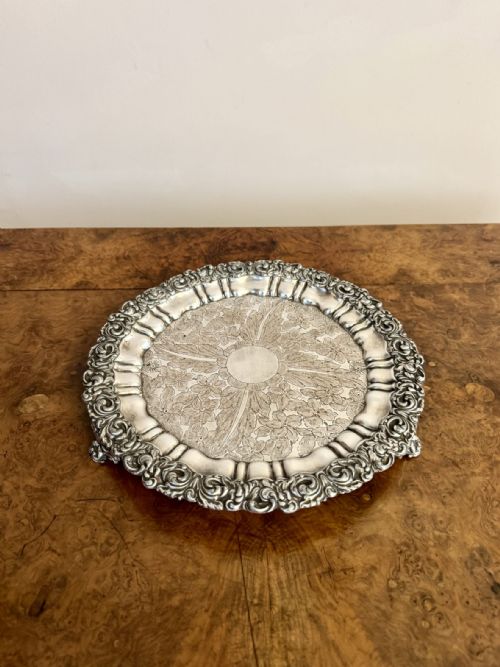
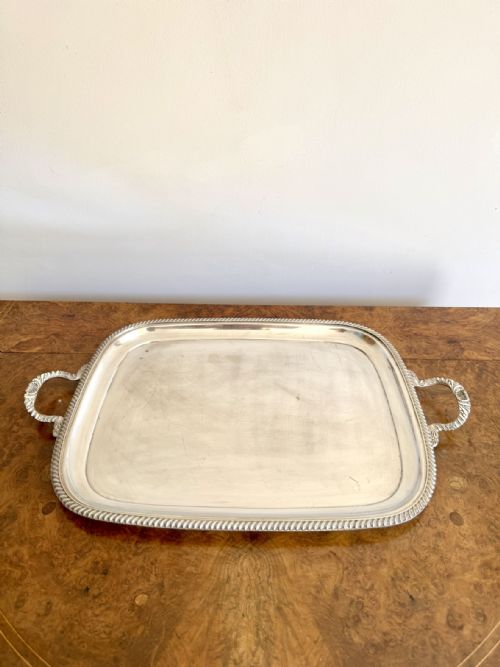
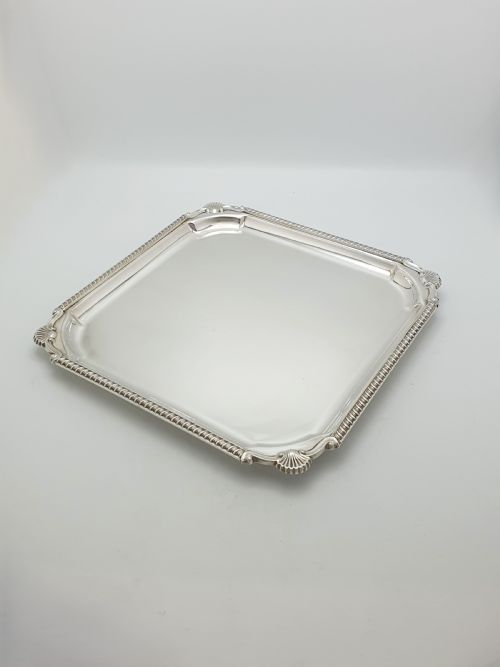


Silver Plate Salver
Discover a silver plate salver to elevate your table service with centuries of British and European craftsmanship.
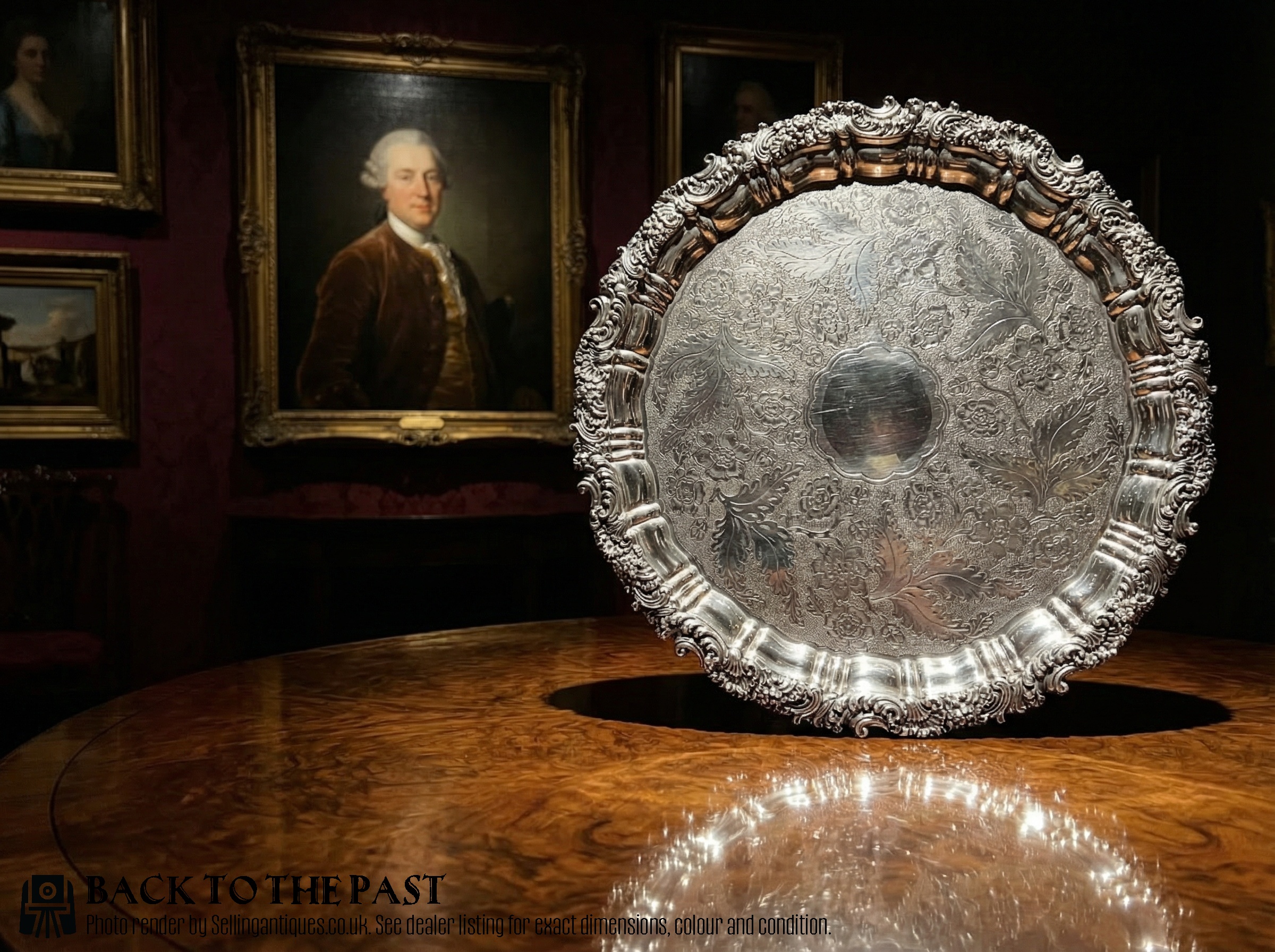
Silver Plate Salver
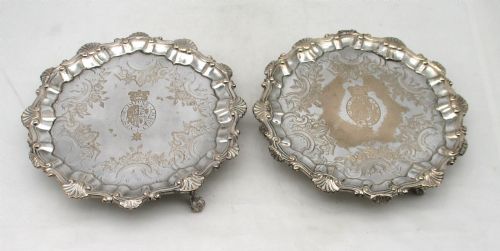
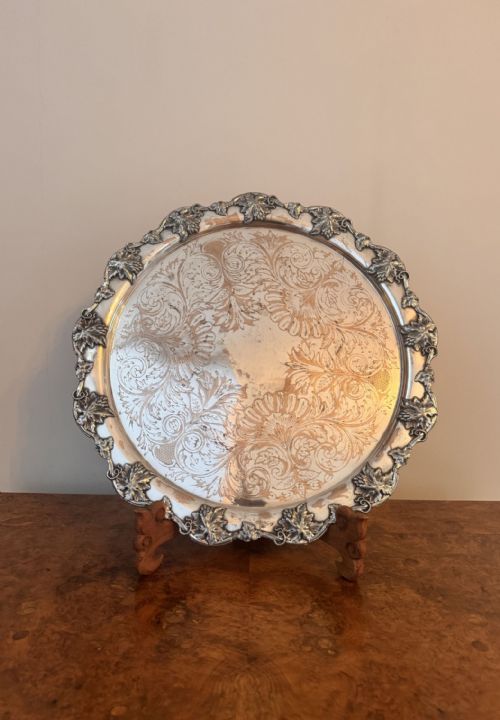
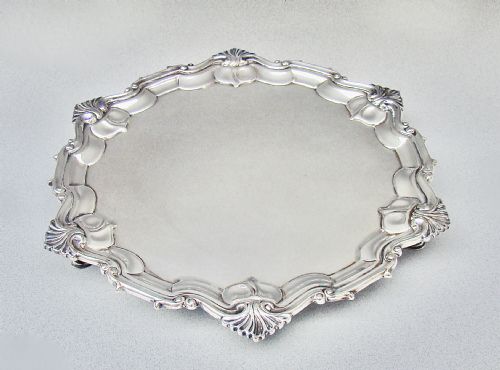
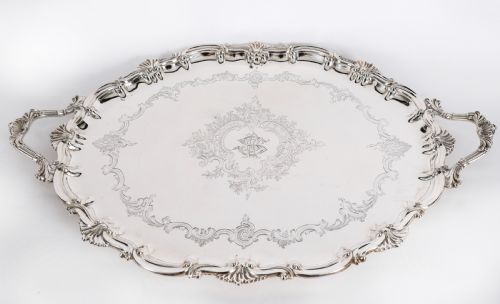
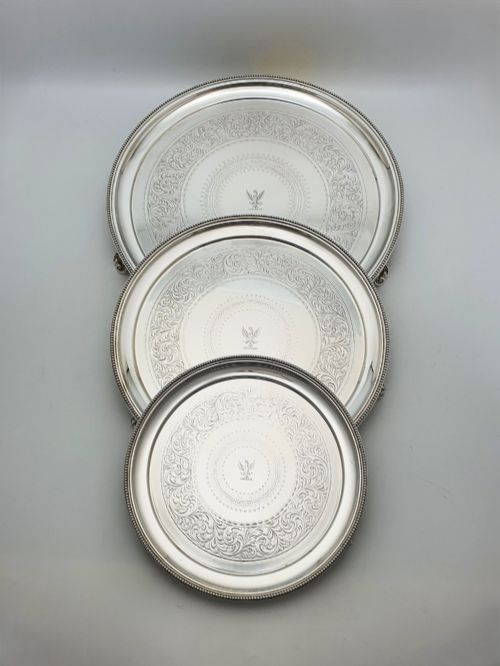
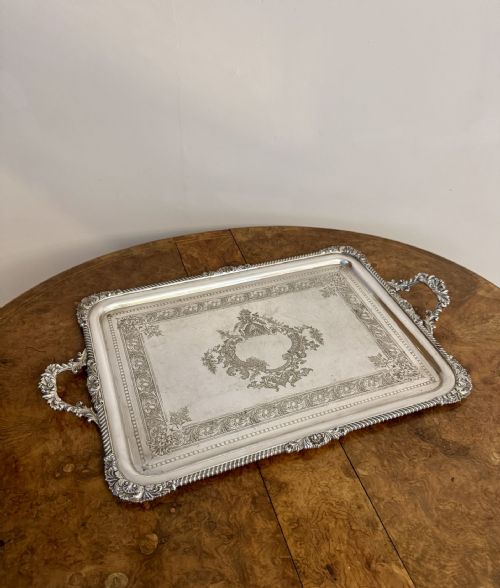
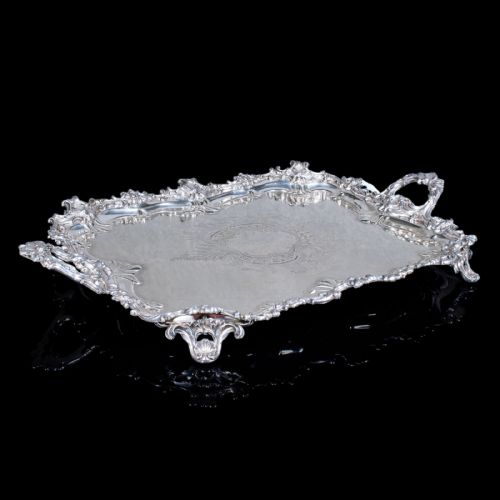
A silver plate salver is a formal serving tray or footed plate designed for drinks, calling cards, or afternoon tea. These pieces span the eighteenth, nineteenth, and twentieth centuries, including the Georgian, Victorian, Edwardian, and Art Deco periods.
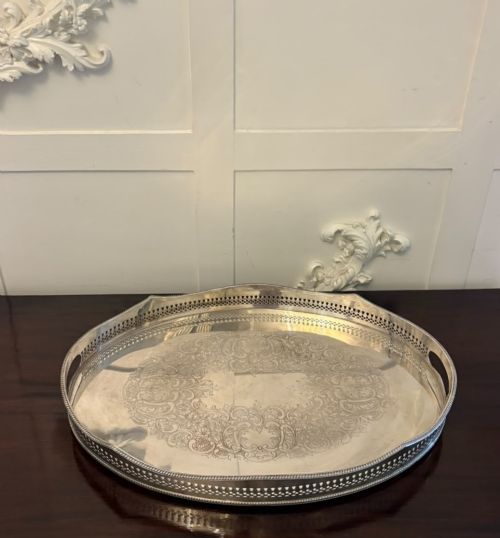
The collection ranges from small card trays to large presentation platters and cocktail trays. Footed circular salvers and oval serving trays dominate the selection, often featuring raised rims and detailed engraving.
How they were made
Early pieces utilise Old Sheffield Plate, a technique fusing a thin sheet of silver to a copper core. Later nineteenth-century items introduce electroplated nickel silver, known as EPNS, using electrical current to bond silver onto base metals.
Workshops applied applied borders, cast scroll feet, and hand-engraved neoclassical or floral motifs onto the metal surfaces. Gallery trays incorporated pierced metal railings soldered to the base.
What varies in quality
The weight of the metal and the crispness of the chased or engraved decoration define the tier of a piece. Heavier gauge copper or nickel silver cores provide structural rigidity that resists bending over time.
The depth and uniformity of the silver layer determine longevity, particularly where base metals might otherwise show through wear. Superior makers executed cast borders and feet with distinct relief and secure joints.
William Hutton & Sons·Mappin & Webb·Thomas Bradbury & Sons·Elkington & Co·James Dixon & Sons·Walker & Hall
The Silver Plate Salver Glossary
- Old Sheffield Plate
- A method of fusing silver to a copper ingot before rolling it into sheets, common before the invention of electroplating.
- EPNS
- Electroplated Nickel Silver, a durable base metal coated with a layer of pure silver using an electrical process.
- Salver
- A footed flat tray traditionally used for serving drinks or presenting cards and letters.
- Gallery tray
- A tray featuring a pierced or solid upright metal gallery wall around the perimeter.
- Engine turned
- A geometric pattern mechanically engraved into the metal surface using a lathe.
Silver Plate Salver: Frequently Asked Questions
How do I clean a silver plate salver?
Use a specialised silver polish and a soft cloth to gently remove tarnish without scrubbing. Avoid abrasive pads that can wear through the thin silver plating.
Wash the tray in warm soapy water and dry thoroughly immediately after polishing to prevent residue build-up in engraved crevices.
What is the difference between Old Sheffield Plate and EPNS?
Old Sheffield Plate involves physically fusing silver and copper sheets together under heat, often revealing a thin copper line at the cut edges. EPNS uses electricity to deposit a silver coating onto a nickel silver base metal.
Sheffield pieces generally date from the late eighteenth to the mid-nineteenth century, while electroplating became widespread after the eighteen-forties.
Can I use an antique salver for serving drinks?
These trays function well for serving cocktails, teas, and spirits when handled with reasonable care. Modern acidic liquids should not sit on the surface for extended periods.
Place coasters or linen mats on the tray if serving heavy glassware to protect the engraved metal from scratches.
How can I tell the period of a tray?
Stylistic clues such as Rococo revival scrolls, Victorian floral engraving, or geometric Art Deco lines offer a clear indication of age. Maker marks and registry kitemarks stamped on the reverse provide exact dating evidence.
Construction methods also help, as rolled copper edges indicate older Sheffield techniques while uniform base metals point to later Victorian or Edwardian production.