
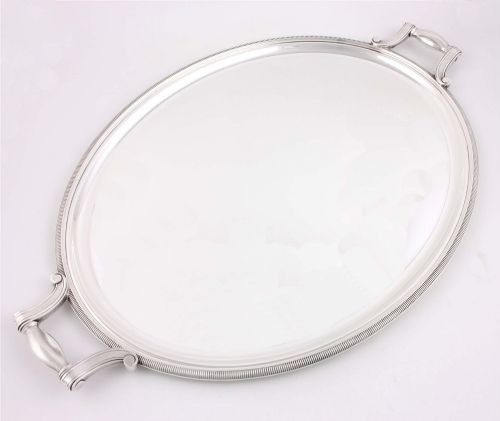

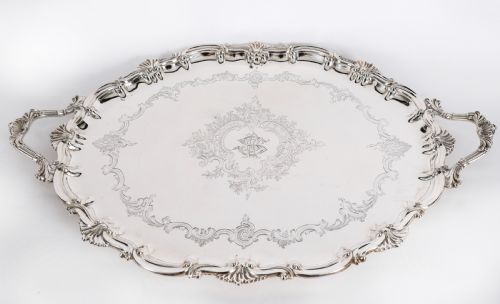


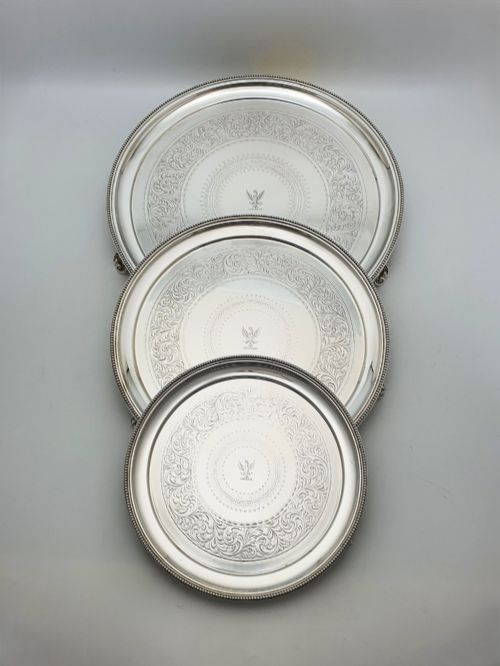
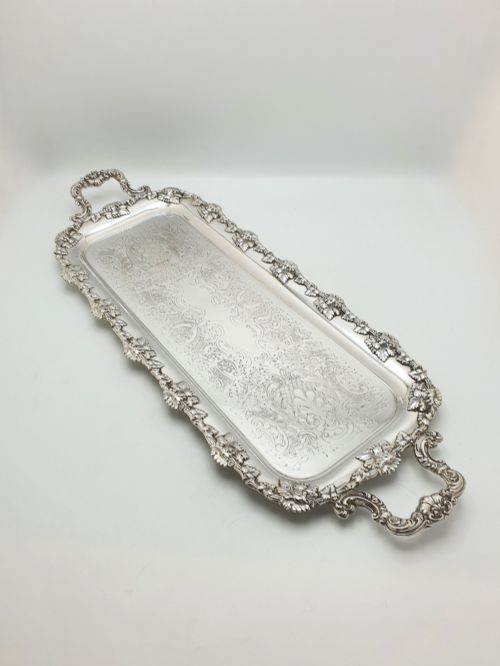
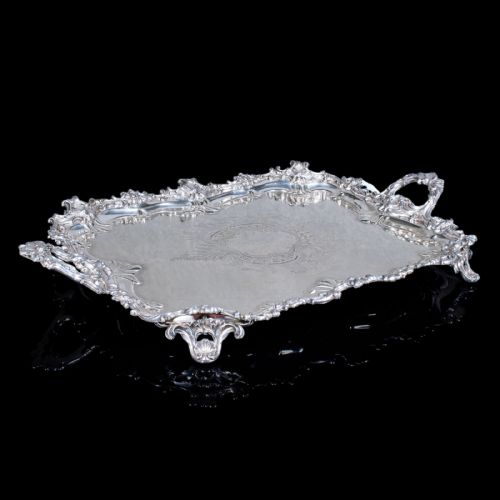
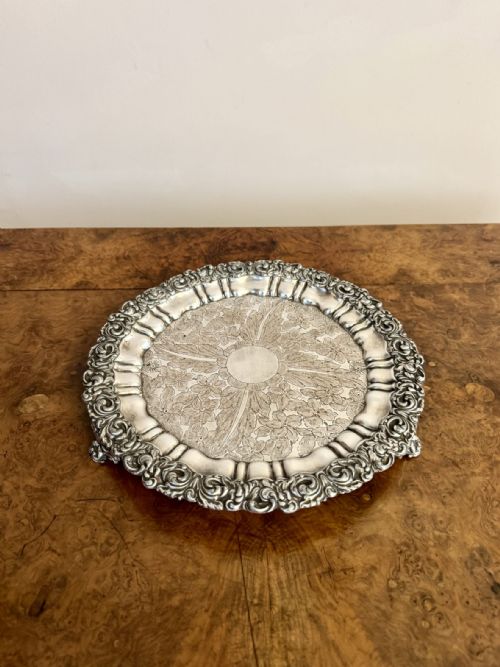


Silver Plate Waiter
A silver plate waiter is a small serving tray or salver, and these pieces bring period elegance to drinks service and display.
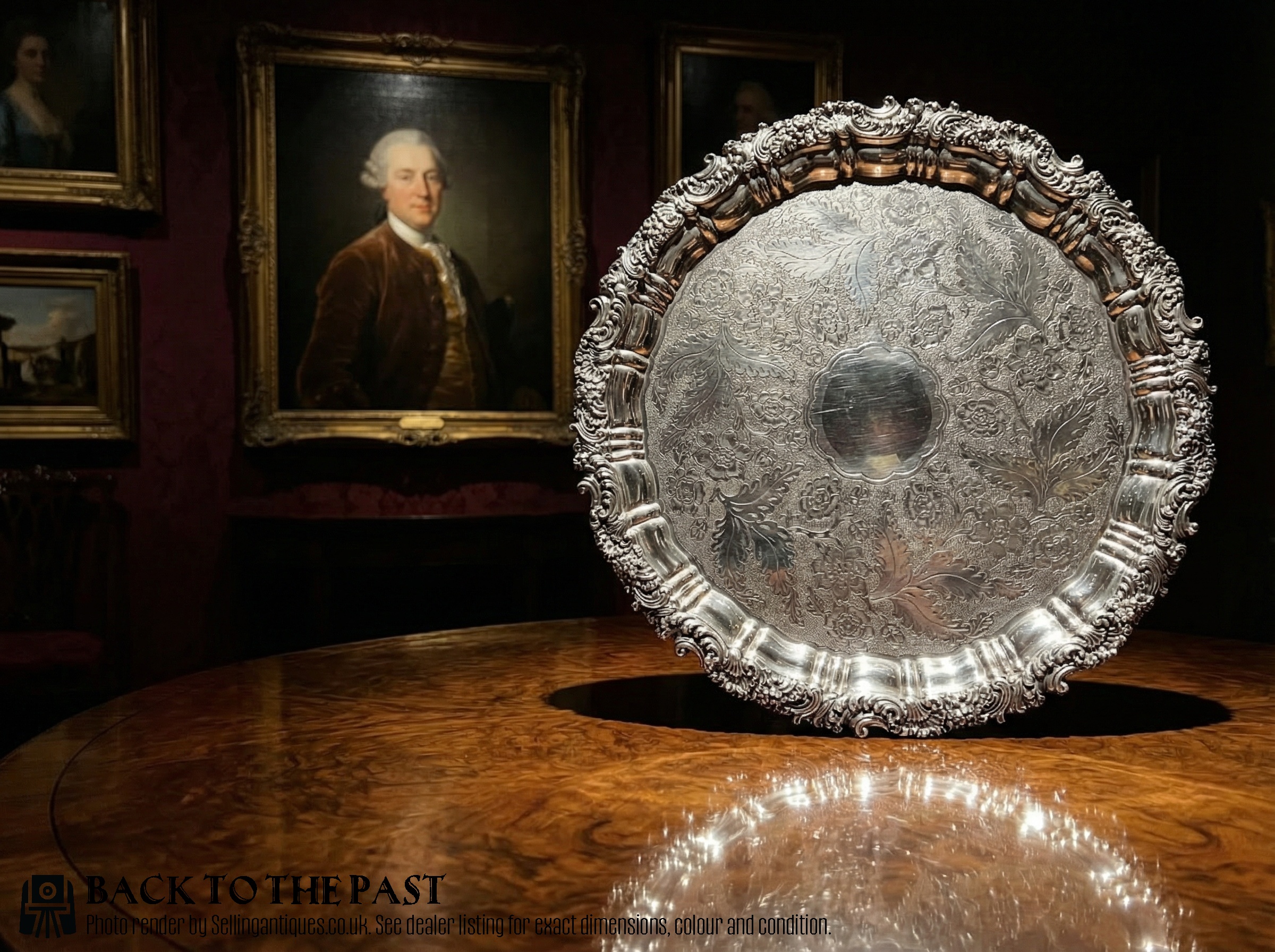
Silver Plate Waiter
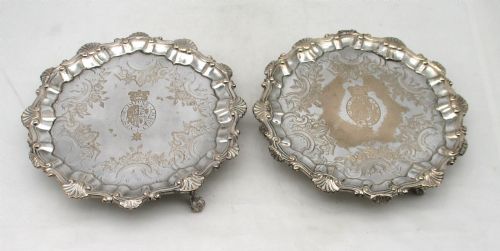
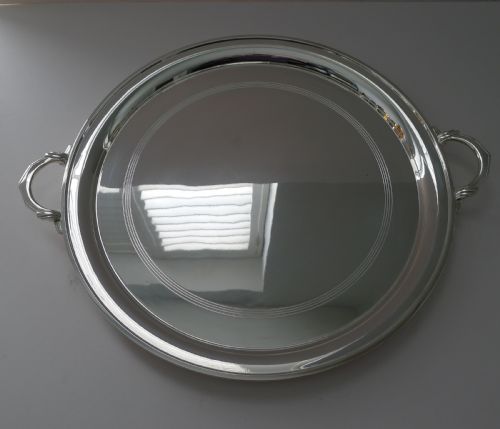
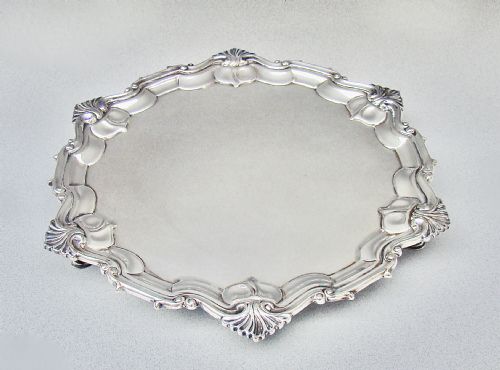
A silver plate waiter is a small serving tray, card tray, or salver used for drinks, calling cards, or presentation. Buyers seeking this form encounter circular and oval formats dating from the eighteenth century through to the mid-twentieth century.
The nineteenth-century Victorian pieces and early twentieth-century Edwardian examples dominate the selection. These items appear alongside earlier Old Sheffield Plate card trays and later Art Deco cocktail trays.
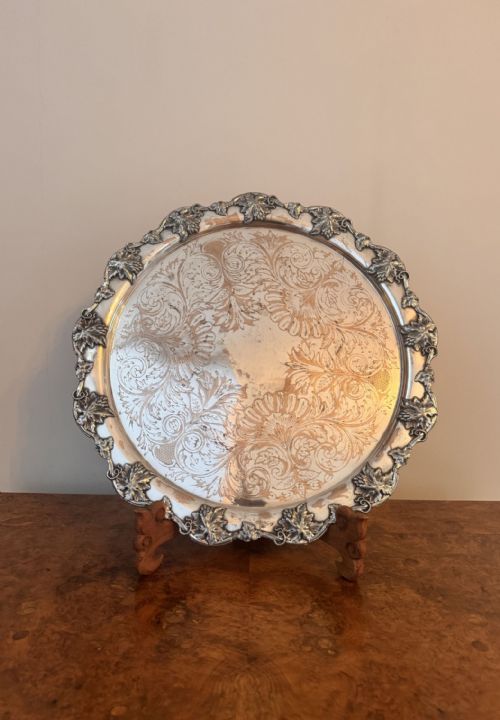
Makers produced these trays in various shapes, including square and rectangular formats with gallery rails or grapevine borders. The functional forms range from small calling card trays to large drinks serving platters.
Materials and construction
Makers utilised copper, nickel silver, and base metal as the foundation for electroplated nickel silver and standard silver plate. Old Sheffield Plate pieces fused a thin sheet of silver to a copper base through heat and pressure.
Nineteenth-century workshops applied silver onto base metals using electroplating techniques, known as EPNS. Craftsmen often added cast rims, chased details, and engraved surface patterns by hand.
The selection includes specialised forms such as cocktail trays, alms dishes, tea trays, and calling card salvers.
Judging quality and execution
Quality rests in the crispness of chased engraving, the weight of the metal base, and the integrity of the applied border. Superior pieces maintain a thick silver layer over the underlying copper or nickel silver.
Makers such as Elkington, Walker & Hall, and Christofle achieved greater distinction through balanced proportions, sturdy handles, and refined feet. Poorer examples show thinning plate where the base metal telegraphs through the surface.
Mappin & Webb·William Hutton & Sons·Christofle·Thomas Bradbury & Sons·Elkington·John Harrison·Padley Parkin·Samuel Hennell·J B Chatterley & Sons·Walker & Hall·James Dixon & Sons·Philip Ashberry & Sons
The Silver Plate Waiter Glossary
- Old Sheffield Plate
- A composite material made by fusing a thin layer of silver to a copper ingot before rolling them into sheets. This early method often shows subtle lines of copper on edges and underside seams.
- EPNS
- Electroplated Nickel Silver, a common base material introduced in the nineteenth century. Nickel silver provides a strong, durable core for the applied silver coating.
- Salver
- A flat tray, usually with feet, traditionally used for serving glasses or presenting items. These pieces often feature raised rims and engraved centres.
- Gallery tray
- A tray fitted with an openwork pierced metal gallery rail around the perimeter. This raised border keeps glasses and decanters secure during service.
- Paten
- A small shallow plate or dish used historically in ecclesiastical settings. These early forms occasionally cross over into domestic service use.
Silver Plate Waiter: Frequently Asked Questions
What is a silver plate waiter used for?
These trays serve drinks, cocktails, and calling cards in formal household settings. They function as portable display surfaces for glassware and tea services.
Historically, domestic staff used them to present letters or visiting cards to homeowners. Today, collectors utilise them for home bar displays and tabletop serving.
How do I date a silver plate waiter?
Dating relies on stylistic markers, manufacturing techniques, and maker marks stamped on the reverse. Georgian and early nineteenth-century pieces often employ Old Sheffield Plate construction.
Victorian and Edwardian items typically display electroplate marks, elaborate engraved borders, or maker initials. Art Deco examples from the nineteen-thirties feature geometric lines and streamlined handles.
What is the difference between Old Sheffield Plate and EPNS?
Old Sheffield Plate uses a mechanical fusion method where silver is bonded to a copper core under high heat. This process produces distinct tactile qualities and subtle copper reveals.
EPNS relies on an electrical current to deposit silver onto a nickel silver base metal. This technique emerged in the mid-nineteenth century and largely replaced the older fusion method.
How do I care for antique silver plate?
Regular maintenance involves gentle cleaning with a soft cloth and specialised silver polish formulated for plated items. Avoid abrasive pads that wear down the thin silver layer.
Store pieces in dry environments away from direct sunlight and high humidity. Proper air circulation prevents premature tarnishing of the metal surface.