






Silver Salt Dips Pair
These silver salt dips pair selections are matched table vessels for dining, prized by collectors for period craftsmanship and domestic history.
Silver Salt Dips Pair
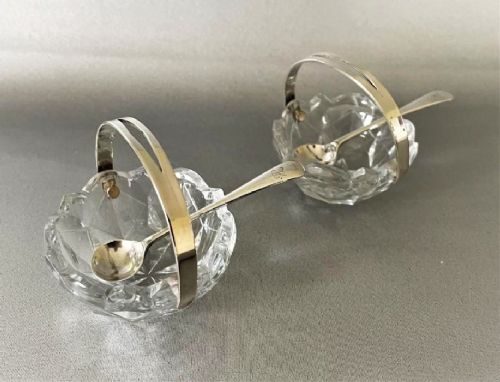
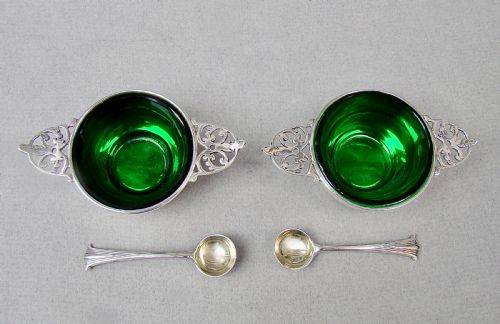
A silver salt dips pair comprises two matching small containers designed to hold salt at the dining table, appearing in forms such as open cellars, cauldron shapes, boats, and novelty quaichs. When exploring a silver salt dips pair, collectors encounter items spanning the Georgian, Victorian, and Edwardian periods.
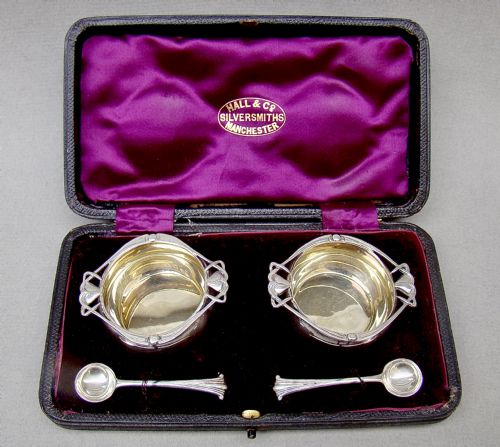
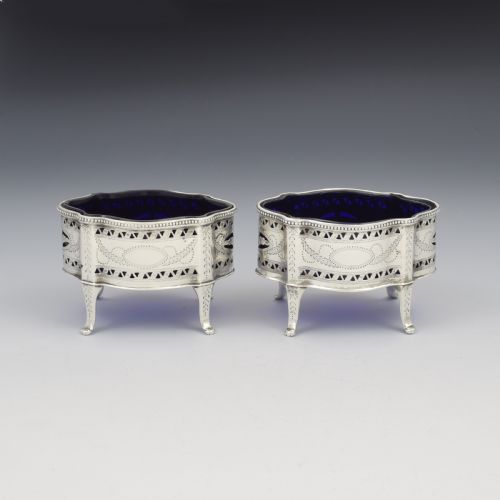
The objects function as tableware accessories and often arrive alongside fitted presentation cases or original matching spoons. Examples range from eighteenth-century trencher salts to pierced serpentine designs and six-lobed Victorian models.
Materials and construction
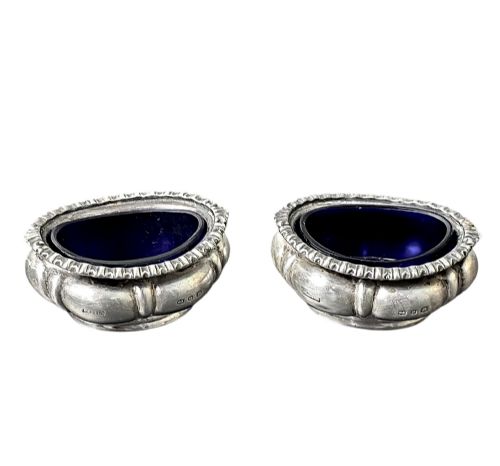
Silversmiths utilised sterling silver and silver gilt to shape the bodies of these vessels, sometimes employing piercing, casting, or hammering techniques. Many open designs incorporate removable glass liners in cobalt blue to protect the metal from corrosive salt.
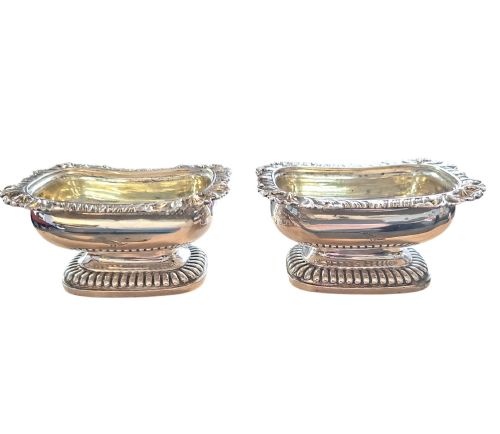
Interior elements within fitted presentation boxes frequently feature linings of silk or velvet to cushion the pieces. Makers also applied gold gilt washes to the interior surfaces of silver bowls to prevent tarnishing.
Silver Salt Dips Pair Retail Price Guide 2026
Typical asking prices for silver salt dips pair among the pieces listed under this phrase on Sellingantiques today, from the lower quarter to the upper quarter. They describe what is for sale here now, not the wider market.
Miniature silver birds double as salt vessels with hinged wings to keep the seasoning dry.
Factors determining quality
The distinction between standard and superior pieces rests on the crispness of the silversmith's chasing, the weight of the metal, and the presence of fully legible hallmarks. Distinctive form, such as novelty bird motifs or architectural boat shapes, elevates certain pairs above basic domestic utilitarian salt cellars.
Complete sets featuring matching original spoons and undamaged coloured glass liners retain higher integrity. The reputation of the maker and the precision of pierced decorative patterns further separate ordinary production from distinguished examples.
Rebecca Emes and Edward Barnard I·Josiah Williams and Co·David Hennell·John Edmonstone·Bateman·Edward Wood·Vale Brothers and Sermon
The Silver Salt Dips Pair Glossary
- Trencher salt
- A heavy, often flat-bottomed salt cellar designed to sit directly upon the dining table for individual or shared use. These early forms typically display robust geometric proportions.
- Cauldron salt
- A small bowl shaped like a cooking pot, usually raised upon three diminutive feet such as hoof or pad supports. This form remains prominent across Georgian silversmithing.
- Cobalt glass liner
- A deep blue glass insert fitted inside an open silver salt cellar to contain the condiment and protect the precious metal. These liners are hand-blown and shaped to fit the specific vessel.
- Silver gilt
- Silver that has been coated with a thin layer of gold on its surface, often applied to the interior bowl of a salt cellar to prevent chemical reactions with salt. This finish imparts a warm yellow tone.
- Quaich
- A traditional shallow two-handled drinking vessel scaled down in these instances to serve as a novelty salt cellar. The form derives from Scottish domestic wooden vessels.
Silver Salt Dips Pair: Frequently Asked Questions
How were salt dips used at the table?
Dining companions used these open vessels to take individual pinches of salt during meals before the invention of free-flowing table shakers. Diners typically used a small spoon or the tip of a knife to transfer salt to their plates.
Wealthier households placed multiple pairs along large tables so guests did not need to pass condiments across the board. The inclusion of matching spoons in later cased sets indicates a shift toward dedicated personal serving implements.
What is a trencher salt?
A trencher salt is a sturdy, low-profile salt cellar produced during the eighteenth century and earlier. They sit directly on the dining surface near the diner's trencher or wooden plate.
These pieces are heavier and more utilitarian than the elevated pedestal or footed salts that became popular later in the Georgian era. Their simple geometric forms reflect early dining arrangements.
Why do some salts have blue glass liners?
Salt is highly corrosive to silver over extended periods, causing pitting and tarnishing if left in direct contact with the metal. Inserting a removable glass liner allowed users to wash the container easily without damaging the silver structure.
Cobalt blue became the standard glass colour for these liners because it provided a striking visual contrast against the polished silver exterior. These liners were individually blown and ground to fit each handmade cellar.
How do I date an antique salt cellar?
Dating relies primarily upon the hallmarks stamped into the silver, which record the assay office, the date letter, and the maker's mark. Comparing the decorative style, such as Georgian neoclassical lines or Edwardian refinement, also helps establish the period.
Design motifs like pierced serpentine galleries or heavy cast feet provide additional visual clues to the decade of manufacture. Hallmarks remain the most reliable method for precise chronological attribution.