



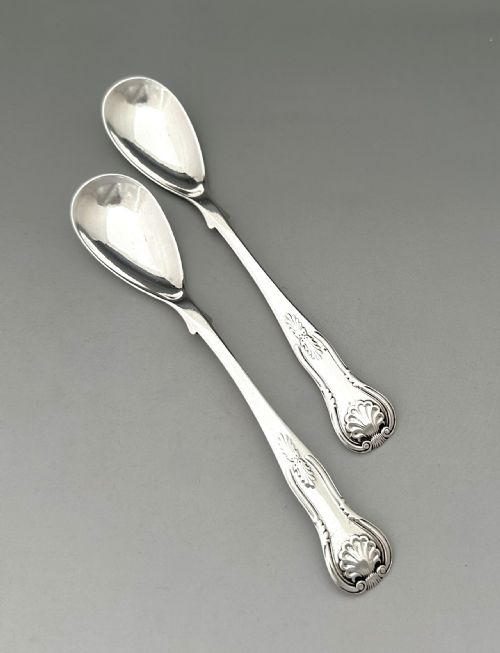


Silver Salt and Mustard
These silver salt and mustard pieces bring small dining table vessels from Georgian, Victorian, and later periods into daily domestic use.
Silver Salt and Mustard
Silver salt and mustard pieces encompass individual mustard pots, open salt cellars, multi-bottle cruet stands, and fitted condiment sets used for table service. The examples appearing here stretch from eighteenth-century Georgian designs through Victorian and Edwardian iterations to mid-century modern and Art Deco creations.
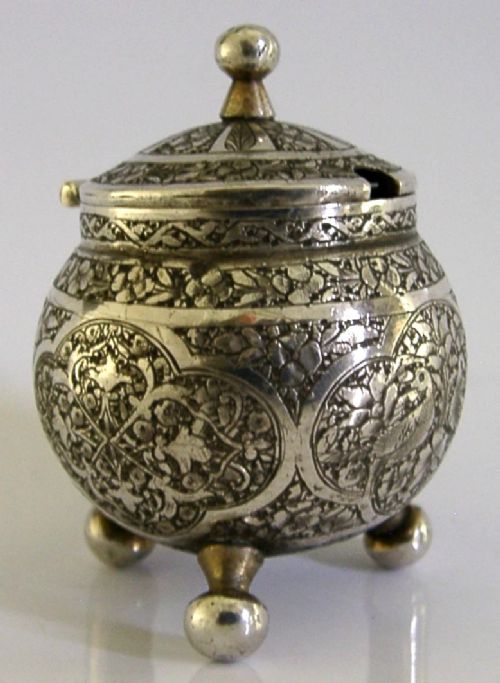
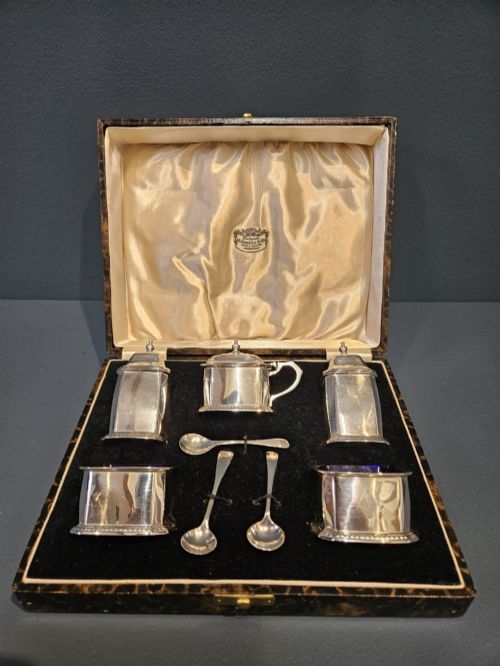
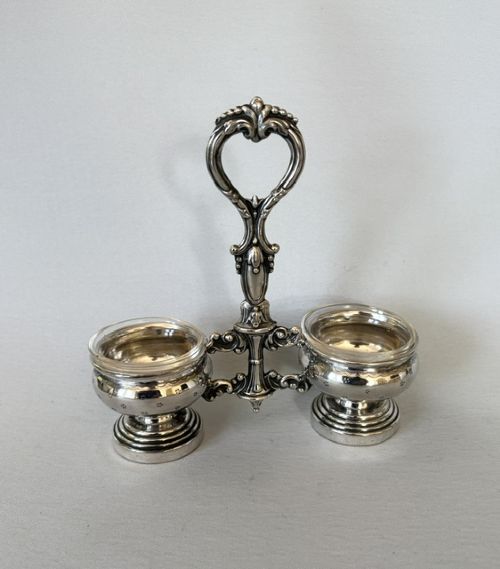
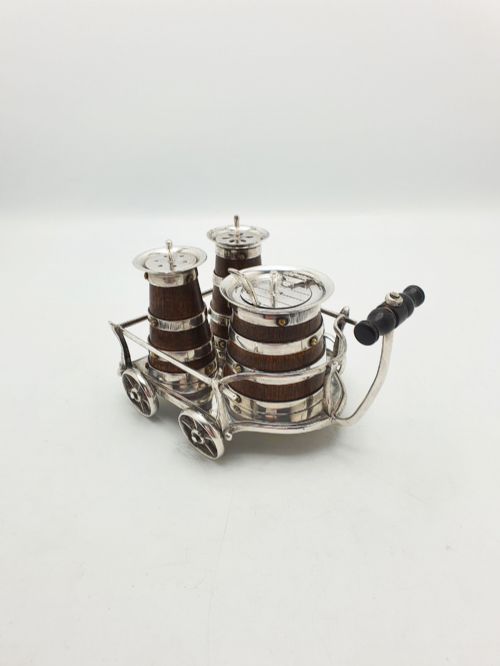
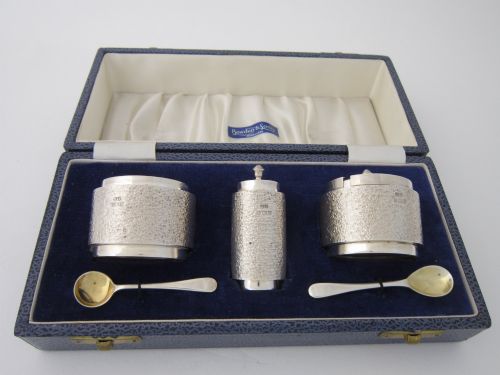
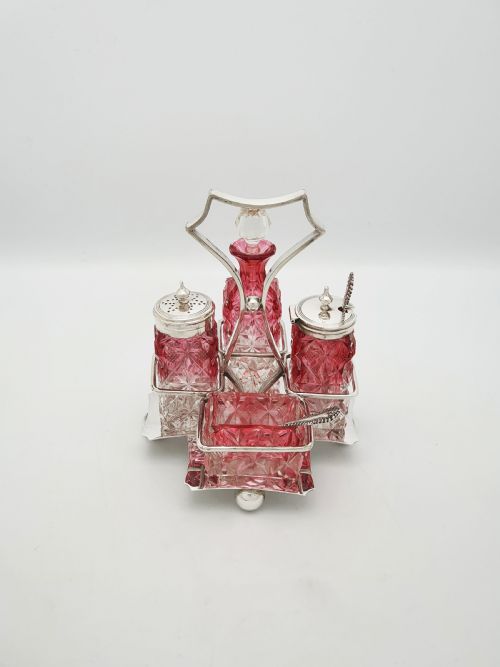
Most encounters on this page involve single mustard pots, boxed three- or four-piece condiment sets, and standalone stands in sterling silver or silver plate. Buyers also encounter novelty animal forms, including farmyard subjects and birds, alongside structural frames housing cut glass bottles.
Makers and makers' marks span provincial silversmiths, major manufacturing firms, and international workshops such as Ottoman silversmiths. These objects served dining rooms across generations, evolving from heavy multi-bottle frames to streamlined twentieth-century geometric sets.
How they were made
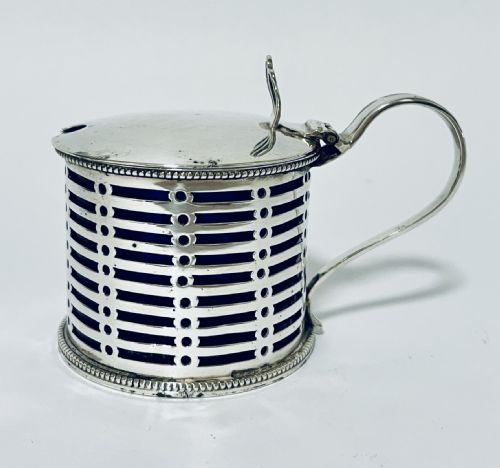
Silversmiths formed mustard pots and condiment stands through traditional techniques involving sheet silver manipulation, piercing, and casting. Many domestic vessels incorporate fitted glass liners in cobalt, cranberry flashed, or clear cut glass, designed to protect the metal from corrosive salts and mustards.
Makers utilised sterling silver and durable silver plate over base metals, pairing them with supporting materials like oak barrels, velvet, satin, and cut glass bottles. Novelty items often combined detailed casting for animal figures with hinged lids and spoon apertures.
Styles span Georgian, Victorian, Edwardian, Art Deco, Ottoman, French Rococo, and Mid-Century Modern.
What varies in quality
Quality rests in the weight of the silver, the crispness of pierced or embossed ornamentation, and the preservation of original glass inserts. Pieces bearing distinct hallmarks from known makers demonstrate greater accountability of origin.
The degree of finishing on hinged lids, the integrity of interior gilding, and the presence of matching spoons elevate individual condiment sets. Fitted presentation boxes likewise add distinction to surviving collections.
William Neale·Hamilton & Inches·Bricks & Sons·Viners Sheffield·Mappin & Webb·Wilmot Manufacturing Co
The Silver Salt and Mustard Glossary
- Cruet set
- A fitted stand holding glass bottles or jars for condiments, oil, vinegar, salt, and mustard. These frames range from simple twin holders to elaborate multi-bottle arrangements.
- Condiment pot
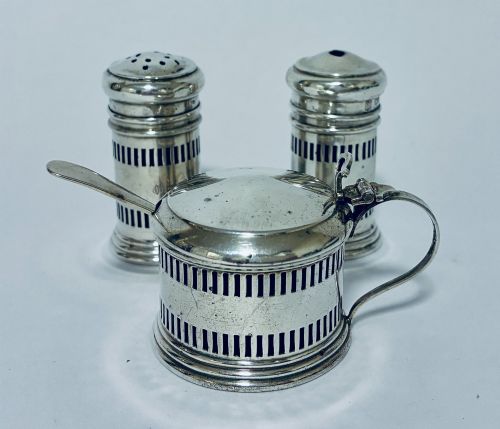
- A small container designed to hold table seasonings such as salt, pepper, or mustard. They frequently feature hinged lids and small matching spoons.
- Flashed glass
- Glass coated with a thin layer of coloured glass on top of a clear or contrasting base before being cut. This technique creates deep colour contrast when faceted.
- Pierced work
- Metal pierced with decorative openwork patterns using saws or punches. Victorian and Georgian silversmiths utilised this method to lighten heavy mustard pot walls.
- Sterling silver
- A silver alloy containing 92.5 percent silver and 7.5 percent other metals, usually copper. British pieces carry hallmark stamps verifying this standard.
Silver Salt and Mustard: Frequently Asked Questions
What is a cruet set?
A cruet set is a tabletop frame holding bottles or pots for seasonings like salt, pepper, oil, vinegar, and mustard.
These sets stood centrally on dining tables for guests to serve themselves during meals.
How do I clean antique silver?
Antique silver requires gentle cleaning with a soft cloth and specialised silver polish to preserve hallmarks and surface detail.
Harsh abrasive dips should be avoided, particularly on plated items or pieces with delicate glass liners.
Why do mustard pots have glass liners?
Glass liners protect the sterling silver or silver plate from the corrosive acids found in prepared mustards.
These removable inserts allowed users to wash away condiments easily without damaging the metal frame.
How do I identify silver periods?
Silver periods are identified through maker's marks, date letters, and assay office stamps impressed directly into the metal.
Stylistic cues such as Georgian neoclassical lines or Art Deco geometric shapes also indicate the era.
Were condiment sets used daily?
Condiment sets saw regular daily use in middle- and upper-class dining rooms throughout the Victorian and Edwardian eras.
Cased sets were often reserved for formal dining or kept as wedding presents.