



Silver Presentation Tray
These silver presentation trays are grand metal platters designed for formal service, combining heavy silver or silver plate with ornate engraving.
What silver presentation trays are
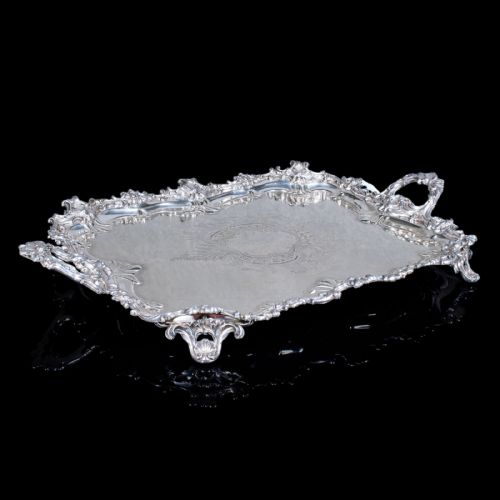
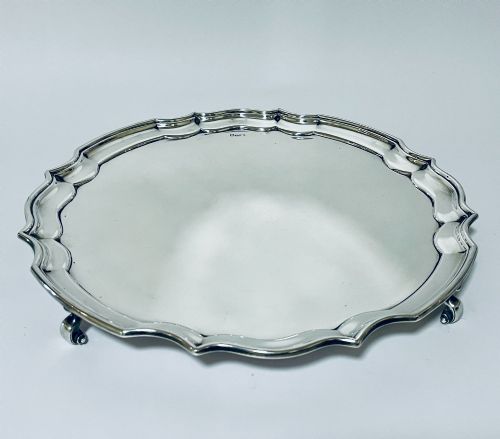
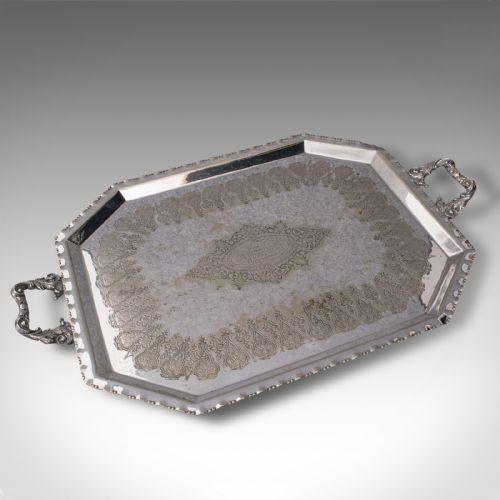
When you search for silver presentation trays, you encounter substantial platters designed for serving, display, and commemoration. The examples seen here span Georgian, Victorian, Edwardian, and later twentieth-century periods, showing diverse forms from circular salvers to oval serving trays with handles.
Most pieces met on this page take the form of traditional salvers and serving trays, frequently rendered in sterling silver or silver plate. Some notable iterations combine silver plate with oak bases, creating heavy boards suited for formal presentation.
Makers and origins range from English workshops to French manufacturers like Christofle, reflecting both domestic British tastes and continental European influence. The forms vary from plain circular platters to elaborately decorated pieces featuring military or civic associations.
How they were made
The construction of these pieces relies primarily on sterling silver and silver plate, occasionally mounted upon sturdy oak timber frames for added rigidity. Metalworking techniques involve casting, hand-hammering, and detailed surface engraving to produce intricate borders and central crests.
Surface ornamentation often employs Rococo Revival scrolls, French Empire motifs, and deep hand-engraved patterns that cover the central fields of the trays. Handles and raised feet are typically cast separately and securely attached to the main body of the tray.
Retail Price Guide 2026
Typical UK retail prices for silver presentation tray, calculated from the Sellingantiques database of over a million retail prices indexed since 2003. This retail price guide relies exclusively on Sellingantiques data; no external sources or auction records are used, so the figures do not describe the wider market.
Listings feature items spanning the Georgian, Victorian, and Edwardian periods, constructed in sterling silver, silver plate, and oak.
What varies in quality
Quality in these pieces is dictated by the weight of the metal, the crispness of the chased or engraved decoration, and the integrity of the underlying construction. Superior examples display deep, hand-cut engraving rather than shallow machine stamping, alongside robust cast borders that sit flat without rocking.
The presence of documented maker marks, original presentation cases, and historical provenance significantly elevates a piece. Silver-plated items rely on the thickness of the silver coating over base metal, whereas sterling silver examples derive their substance entirely from solid precious metal.
James Fray·Paul Storr·Christofle
The Silver Presentation Tray Glossary
- Salver
- A flat plate or tray used for serving drinks or presenting items, typically raised on small feet. These metal platters form a core category within presentation silver.
- Sterling Silver
- An alloy consisting of pure silver and other metals, usually copper, standardised for durability and fineness. This material marks the highest tier of metal quality in the listings.
- Silver Plate
- A layer of silver applied to a base metal core, such as copper or nickel brass. This technique allowed makers to produce large serving trays at a lower cost than solid silver.
- Rococo Revival
- A nineteenth-century design style characterised by ornate asymmetry, C-scrolls, and naturalistic shell and floral motifs. This aesthetic heavily influences the decorative borders of many Victorian trays.
- French Empire Style
- A neoclassical design movement marked by symmetry, military trophies, and classical architectural motifs. Pieces in this style display restrained geometric dignity compared to exuberant Rococo designs.
Frequently Asked Questions
How do I care for silver trays?
Maintenance requires regular, gentle cleaning with appropriate silver polish to prevent tarnish accumulation while preserving the engraved details. Soft cloths and non-abrasive pastes ensure the metal surface remains undamaged over decades of handling.
Storing them flat or in dedicated presentation cases prevents accidental warping and scratches. Wooden elements combined with silver, such as oak trays, require specialist wax to nourish the timber without affecting the metal.
How do I date a silver tray?
Dating relies heavily on hallmarks stamped into the metal, which record the assay office, the year letter, and the maker's mark. Stylistic clues such as Rococo Revival scrolls or Empire borders also point toward specific nineteenth-century decades.
Documented presentation inscriptions provide an exact historical anchor for the piece's creation or award date. Comparing the weight, edge construction, and engraving style further refines the period attribution.
Were these trays used for tea?
Many large serving platters functioned as butler's trays or bases for tea and coffee services in formal domestic settings. Their raised rims and sturdy handles made them practical for transporting heavy ceramic pots safely.
Others served strictly ceremonial purposes, remaining on display rather than participating in daily household routines. The inclusion of oak bases often points towards heavy daily service use in substantial dining rooms.