



1830s Sterling Silver
These 1830s sterling silver pieces are small personal objects and table silver spanning the Georgian, William IV and early Victorian periods, prized for crisp chasing and maker craftsmanship.
1830s Sterling Silver
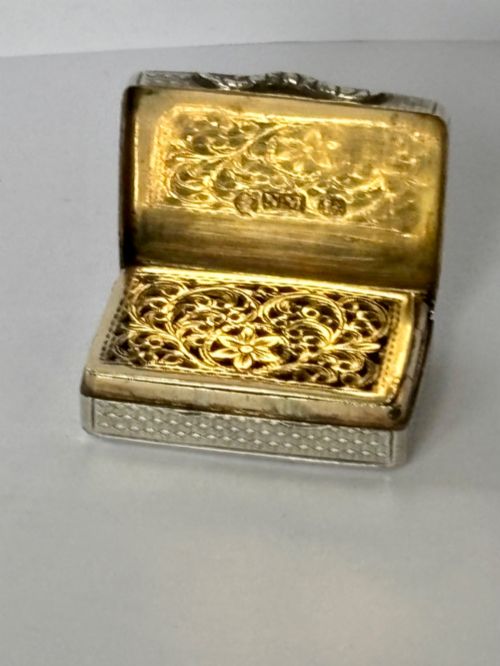
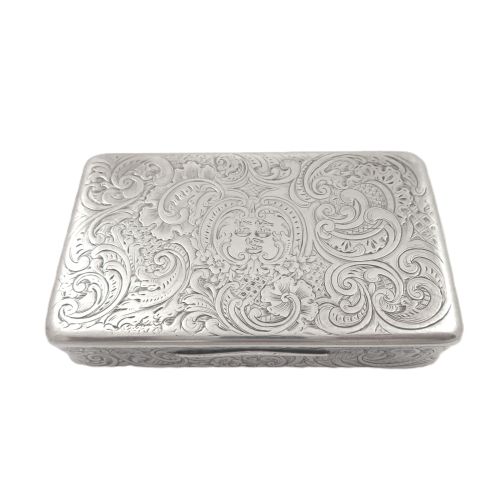
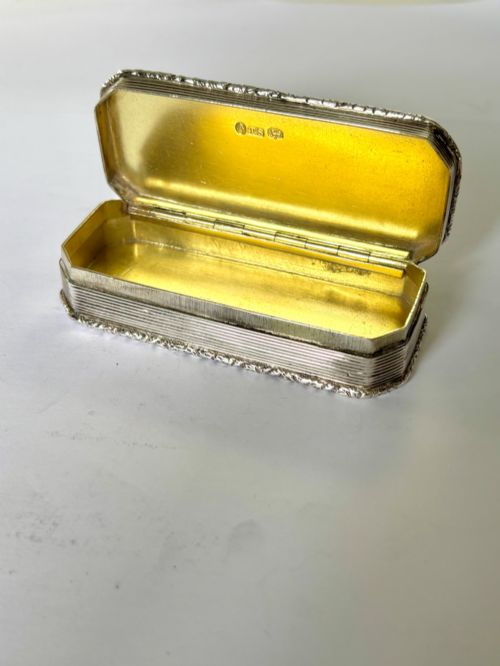
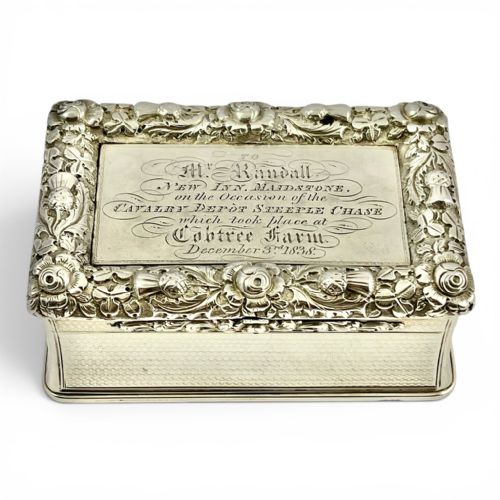
When you search for 1830s sterling silver, you encounter pocket items and dining table pieces spanning the Georgian, Regency, William IV and Victorian eras. Snuff boxes and vinaigrettes dominate the selection, often accompanied by salt cellars, cigar cases, decanter labels, chambersticks and trays.
The objects display diverse decorative approaches characteristic of the period, ranging from restrained engine-turned patterns to exuberant naturalistic floral designs and cast acanthus borders. Pieces such as vinaigrettes occasionally retain their original leather cases and interior sponges, offering a complete historical survival.
How they were made
Makers shaped solid silver and silver-gilt through techniques like engine-turning, floral chasing, and casting to produce heavy borders and detailed naturalistic forms. Guilders applied silver gilt and gold vermeil to the interior surfaces of boxes and vinaigrettes.
Accessory elements such as leather and silk appear in fitted cases, whilst internal gilt grilles in vinaigrettes demonstrate intricate piercing alongside hand engraving.
1830s Sterling Silver Retail Price Guide 2026
Typical asking prices for 1830s sterling silver among the pieces listed under this phrase on Sellingantiques today, from the lower quarter to the upper quarter. They describe what is for sale here now, not the wider market.
Listings feature sterling silver, silver gilt, and vermeil items utilising Georgian, William IV, and Victorian stylistic designs.
What varies in quality
Quality separates objects by the crispness of their chased floral decoration and the weight of the solid silver used in their construction. Maker attribution significantly elevates interest, particularly when works originate from prominent silversmiths active in Birmingham or London.
The presence of original fitted leather cases and the survival of internal elements like sponges or parcel-gilt finishes distinguish exceptional examples from standard production.
Thomas Shaw·Nathaniel Mills·William Bateman·Joseph Willmore·Edward Edwards·James Fray
The 1830s Sterling Silver Glossary
- Sterling silver
- An alloy comprising ninety-two point five percent silver and seven point five percent other metals, typically copper, used across all pieces here.
- Silver-gilt
- Solid silver that has been coated with a thin layer of gold on its surface, often found on the interiors of snuff boxes and vinaigrettes.
- Vinaigrette
- A small decorative box featuring a pierced internal grille, designed to hold a sponge soaked in aromatic vinegar.
- Engine turned
- A geometric pattern mechanically engraved into the metal surface using a lathe, providing texture and reducing glare.
- Chamberstick
- A short candlestick fitted with a pan to catch dripping wax, designed to be carried by hand around a house.
1830s Sterling Silver: Frequently Asked Questions
How do I clean antique silver?
Use a soft microfiber cloth and a mild silver polish specifically formulated for antiques to remove tarnish gently.
Avoid abrasive brushes or harsh chemical dips that can strip away fine chasing and damage gilt surfaces.
What is the difference between a snuff box and a vinaigrette?
A snuff box is designed to hold dry powdered tobacco for inhalation, featuring a tight-fitting solid lid.
A vinaigrette contains a hinged, pierced internal grille over a sponge soaked in scented vinegar for freshening the air.
How can I date 1830s silver pieces?
Examine the hallmarks stamped on the metal, which include city marks, standard marks, and date letters corresponding to specific years.
Maker marks and monarch duty marks also help narrow down the exact year of production during the Georgian and Victorian transitions.
Were these silver items made for everyday use?
Objects such as decanter labels, salt cellars, and chambersticks served active daily functions in dining rooms and bedchambers.
Personal items like snuff boxes and cigar cases were carried in pockets by gentlemen and ladies of the period.