
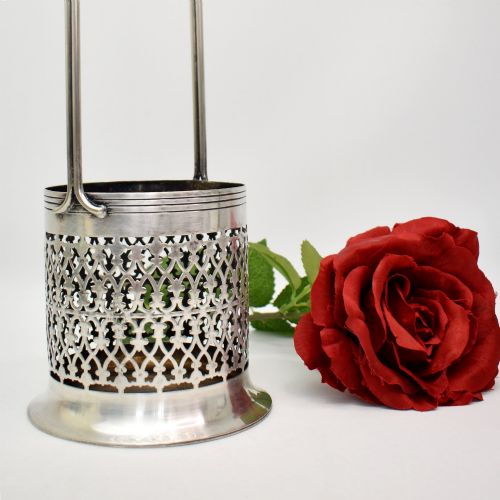


Silver Plated Wine Coaster
A silver plated wine coaster protects the dining table from drips while adding a gleam of polished metal to the bottle.
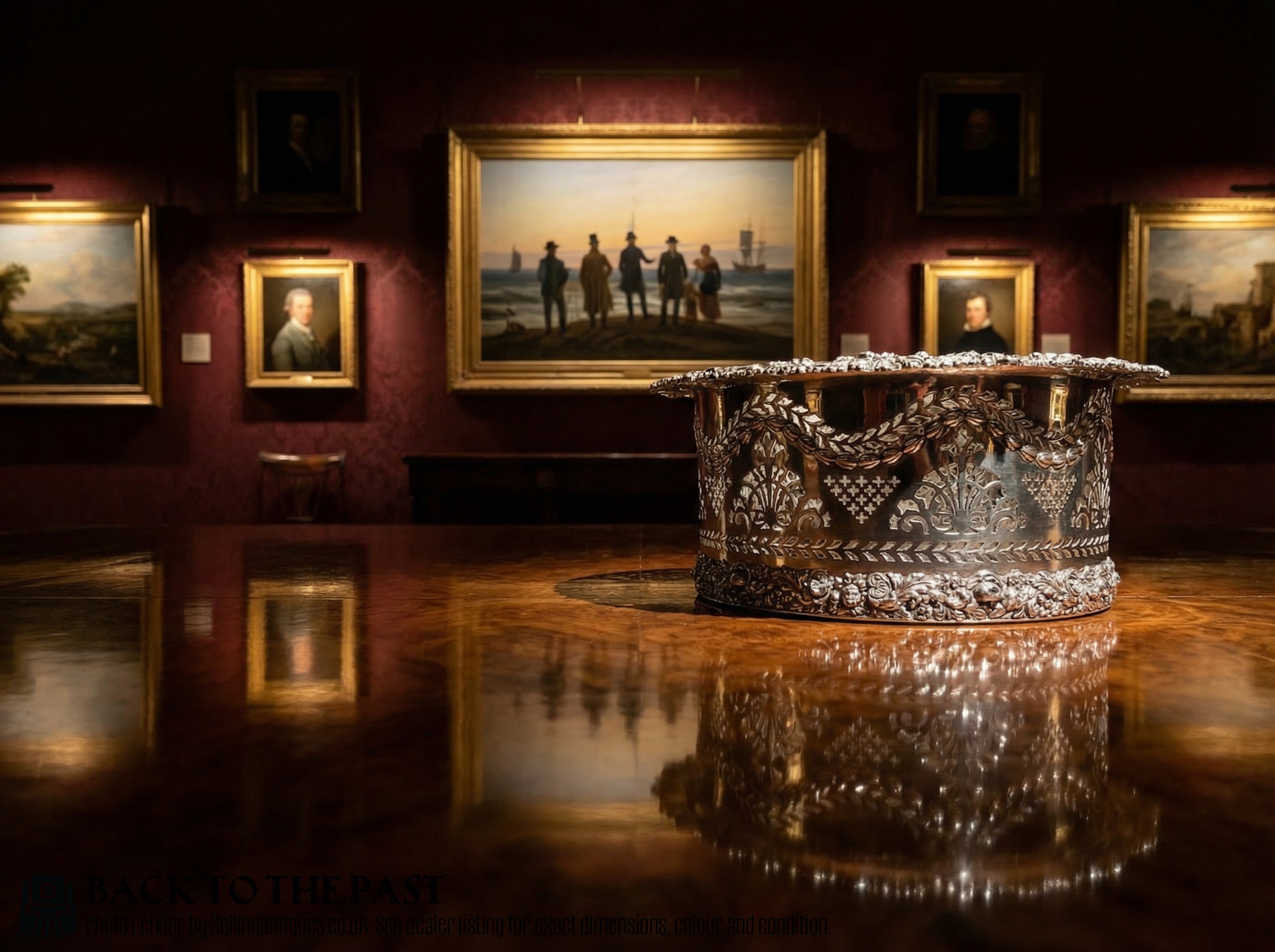
What these pieces are
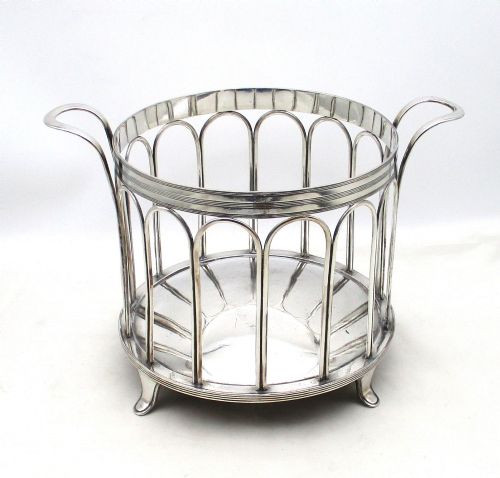
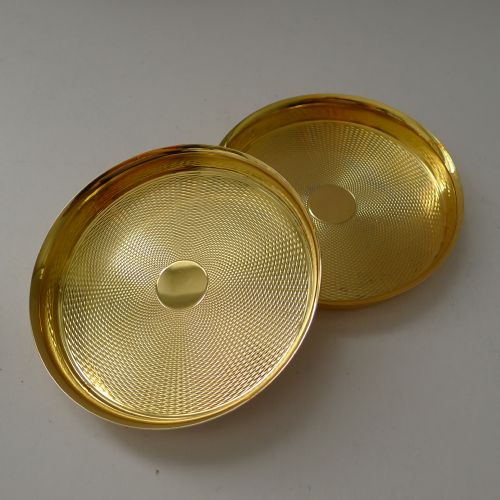
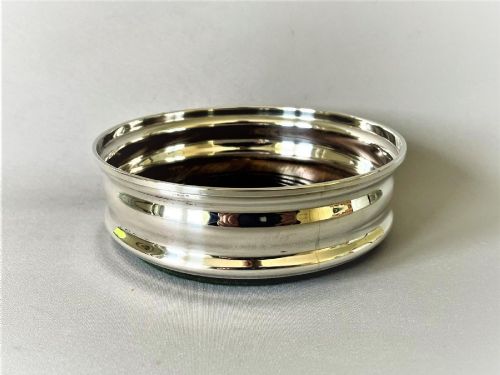
A silver plated wine coaster is a low, round gallery designed to hold a wine bottle, decanter or champagne magnum on the dining table. The selection spans single holders, pairs and larger multiple-bottle stands or trolleys from the Georgian, Victorian and Edwardian periods.
Most examples encountered here date from the nineteenth and early twentieth centuries, reflecting traditional English dining habits. While primarily intended for wine bottles, some versatile forms also double as planters, syphon stands or pen holders.
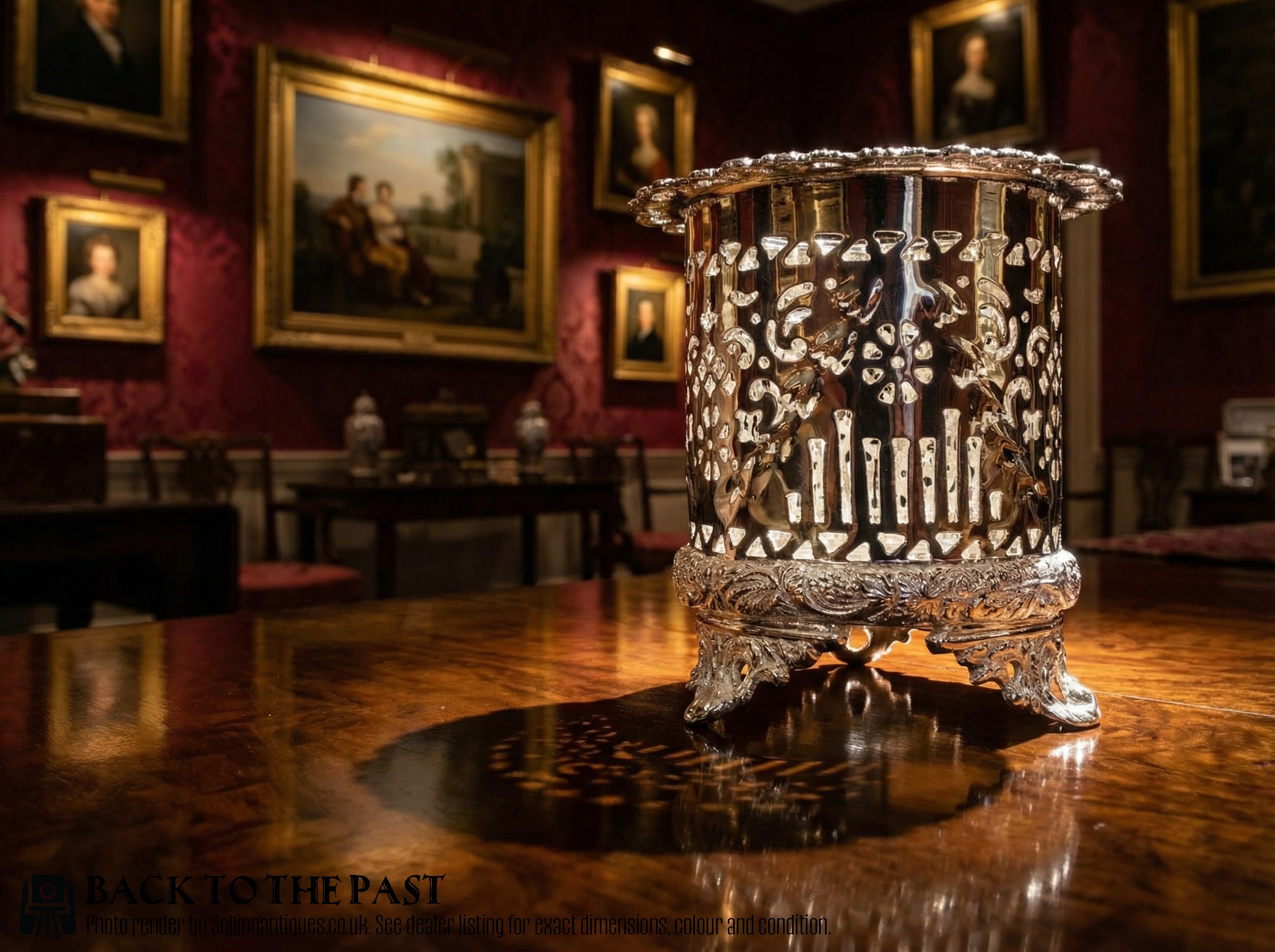
How they were made
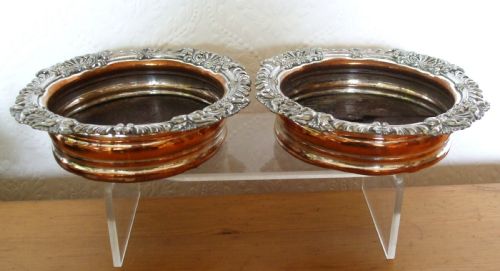
Many early examples utilise Old Sheffield Plate, a technique fusing a thin layer of silver onto a heavier copper base. Later pieces employ standard silver plating over base metals, often combined with turned wooden bases made from mahogany or other timbers.
Maker techniques include pierced galleries, applied grape and vine motifs, and turned wooden inserts affixed to the metal base to cushion the bottle.
Retail Price Guide 2026
Typical UK retail prices for silver plated wine coaster, calculated from the Sellingantiques database of over a million retail prices indexed since 2003. This retail price guide relies exclusively on Sellingantiques data; no external sources or auction records are used, so the figures do not describe the wider market.
Listings feature items spanning the Georgian, Victorian and Edwardian eras, incorporating wood, copper and silver plate.
What varies in quality
Quality rests in the crispness of the chased or pierced decoration and the integrity of the base construction. Heavier metal gauge and substantial wooden inserts distinguish superior examples from lighter utilitarian pieces.
The method of plating also dictates character, as Old Sheffield Plate reveals subtle hints of copper showing through high points of wear, whereas mid-nineteenth-century electroplating offers a more uniform silver coverage.

Mappin & Webb·Hawksworth Eyre And Co·Elkington And Mason·Henry Waterhouse·Christofle France
The Silver Plated Wine Coaster Glossary
- Old Sheffield Plate
- An early method of fusing silver sheet to a copper ingot before rolling into plate. This technique creates a distinctive appearance as underlying copper shows through through age and polishing.
- Gallery
- The upright decorative border surrounding the perimeter of the coaster. These walls are often pierced with geometric or floral patterns.
- Magnum
- A larger vessel size requiring wider container dimensions. Coasters designed for magnums accommodate these broader champagne and wine bottles.
- Syphon Stand
- An alternative tall frame designed to hold mineral water syphons rather than wine bottles. They share the same cylindrical metal construction.
- Wine Trolley
- A multi-wheeled carriage holding one or more coasters. These allow the vessels to be rolled along the dining table during port rotation.
Frequently Asked Questions
What is a wine coaster used for?
A wine coaster holds a bottle or decanter upright on the dining table and catches any condensation or drips running down the glass. This protects polished wooden surfaces from water rings and stains during meals.
Historically, they were passed around the table after the meal during the port or wine service. Today, they serve a similar functional and decorative role on sideboards and dining tables.
How do I tell Old Sheffield Plate from later silver plate?
Old Sheffield Plate was made by fusing silver and copper together before shaping, which often leaves a faint reddish copper tinge visible along exposed rims and high points. Standard electroplating, introduced later in the nineteenth century, provides an even silver layer over base metal.
Examining the edges and underside under good light helps reveal the underlying manufacturing method. Older fused pieces also tend to feel slightly different in weight distribution compared to mass-produced electroplated items.
Can these coasters hold modern wine bottles?
Most standard antique coasters accommodate traditional wine bottle shapes comfortably. However, wider burgundy bottles or taller champagne magnums require specific larger holders designed for that purpose.
Checking the internal diameter of the wooden base ensures a proper fit for contemporary bottle dimensions. Multi-bottle frames offer alternative spacing for varying bottle girths.
How do I care for wooden bases in antique coasters?
The turned wooden inserts require protection from excess moisture and harsh cleaning agents. Wiping condensation promptly prevents the timber from warping or staining.
Periodic application of appropriate wood wax maintains the polish of the mahogany or timber base. Silver cleaner should be kept away from the wood to avoid discoloration.