




Silver Plated Tantalus
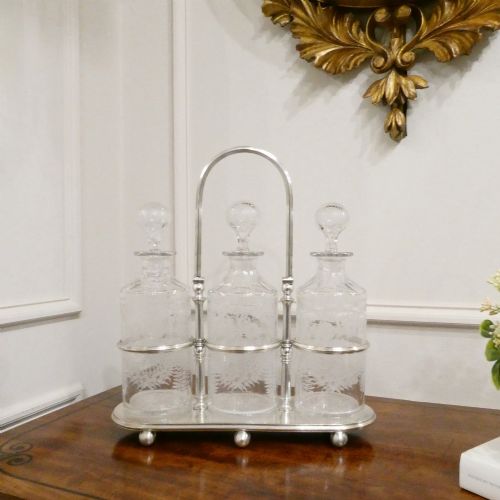
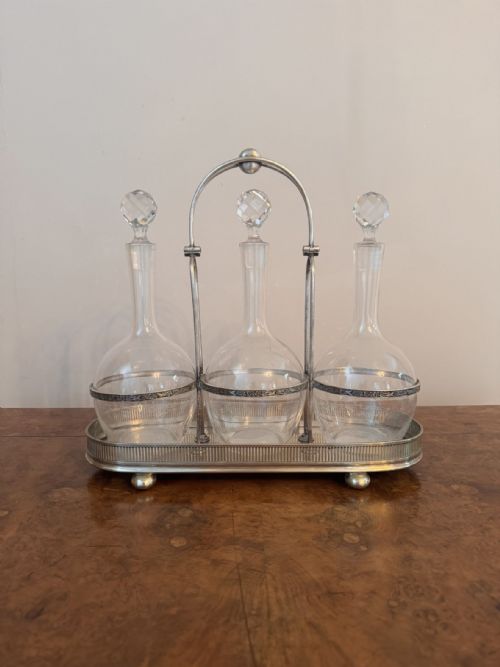
A silver plated tantalus secures fine spirits within a locking metal frame, offering a glimpse of the whiskey while keeping the contents safe.
Silver Plated Tantalus
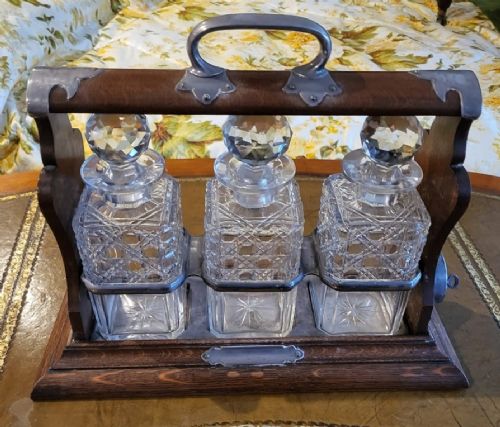
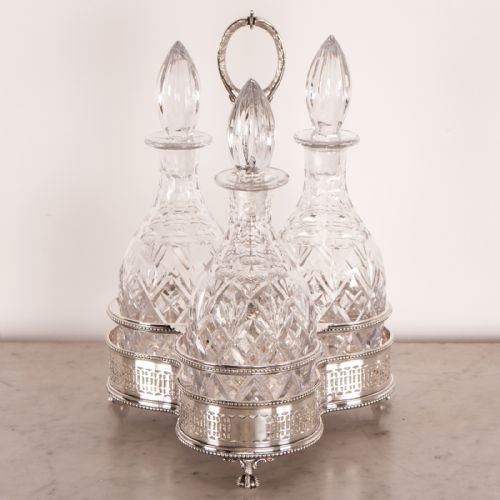
A silver plated tantalus appears primarily in Victorian and Edwardian iterations, designed to hold two or three glass decanters securely behind a locking mechanism.
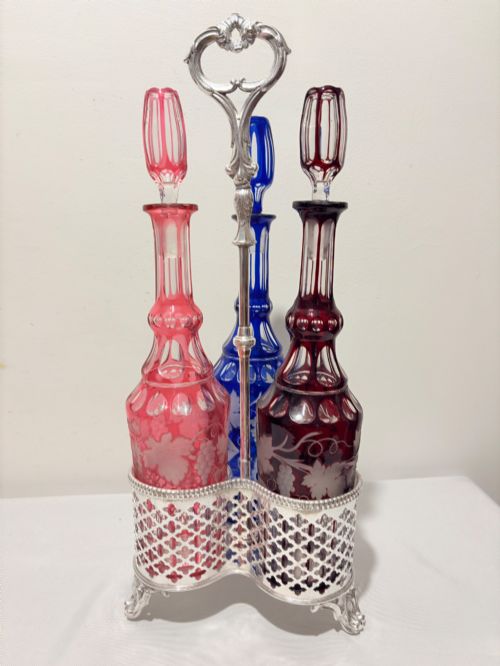
The form ranges from simple decanter stands and cruets to elaborate partner's boxes and travelling bars housing cut glass or crystal bottles.
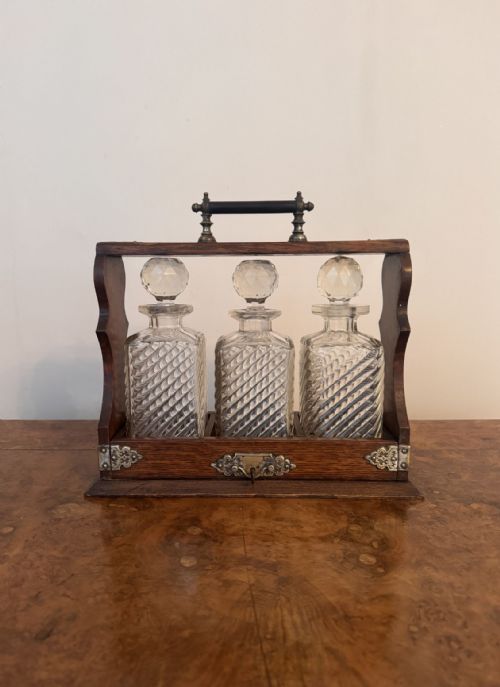
Oak forms the primary timber for the bases, alongside walnut, coromandel, and marquetry inlay, reflecting late nineteenth and early twentieth-century entertaining habits.
Materials and Technique
Makers fused silver plate or Old Sheffield Plate onto base metals to create the gleaming frames that lock the decanters in place.
Timber bases in oak and exotic hardwoods like coromandel were joined with precision, often incorporating handles and lockable drop-front or lifting mechanisms.
Cut glass, cut crystal, and frosted barrel dispensers were paired with the metalwork, sometimes accompanied by tot pails and matching glasses.
Silver Plated Tantalus Retail Price Guide 2026
Typical asking prices for silver plated tantalus among the pieces listed under this phrase on Sellingantiques today, from the lower quarter to the upper quarter. They describe what is for sale here now, not the wider market.
Named after the mythological king who was kept just out of reach of food and drink.
Assessing Quality
Quality rests in the weight and thickness of the silver plate over the metal frame, alongside the crispness of the cutting on the glass decanters.
The sophistication of the locking mechanism and the selection of cabinet timbers, such as figured oak or coromandel, distinguish standard examples from premier workshop productions.
Walker And Hall·Elkington·The Goldsmith Co·Hukin And Heath·Philip Ashberry·Mappin Brothers·Hobbs And Co·Betjemann And Sons·John Round·Mappin And Webb·Fenton Bros Sheffield
The Silver Plated Tantalus Glossary
- Tantalus
- A locking drink container frame that displays decanters while preventing unauthorised access to the spirits inside.
- Old Sheffield Plate
- An early fusing technique where a sheet of silver is fused to a copper base before rolling.
- Coromandel
- A dense, heavily grained southeast Asian hardwood prized for luxury Victorian cabinet work and tantalus bases.
- Cut Crystal
- Glass with high lead content carved with geometric facets that catch the light within the metal frame.
- Tot Pail
- A small metal bucket associated with antique barware sets for holding ice or water.
Silver Plated Tantalus: Frequently Asked Questions
What is a silver plated tantalus?
A silver plated tantalus is a locking barware stand designed to display spirit decanters while withholding the key to prevent uninvited drinking.
These pieces combine metalwork frames, timber bases, and cut glass bottles into a single locking unit.
How do you open the locking mechanism?
Most models require a working key to release a side or top locking bar that otherwise traps the stoppers of the decanters.
Without turning the key in the integrated lock, the metal retaining arm stays fixed across the necks of the bottles.
Were these made in different sizes?
The frames accommodate two, three, or occasionally four bottles, depending on the intended capacity and the room where they stood.
Smaller two-bottle versions suit compact sideboards, while grander triple-bottle stands occupy larger partner desks and dining rooms.
What timber is used for the bases?
Oak is the wood most frequently encountered in these stands, appearing in plain, quarter-sawn, and tiger grain varieties.
Walnut and exotic coromandel also feature in the construction of the bases and boxes.