




Silver Plated Serving Fork
These silver plated serving fork examples offer functional elegance for the dining table, drawing on Victorian and Edwardian craftsmanship to elevate everyday hosting.

Silver Plated Serving Fork
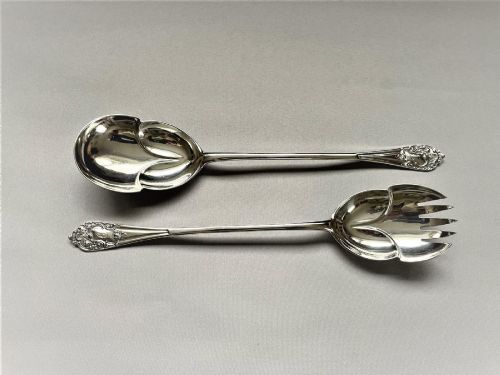
When searching for a silver plated serving fork, buyers encounter a variety of dining utensils intended for specific foods. The selection spans distinct forms including fish servers, salad servers, and dedicated carving sets.
Most examples originate from the Victorian and Edwardian periods, reflecting the formal dining customs of the nineteenth and early twentieth centuries. These range from single forks to paired utensils and boxed sets.
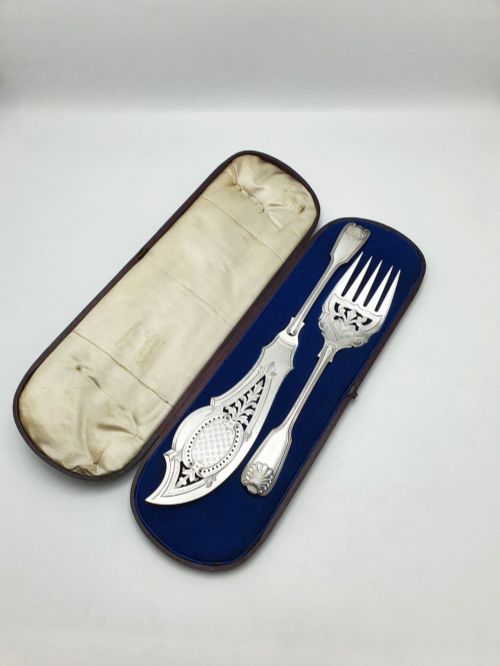
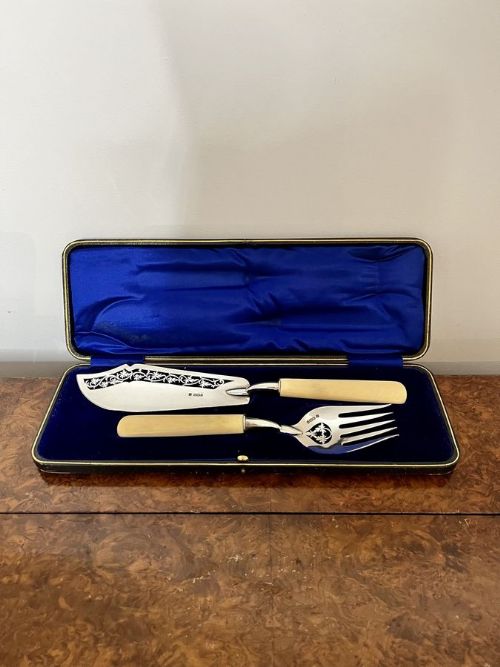
The assortment includes specialised pieces with decorated tines and specialised handles, designed to serve specific courses at the table. Fish serving sets and salad servers dominate the available forms from this era.
How they were made
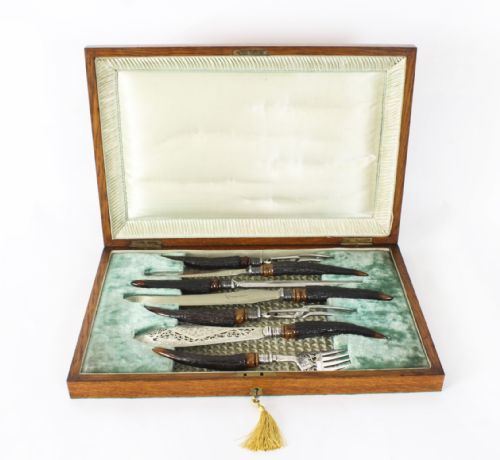
The construction utilises a base metal coated in silver, paired with organic handle materials such as stag antler and horn. Steel components frequently form the functional blades and tines of carving and serving implements.
Engraving often decorates the metal surfaces, featuring detailed motifs such as hunting or dog scenes. Handles are shaped from natural materials like wood, mother-of-pearl, and velvet-lined presentation boxes frequently house the complete sets.
Several Victorian fish forks feature charmingly detailed hunting and dog engravings nibbling across the tines.
What varies in quality
Quality differentiates through the depth and clarity of the engraved decoration on the metal components. Finer examples display crisp, detailed hunting scenes or floral patterns across the surface of the fork.
The selection of handle materials also distinguishes the grade of the piece, with well-matched stag antler and polished horn representing higher standards of manufacture. Complete boxed sets maintaining their original presentation containers command greater attention.
The Silver Plated Serving Fork Glossary
- Silver Plate
- A base metal coated with a thin layer of silver. This technique allowed manufacturers to produce decorative tableware at a more accessible cost than solid sterling silver.
- Stag Antler
- A natural material utilised for knife and fork handles. It provides a textured grip and a distinctive appearance favoured in nineteenth-century dining implements.
- Fish Servers
- Utensils specifically designed for portioning fish courses at the table. They typically comprise a wide blade and a matching fork with pierced or engraved decoration.
- Edwardian
- Pertaining to the period of the reign of King Edward VII from nineteen hundred and one to nineteen hundred and ten. Pieces from this era often feature lighter, refined designs compared to earlier Victorian items.
Silver Plated Serving Fork: Frequently Asked Questions
How do I clean silver plated forks?
Clean silver plated items gently using a soft cloth and a specialised silver polish designed to protect the plated surface. Avoid harsh abrasives that might wear away the silver coating over time.
Store the utensils in dry conditions, preferably within a lined box or wrap, to minimise tarnishing between uses.
Can I use antique serving forks daily?
These forks were built for dining use, but their age requires a degree of care during regular handling. Hand washing is essential to preserve the integrity of the silver plate and the organic handle materials.
Avoid putting them in a dishwasher, as the heat and harsh detergents can damage horn, antler, and the plated finish.
How do I date a silver fork?
Dating relies on stylistic clues, engraved decorative motifs, and any accompanying hallmarks stamped into the metal. Victorian and Edwardian pieces often exhibit distinct manufacturing marks and aesthetic movements characteristic of their decade.
Examining the construction of the handle and the type of engraving provides further context for the period of manufacture.