




Victorian Silver Plated Forks
Victorian silver plated forks bring refined dining history to the table, combining heavy plate with organic handles like mother-of-pearl, antler, and horn.
Victorian Silver Plated Forks
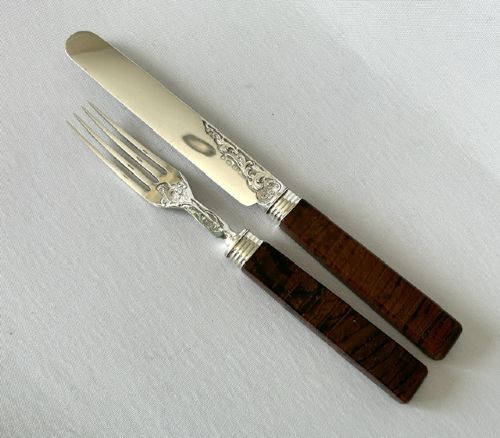
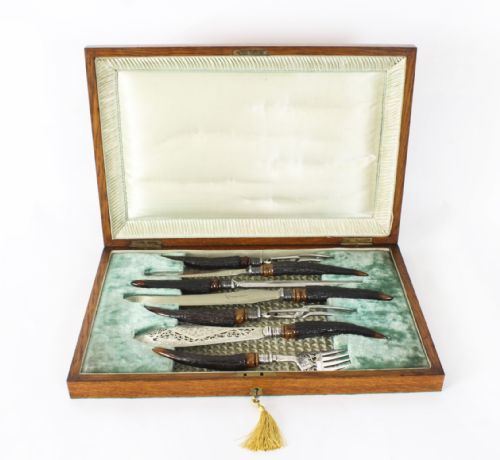
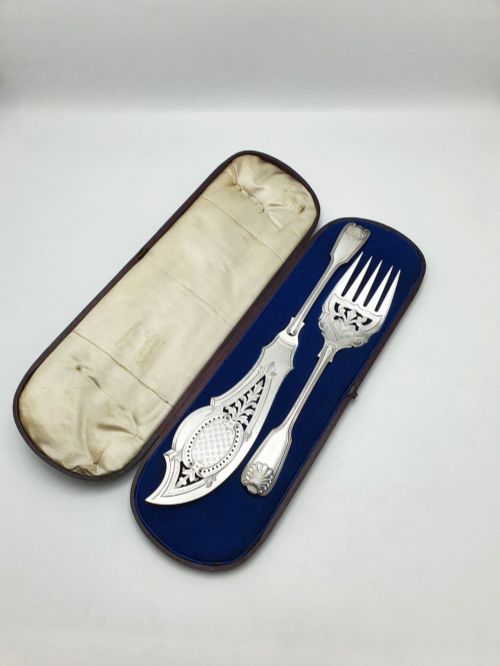
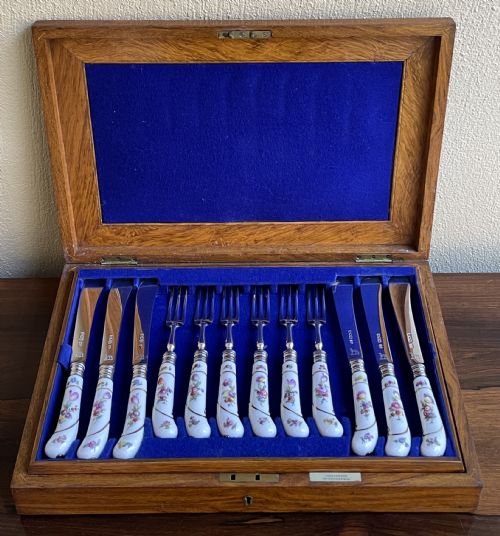
Victorian silver plated forks span specialised table service items including fish servers, dessert cutlery sets, hors d'oeuvres forks, and carving sets alongside boxed canteens. These pieces originate primarily from the Victorian and Edwardian periods, stretching from the mid-nineteenth century into the early twentieth century.
Handles introduce considerable variety to these items, utilising natural substances including mother-of-pearl, horn, antler, and various woods alongside the core silver plate. Engraved decoration appears across many blade surfaces, depicting hunting scenes, floral motifs, and detailed geometric patterns.
How they were made
Makers applied silver plating techniques over base metal substrates to create durable dining implements that imitated solid silver at a lower cost. This plating process was combined with skilled hand engraving on blades and tines to produce intricate surface patterns.
Craftsmen shaped natural materials like mother-of-pearl, deer antler, and horn to form the handles, securing them to the metal shafts with pins and ferrules. Fitted oak and wooden presentation cases lined with velvet or silk were constructed specifically to house these multi-piece cutlery sets.
Listings feature silver plate combined with oak, velvet, silk, mother-of-pearl, and antler across Victorian and Edwardian periods.
What varies in quality
The standard of engraving dictates much of the visual merit, with deeply etched hunting scenes or botanical designs marking out superior items from plain stamped metal. Preserved original presentation cases lined in silk or velvet elevate the desirability of a service.
The integrity and match of organic handle materials such as mother-of-pearl, horn, and antler separate fine sets from standard examples. Intact silver plate without extensive base metal show-through indicates careful historical use and storage.
Carrington·Thomas Harwood and Co.
The Victorian Silver Plated Forks Glossary
- Silver Plate
- A thin layer of silver bonded to a base metal substrate. This technique allowed Victorian manufacturers to produce bright dining utensils at a commercial scale.
- Mother-of-Pearl
- The iridescent internal layer of certain mollusc shells used frequently for cutlery handles. It provides a smooth, pearlescent grip on dessert and fruit sets.
- Hors d'oeuvres Forks
- Small specialised forks designed for serving appetizers or pickles. They appear in dedicated boxed sets from the late nineteenth century.
- Canteen
- A fitted box or cabinet designed to store a complete set of cutlery. These wooden cases often feature multiple internal tiers lined with velvet or silk.
Victorian Silver Plated Forks: Frequently Asked Questions
What are victorian silver plated forks used for?
These utensils were created for specific dining courses, including fish, dessert, fruit, cheese, and hors d'oeuvres, rather than general everyday meals.
Many sets include matching servers or knives designed to handle specific foods during formal Victorian dining rituals.
How do I care for silver plated cutlery?
Gentle hand washing in warm soapy water with a soft cloth preserves the delicate silver plate and prevents damage to organic handles.
Harsh abrasive cleaners and modern dishwashers strip away the thin silver layer and ruin natural materials like mother-of-pearl and horn.
Are original presentation cases common?
Many sets survive alongside their original fitted wooden or oak presentation cases, often lined with velvet or silk to protect the contents.
These fitted boxes indicate higher-status dining sets that were intended as gifts or special household possessions.
How can I tell the period?
Stylistic clues such as engraved hunting motifs, specific handle materials like antler, and maker attributions help date the pieces to the Victorian or Edwardian eras.
Fitted wooden canteens and accompanying presentation boxes also reflect the manufacturing standards of the late nineteenth and early twentieth centuries.