



Victorian Dining Table Server
These robust pieces of dining furniture meet the search phrase victorian dining table server by providing functional surface space and storage during formal meals.
Victorian Dining Table Server
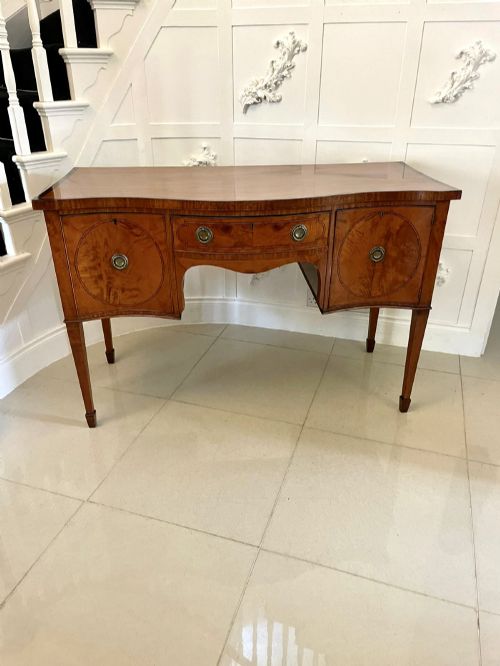
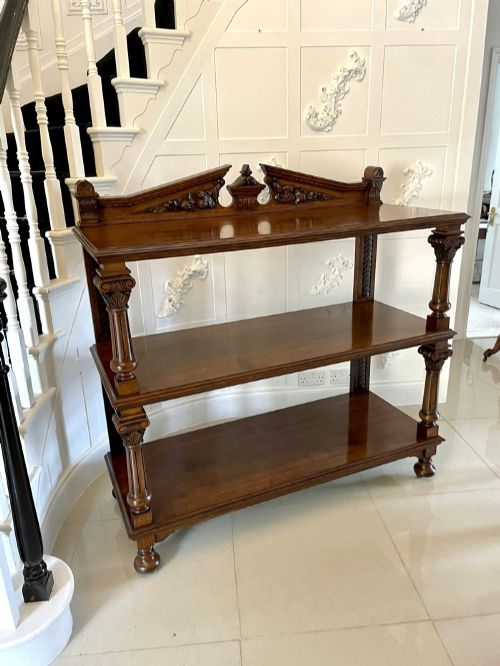
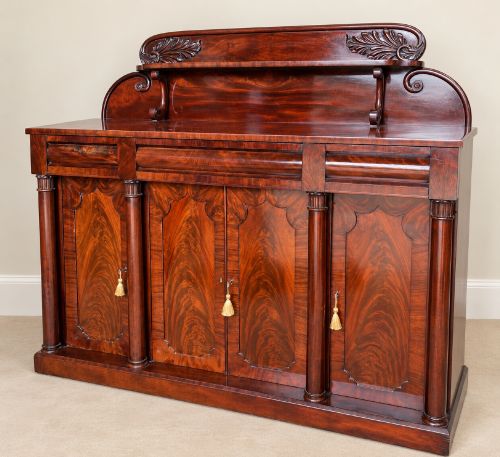
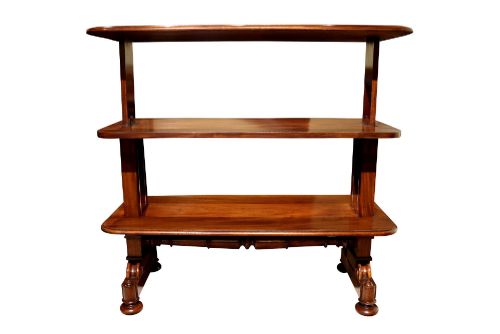
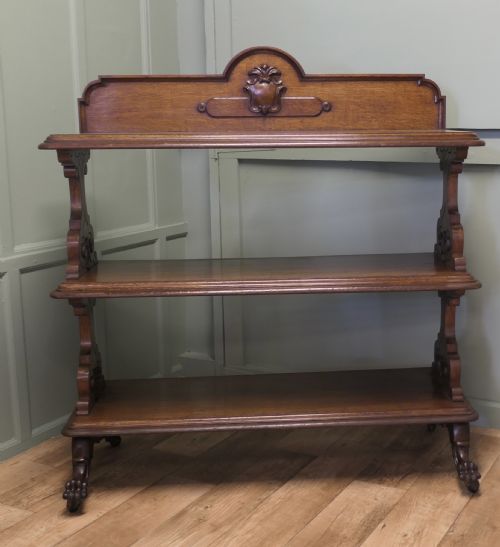
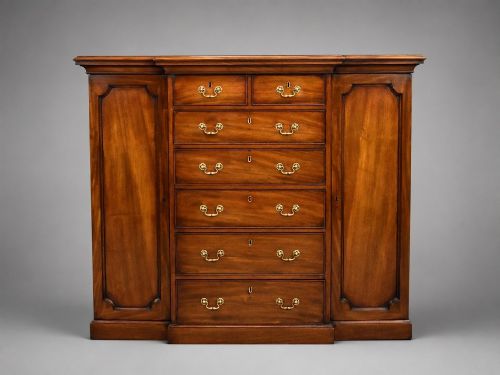
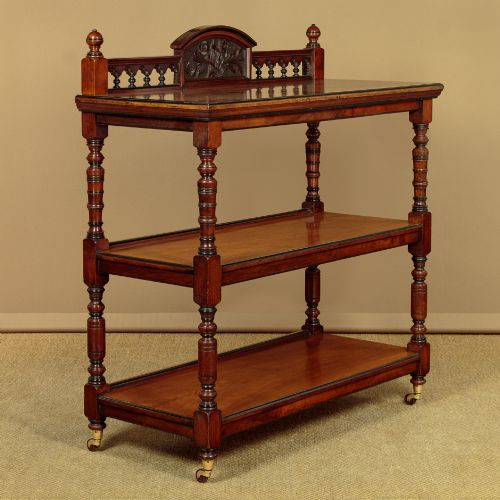
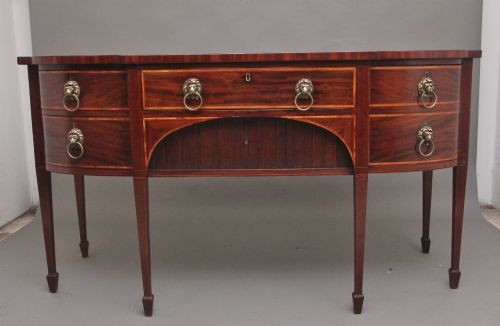
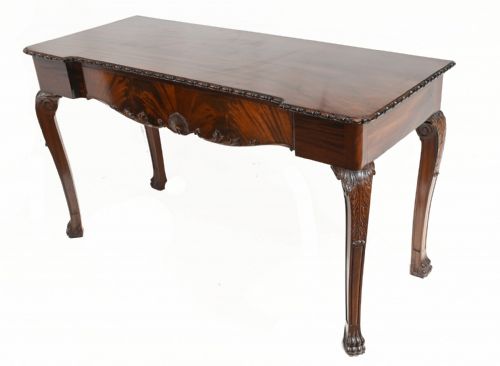
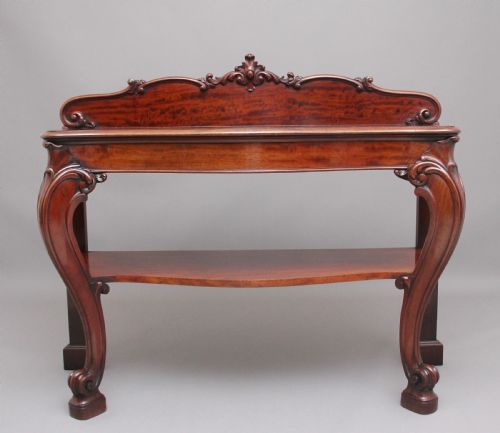
A victorian dining table server encompasses large sideboards, multi-tiered dumbwaiters, and serving tables designed for the dining room. These forms appear across the nineteenth century, including specific decades such as eighteen eighty and eighteen ninety.
Mahogany and carved oak dominate the selections, alongside walnut, pollard oak, and pitch pine. Pieces arrive in various regional styles like William IV, Chippendale Revival, and Aesthetic Movement.
Buyers commonly encounter mahogany sideboards with cupboards and three-tier dumbwaiters equipped with revolving shelves or rise and fall mechanisms.
Materials and Construction
Cabinet makers built these servers using solid timbers and rich veneers, applying flame mahogany veneer and walnut over sturdy structural frames. Brass hardware, sterling silver mounts, and silver plate elements provide functional fittings.
The listings show pieces spanning from the eighteen forties through to the Edwardian period, constructed in mahogany, oak, walnut, and pitch pine.
Judging Quality
The standard of timber selection and depth of carving separate basic examples from finer works. Superior pieces display carefully matched veneer grains and crisply hand-carved ornamentation.
Proportion and scale dictate utility, with unusually small proportions or multi-tiered revolving designs commanding attention for their clever engineering and refined presence.
Gillows
The Victorian Dining Table Server Glossary
- Dumbwaiter
- A multi-tiered serving stand used to hold dishes and utensils near the dining table. These items often feature revolving trays or multiple tiers for food presentation.
- Sideboard
- A large dining room cabinet designed for storing tableware and serving food. They frequently include cupboards, drawers, and raised back shelves.
- Pollard oak
- Timber taken from trees that were pollarded, creating a dense wood with highly decorative knot clusters. Cabinet makers utilised this timber for striking cabinet doors and panels.
- Aesthetic movement
- A nineteenth century design style emphasising visual beauty over narrative meaning. Furniture from this movement employs clean lines and dark contrasting woods.
Victorian Dining Table Server: Frequently Asked Questions
What is a dumbwaiter used for?
A dumbwaiter serves as a multi-tiered stand placed beside the dining table to hold dishes, glasses, and serving items.
These pieces allowed diners to access extra plates and courses without relying on constant service from staff.
How do I identify a Victorian sideboard?
Victorian sideboards typically display heavy timber construction in mahogany or oak, often decorated with carved panels and substantial brass handles.
They incorporate cupboards and drawers designed specifically for dining room storage and food service.
Where does pollard oak come from?
Pollard oak derives from trees that were cut back near the trunk to encourage dense, bushy branch growth.
This pruning method produces timber with distinctive swirling grain patterns highly valued by nineteenth century cabinet makers.
What distinguishes an Aesthetic Movement server?
Aesthetic Movement servers lean towards simpler structural forms and darker walnut timbers that highlight natural wood grains.
They reject heavy historical revival ornamentation in favour of refined geometric lines and subtle decorative details.