



Silver Plated Preserve Dish
A silver plated preserve dish brings table service from the Victorian, Edwardian, and Art Deco eras straight to the modern home.
Silver Plated Preserve Dish
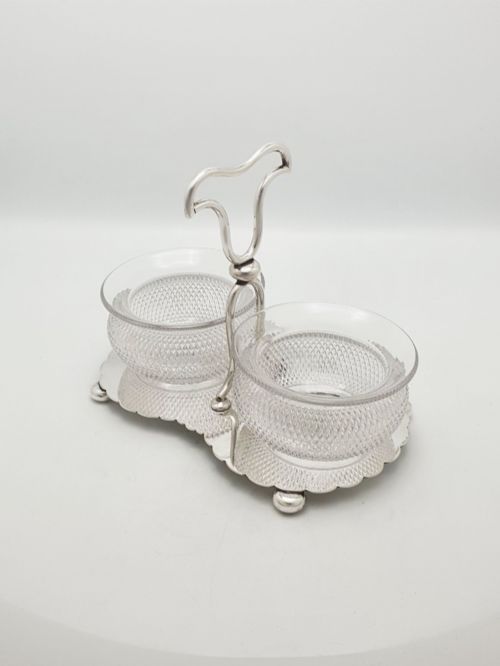
A silver plated preserve dish serves jam, butter, or condiments on the dining table, combining metal stands with glass liners. You will frequently encounter cranberry glass, cut glass, and vaseline glass resting in silver plated holders originating from the Victorian, Edwardian, and Art Deco periods.
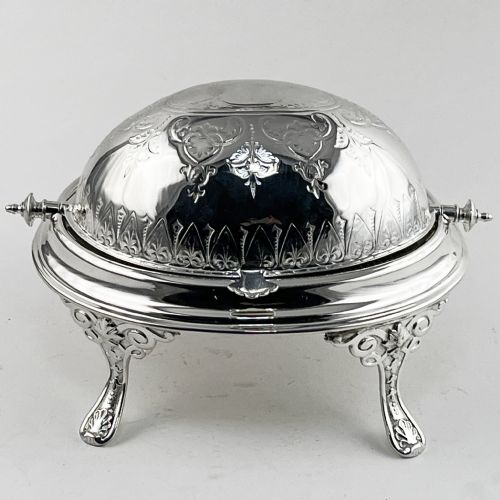
The forms range from simple single bowls with spoons to twin glass bowls on stands, revolving lidded butter dishes, and novelty designs shaped like military caps. These serveware pieces reflect the dining customs of the late nineteenth and early twentieth centuries, particularly breakfast and afternoon tea.
Most examples date between eighteen ninety and nineteen thirty, spanning the late Victorian years through the Edwardian era and into the geometric lines of Art Deco. Scottish origins and oak frames also appear among the selections, demonstrating regional variation in manufacture.
Materials and construction
The metal components rely on silver plate and electroplated nickel silver as a base beneath the silver layer. Craftsmen shaped these mounts through piercing, casting, and soldering to create decorative stands and fitted lidded frames.
Glass liners were blown, moulded, or deeply cut to fit the specific contours of the metal frames. Cranberry glass and vaseline glass achieve their distinct hues through mineral additives in the melting process, whilst clear glass relies on sharp mechanical cutting for pattern and texture.
Listings feature pieces from the Victorian, Edwardian, and Art Deco periods, utilising cranberry glass, vaseline glass, and cut glass paired with silver plate.
Evaluating quality and design
The thickness of the silver plating and the crispness of the chased or pierced metalwork determine the refinement of the stand. Superior pieces show precise detailing on handles, feet, and lids, while simpler versions rely on plain polished surfaces.
The quality of the glass insert dictates much of the visual appeal, particularly in the depth of colour found in cranberry and vaseline examples or the precision of wheel-cutting on clear glass. Matching original spoons and intact glass liners without chips enhance the completeness of the object.
The Silver Plated Preserve Dish Glossary
- Silver Plate
- A base metal, such as nickel silver, coated with a thin layer of pure silver. This technique provided the appearance of solid silver at a lower cost for domestic dining wares.
- Cranberry Glass
- A rich red-pink glass created by adding gold chloride to the molten batch. It became exceptionally popular for Victorian tablewares and dessert services.
- Vaseline Glass
- A transparent or translucent yellow-green glass containing uranium dioxide. It glows under ultraviolet light and found frequent use in decorative domestic items.
- Electroplated Nickel Silver
- An alloy of copper, nickel, and zinc coated with silver using an electrical current. This method became standard industrial practice during the nineteenth century.
- Cut Glass
- Glass decorated by cutting facets and patterns into the surface using rotating wheels. The technique creates bright refractive patterns across bowls and dishes.
Silver Plated Preserve Dish: Frequently Asked Questions
What was a silver plated preserve dish used for?
These dishes held jams, jellies, marmalade, or butter for breakfast and tea tables in Victorian and Edwardian households. The glass liner contained the food to protect the metal from acidic preserves.
They sat centrally on the dining table alongside toast racks and tea services, often accompanied by a small matching spoon for serving.
How do I identify a Victorian preserve dish?
Victorian examples often feature ornate pierced silver plated stands, heavy cranberry glass liners, and sometimes revolving lids. They tend to have floral or naturalistic decorative motifs typical of the late nineteenth century.
Later Edwardian and Art Deco pieces shift towards lighter frames or geometric shapes, while retaining the combination of plated metal and coloured glass.
Can I use these dishes for daily dining?
Many people continue to use these pieces for serving jams or condiments during breakfast or afternoon tea. Hand washing the glass liners and silver plated stands preserves the finish and prevents damage to the plating.
Harsh abrasives and dishwashers should be avoided to protect both the glass and the silver surface.
What is the difference between cranberry and vaseline glass?
Cranberry glass gets its distinct pinkish-red shade from gold content mixed into the glass during production. Vaseline glass displays a pale yellow-green tint caused by small amounts of uranium used as a colourant.
Both types were widely paired with silver plated stands during the Edwardian and late Victorian periods.
Are the spoons usually original to the dish?
Some pieces retain their original matched spoons, particularly those featuring specific pierced designs or matching plating. Finding a complete set with both the correct glass liner and spoon adds to the historical interest.
Replacements are common due to the small size of the spoons making them easy to misplace over decades of use.