



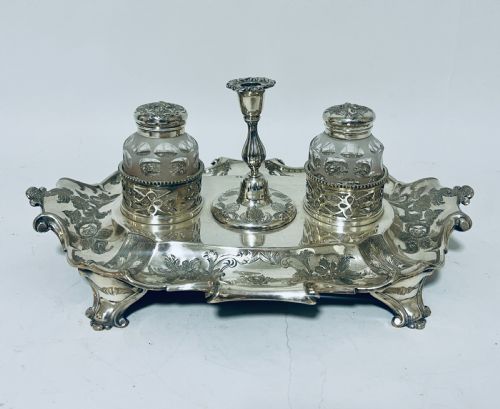


Silver Plated Inkwell
A silver plated inkwell brings the weight of the writing desk into daily life, offering a tactile anchor for correspondence.
Silver Plated Inkwell
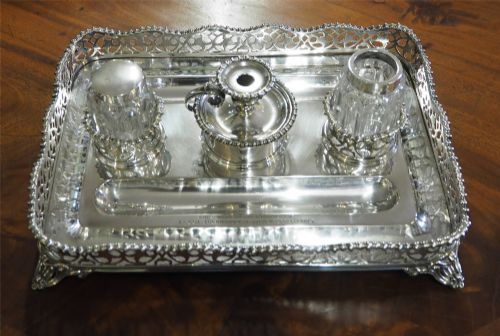
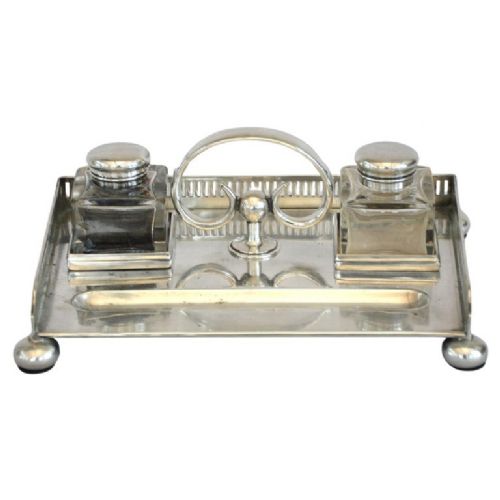
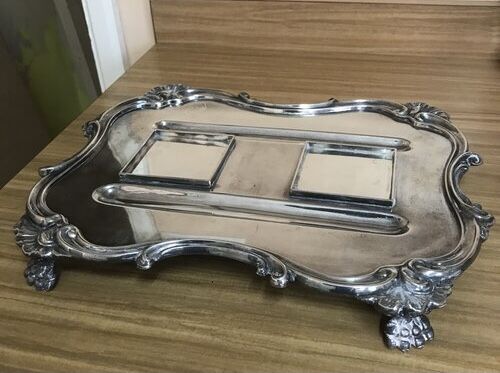
When searching for a silver plated inkwell, collectors encounter everything from simple travel pieces to large desk stands holding pen rests and multiple bottles. These items served as the centrepieces of 19th-century and early 20th-century writing desks, functioning as both utility objects and decorative desk accessories.
The pieces appearing on this page span the Victorian and Edwardian eras, alongside earlier Georgian examples and Sheffield plate pieces. Forms range from classical double inkstands to unusual novelty items modelled as animals, horns, and sporting equipment.
Materials and Manufacture
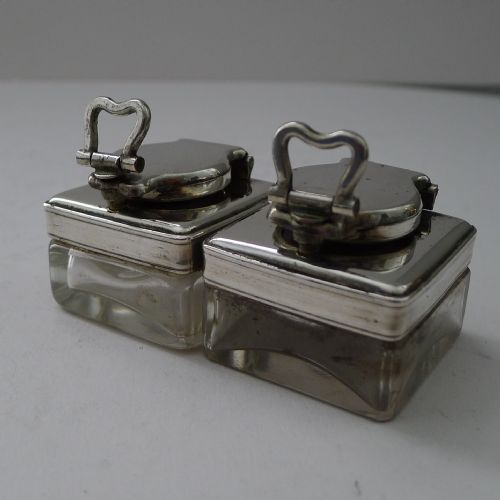
Makers fused silver onto base metals using traditional Sheffield plating techniques or later electroplating methods onto metals like copper and white metal. Many designs incorporate heavy cut glass or crystal reservoirs fitted with hinged metal lids to contain the ink securely.
The bases frequently combine metalwork with organic materials such as oak, horn, and wood to create substantial desk stands and tidies. Decorative details employ revivalist styles, incorporating cast motifs from Egyptian, Rococo, and classical design repertoires.
Silver Plated Inkwell Retail Price Guide 2026
Typical asking prices for silver plated inkwell among the pieces listed under this phrase on Sellingantiques today, from the lower quarter to the upper quarter. They describe what is for sale here now, not the wider market.
Writers of the past could dip their pens into inkwells shaped like roosters, armadillos, stags, and curling stones.
Assessing Quality and Execution
The distinction between standard desk pieces and the finest examples rests on the crispness of the casting and the thickness of the plating. Heavy mounts, intact glass reservoirs without chips, and well-executed novelty details elevate an item above mass-produced utilitarian wares.
Maker attribution also influences standing, with pieces bearing marks from established firms commanding greater interest. The integration of materials, such as combining horn or oak with substantial silver plate, determines the overall balance and presence of the stand.
Wilkinson and Co·Walker And Hall·Daniel Holy·James Deakin·Elkington and Co·Mappin and Webb·Martin Hall
The Silver Plated Inkwell Glossary
- Sheffield plate
- An early method of fusing a thin sheet of silver to a copper ingot before rolling and shaping. This technique predates modern electroplating.
- Standish
- A complete desk accessory set incorporating inkwells, sanders for drying ink, and pen holders on a single tray. These were central fixtures of formal writing desks.
- Novelty inkwell
- An ink container shaped to resemble an animal, figure, or object rather than a standard vessel. Examples modelled as birds, golf items, and curling stones are typical.
- Cut glass
- Glass decorated by cutting geometric or floral patterns into the surface using a wheel. It provides heavy, clear reservoirs for ink within metal stands.
- Electroplating
- A process using electrical current to deposit a layer of silver onto a base metal object. This method superseded Sheffield plate in the mid-19th century.
Silver Plated Inkwell: Frequently Asked Questions
How do I date a silver plated inkwell?
Dating relies on hallmarks, registration numbers, and stylistic cues such as Victorian ornamentation or Edwardian proportions. Early 19th-century pieces often utilise Sheffield plate characteristics before electroplating became widespread.
Examining the construction methods of the glass inserts and the base materials provides further context for the period of manufacture.
What is the difference between an inkstand and an inkwell?
An inkwell is simply the small vessel that holds the ink, whereas an inkstand or standish is a larger tray that holds one or more inkwells along with pen rests and other desk accessories.
Standishes often include compartments for wafers, sealing wax, or sand.
Can I still use an antique inkwell for writing?
These pieces can hold ink, though many collectors prefer to display them as decorative objects rather than active desk tools. Glass reservoirs should be checked for secure seals if used.
Modern ink can sometimes stain older glass or corrode historic metal mounts if left uncleaned.
How should I clean silver plated items?
Maintenance requires gentle cleaning with a soft cloth and specialised silver cleaner formulated for plated items. Avoid aggressive scrubbing that might wear through the thin silver layer to the base metal.
Keeping pieces away from moisture and direct sunlight preserves both the metal surface and any organic elements like oak or horn.