





Silver Plated Food Cover
A silver plated food cover brings grand dining room presence to the table, keeping roasts warm beneath gleaming metal domes.
Silver Plated Food Cover
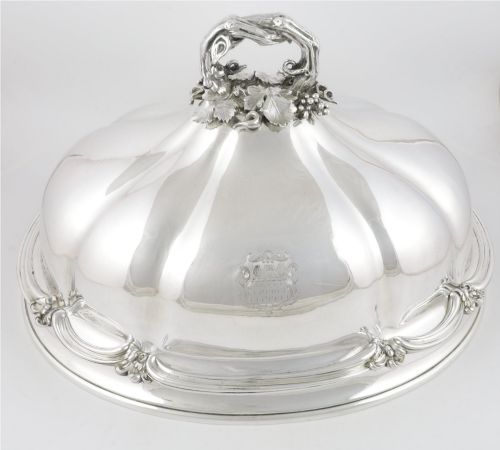
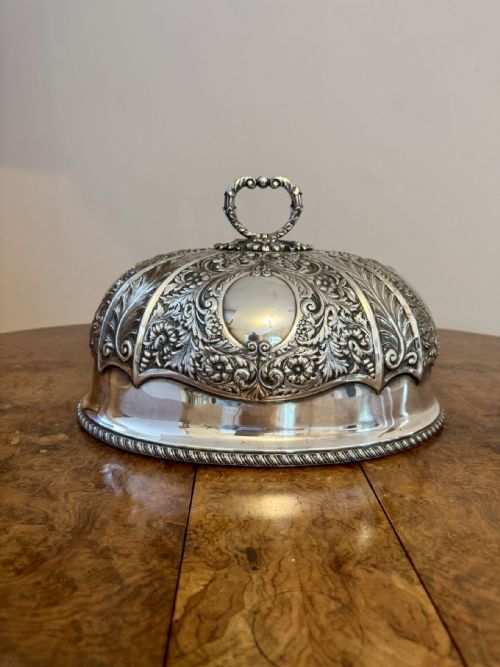
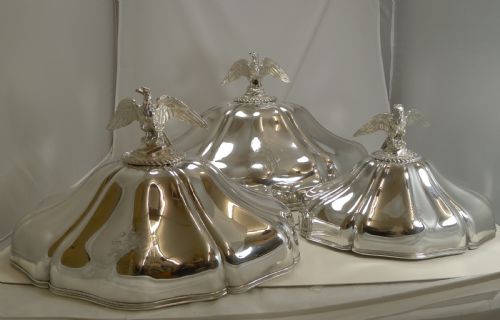
When searching for a silver plated food cover, collectors encounter substantial meat domes, cloches, and warming dishes designed to protect and present fine meals. These serveware pieces originate from the Georgian, Victorian, and Edwardian periods, reflecting centuries of formal dining traditions.
Originating primarily from English workshops, these items span styles from Regency elegance to ornate Victorian ornamentation. Each piece serves both a practical thermal function and a decorative display purpose in the dining room.
How they were made
Early examples utilise Old Sheffield Plate, a technique fusing a thin sheet of silver to a thicker copper base. Later Victorian and Edwardian items employ electroplated nickel silver, known as EPNS, which provided a durable and even metallic coating over base metal.
Artisans formed these domes by hammering and shaping metal sheets, adding cast handles and applied decorative borders. The resulting structures combined strength with the polished appearance of solid silver.
Silver Plated Food Cover Retail Price Guide 2026
Typical asking prices for silver plated food cover among the pieces listed under this phrase on Sellingantiques today, from the lower quarter to the upper quarter. They describe what is for sale here now, not the wider market.
Listings feature Old Sheffield Plate, EPNS, and copper materials across Georgian, Victorian, and Edwardian periods.
What varies in quality
Quality rests in the weight of the metal and the crispness of the chased or applied ornamentation. Superior examples display balanced proportions and robust handles securely attached to the main dome.
The preservation of the original plating layer distinguishes finer items from those showing extensive wear to the base metal. Maker attribution also elevates certain pieces, particularly when associated with renowned workshops like Boulton or Mappin and Webb.
Roberts Cadman·Henry Wilkinson·Mappin and Webb·Boulton·Dan Holy·Durand·Atkin Brothers
The Silver Plated Food Cover Glossary
- Old Sheffield Plate
- An early method of fusing silver to copper before electroplating became common. This technique often reveals a faint line of copper along the cut edges.
- EPNS
- Electroplated nickel silver, a common base metal composition coated with a layer of silver. It became the industry standard in the latter half of the nineteenth century.
- Cloche
- A bell-shaped cover used for food service. The term derives from the French word for bell.
- Meat Dome
- A large, domed cover designed to fit over a platter of meat to retain heat. These often feature robust ring or foliate handles for lifting.
Silver Plated Food Cover: Frequently Asked Questions
How do I clean a silver plated food cover?
Use a gentle silver polish and a soft cloth to maintain the shine without removing the plating layer. Avoid abrasive pads that scratch the metallic surface.
Store the piece in a dry environment to prevent tarnishing and moisture damage over time.
Can I use these for actual dining?
These covers function effectively for keeping roasted meats warm on the dining table. Warm the metal dome beforehand to improve heat retention during a meal.
Ensure food contacts a suitable ceramic or metal platter rather than resting directly against the older metal lining.
How do I identify Old Sheffield Plate?
Look for small areas where the underlying copper shows through the worn silver layer, particularly at the rims and edges. This fused sandwich construction differs visually from later uniform electroplating.
Weight and construction details also help distinguish these early pieces from later Victorian equivalents.
What periods do these pieces span?
The selection includes items from the Georgian, Regency, and William IV eras up through Victorian and Edwardian periods. Each era brought distinct stylistic choices in handles and decorative borders.
Earlier nineteenth-century items frequently utilise Old Sheffield Plate, while later Victorian and Edwardian examples employ EPNS.