


Silver Plated Condiment Pot
A silver plated condiment pot brings functional elegance to the table, offering a polished housing for salt, mustard or preserves.
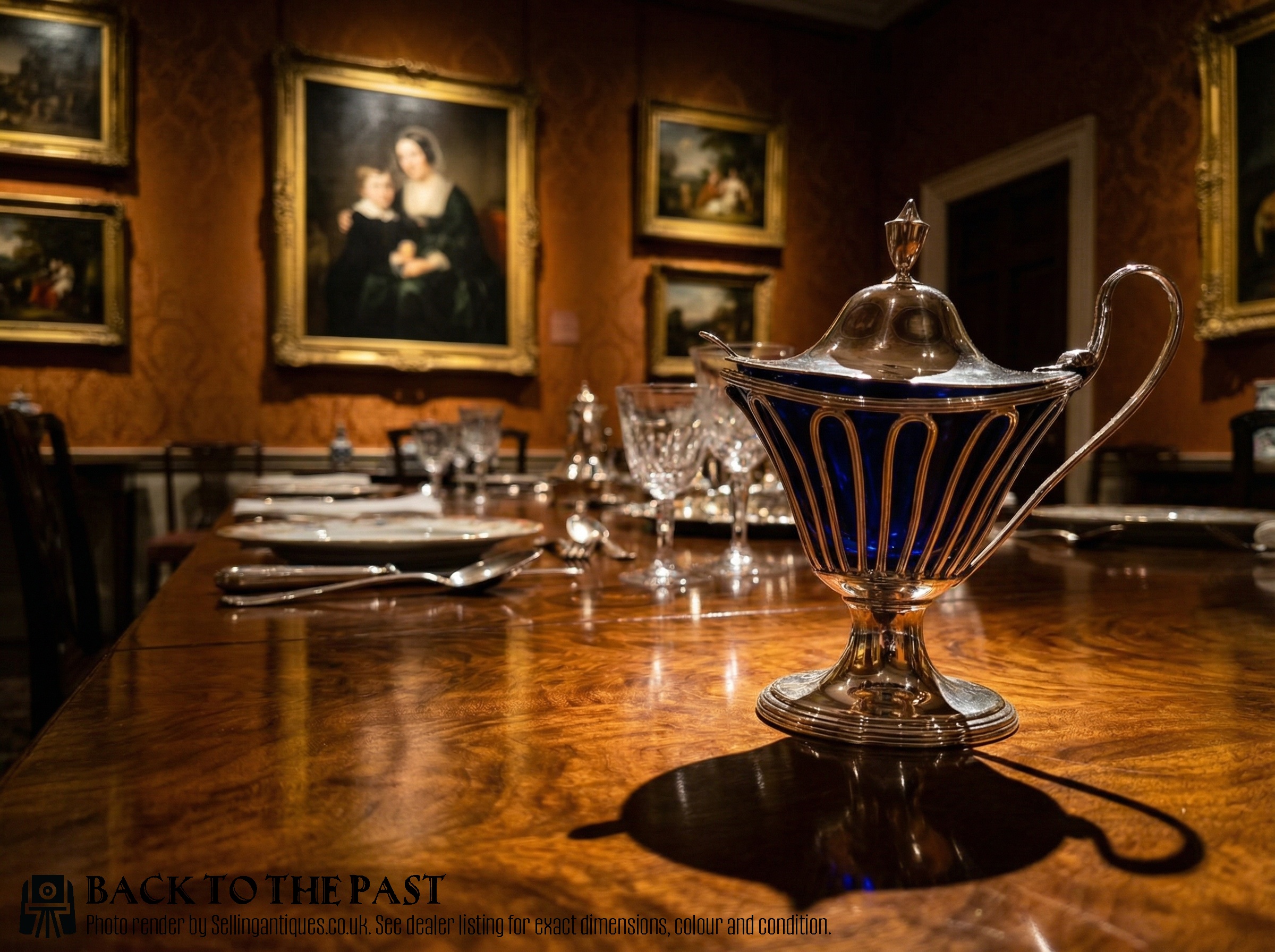
Silver Plated Condiment Pot
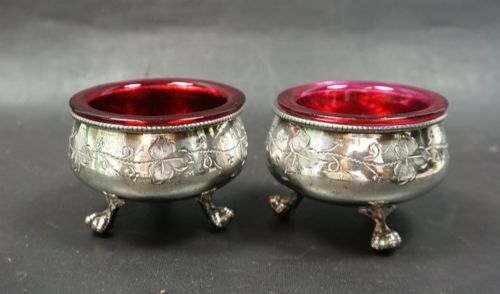
A silver plated condiment pot serves as a container for table seasonings and sauces, appearing in forms such as cruet sets, preserve dishes, salt cellars and sauce boats. These items date primarily from the Victorian, Edwardian and Art Deco periods, spanning the late nineteenth century through to the nineteen thirties.
Buyers will most frequently encounter Edwardian silver plated cruet sets on this page, alongside cut glass preserve dishes and Victorian novelty pieces. The selection includes standalone pots as well as multi-bottle stands designed to hold several condiments simultaneously for the dining table.
How they were made
The construction typically combines a base metal foundation coated in silver plate, paired frequently with cut glass, cranberry glass or occasionally oak and walnut elements. Master silversmiths utilised durable wirework and shaped frames to support delicate glass liners and jars.
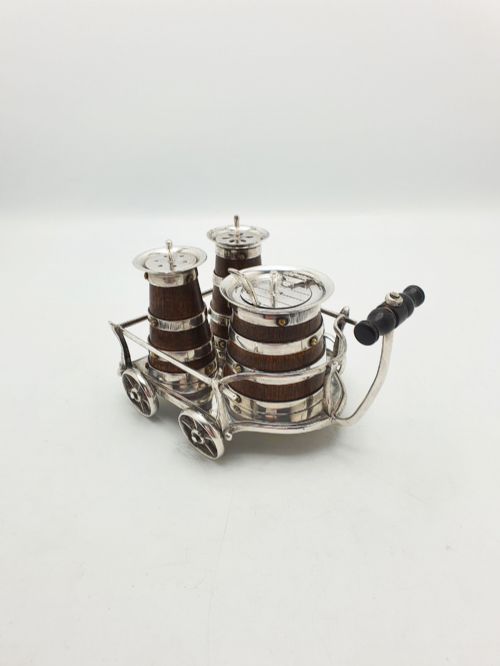
Specialised techniques enabled makers to fashion novelty forms shaped like oak barrels, carriages, farmyard animals and butler trays. Precision cutting transformed glass inserts into faceted vessels that caught the light alongside the polished metal mounts.
Dining tables of the late nineteenth century occasionally hosted miniature silver plated violins and farmyard animals dispensing mustard.
What varies in quality
The distinction between standard tablewares and finer examples rests upon the crispness of the silver plating and the intricacy of the metalwork frames. Superior items display balanced proportions, substantial weight in the metal and intact glass liners without chips.
Novelty condiment pots derive their desirability from the ingenuity of their design and the fidelity of their sculptural details, whether depicting a musical instrument or an equestrian scene. The integration of high-grade materials like cranberry glass elevates the decorative appeal of a piece.
Mappin Brothers·Mappin & Webb
The Silver Plated Condiment Pot Glossary
- Cruet set
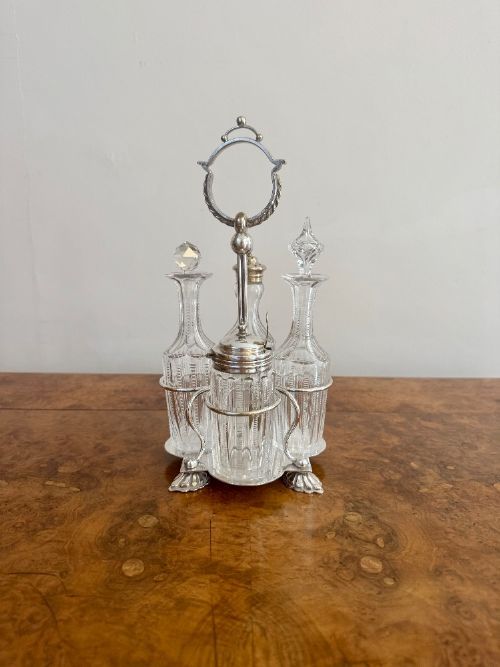
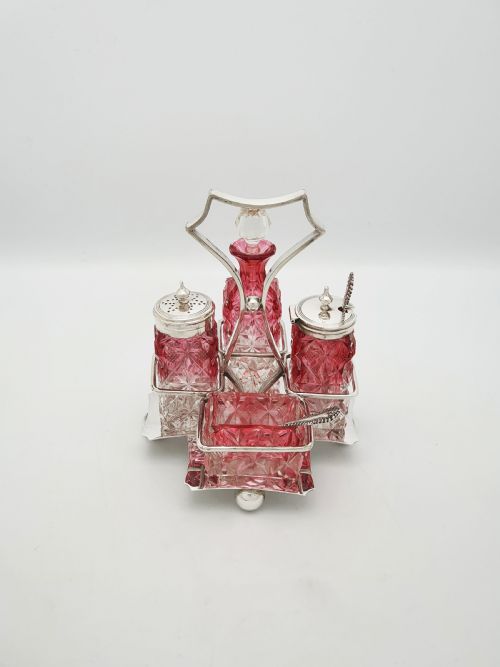
- A fitted stand holding multiple bottles, cruets or pots for condiments such as oil, vinegar, salt and pepper. These frames often incorporate a central carrying handle.
- Cranberry glass
- A rich red or pink transparent glass created by adding gold chloride to the molten glass batch. It is commonly found in Victorian and Edwardian liner bowls.
- Silver plate
- A manufacturing method where a thin layer of silver is bonded to a base metal such as copper or Britannia metal. This technique provided the appearance of solid silver at a lower cost.
- Salt cellar
- An open vessel or small pot used to hold salt at the dining table before the widespread adoption of individual shakers. They frequently include glass inserts to protect the metal from corrosion.
- Preserve dish
- A specialised bowl intended for jam, marmalade or honey, often supplied with a fitted spoon and an attached silver plated stand. Many feature cut or flashed glass bodies.
Silver Plated Condiment Pot: Frequently Asked Questions
How do I clean a silver plated condiment pot?
Use a soft cloth and a specialised silver polish formulated for plated items, applying gentle pressure to avoid wearing through the thin silver layer.
Rinse the piece thoroughly in warm water and dry it immediately with a lint-free cloth to maintain the polished shine.
Are these condiment pots suitable for daily use?
Many of these items remain robust enough for regular dining service, provided they are hand-washed rather than placed in an automatic dishwasher.
Care should be taken with antique glass liners and delicate wirework frames during handling and cleaning.
How can I date a silver plated condiment set?
Dating relies on stylistic markers such as the ornate floral motifs of Victorian pieces, the clean lines of Edwardian designs, or the geometric shapes typical of Art Deco.
Maker marks stamped onto the base of the silver plate often provide additional clues to the manufacturing decade.
What is a novelty condiment pot?
Novelty pots are amusing or unusual containers shaped to resemble everyday objects, animals or transport, such as carriages, oak barrels or farmyard figures.
Victorian and Edwardian manufacturers produced these imaginative pieces to add conversation and character to formal dining tables.