


Silver Plated Coffee Set
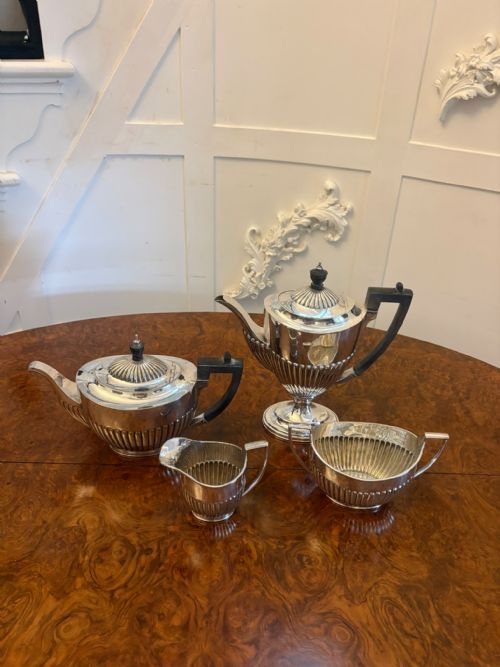
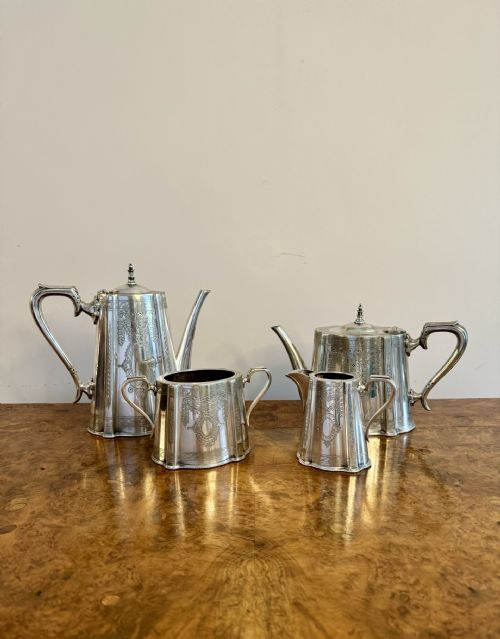
A silver plated coffee set brings the formality of service into the room, spanning Edwardian elegance and Art Deco geometry.
Silver Plated Coffee Set
A silver plated coffee set brings together matching vessels for morning or after-dinner service, commonly found as three or four piece configurations comprising a coffee pot, teapot, sugar bowl, and milk jug. The selection spans distinct eras from late Victorian elaboration through Edwardian refinement to the clean lines of Art Deco.
Most examples encountered here date from the Edwardian period and the early twentieth century, reflecting a peak in domestic hospitality and metalworking output. Alongside complete services, related pieces such as café au lait pots and demitasse sets appear regularly in the listings.
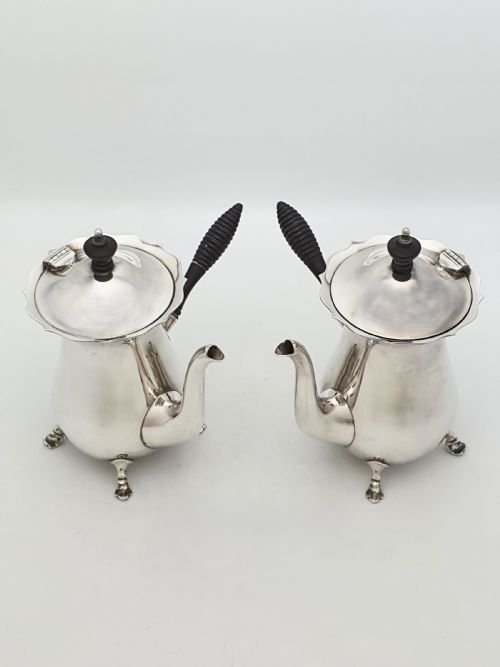
The form developed to serve multiple guests from a unified suite, often supplied with matching trays, handles, and spouts. Individual pieces show various combinations of materials such as bone, porcelain, and ebonised wood to insulate against heat.
Materials and methods of manufacture
Production relied heavily upon electroplated nickel silver as a durable base for applying a thin layer of pure silver, allowing makers to produce substantial vessels without the cost of solid silver. Manufacturers combined this metal foundation with insulators like ebony and ebonised wood for handles, preventing heat transfer during pouring.
Decorative work on these sets involved hand-engraving, applied cast mounts, and chased patterns, particularly in Victorian and Edwardian rococo revival styles. Certain pieces incorporate details such as gold plating inside sugar pots and cream jugs, alongside porcelain elements and bone fittings.
Materials recorded across the inventory include silver plate, nickel silver, ebony, bone, and porcelain.
Distinctions in quality and execution
Quality rests upon the thickness and durability of the silver plating over the base metal, together with the crispness of chased or engraved ornament. Superior services maintain intact plating across high-wear areas like spouts, handles, and rims.
Construction standards appear in the weight of the metal, the secure fitting of insulators, and the balance of pots when lifted. Sets bearing marks from established workshops show greater refinement in cast handles and hinges than unmarked commercial production.
Walker and Hall·Elkington and Company·David Andersen·Frank Cobb and Co·WMF Germany·Benetfink London
The Silver Plated Coffee Set Glossary
- Electroplated Nickel Silver
- A copper, nickel, and zinc alloy coated with a layer of pure silver through an electrolytic process. This method formed the structural basis for the majority of late nineteenth and twentieth century sets.
- Demitasse
- A small cup used for serving strong black coffee after a meal. Sets bearing this designation typically include smaller vessels scaled for concentrated coffee rather than large breakfast cups.
- Café Au Lait
- A style of dual pot service designed for serving coffee and hot milk simultaneously. These paired vessels allow users to mix proportions at the table.
- Jugendstil
- The continental European manifestation of Art Nouveau, characterised by flowing organic lines and natural motifs. This style appears on imported spoons and select serving pieces within the collection.
- Adam Revival
- An architectural neoclassical style popular in the late nineteenth century, bringing symmetrical urn shapes and restrained swags to tea and coffee services.
Silver Plated Coffee Set: Frequently Asked Questions
How do I clean my silver plated coffee set?
Maintenance requires mild washing in warm soapy water followed by thorough drying with a soft cloth to prevent water spots.
Harsh abrasive dips strip the silver layer from the base metal, so specialist silver cloths should be used sparingly on flat surfaces.
How do I distinguish Edwardian sets from Victorian ones?
Victorian sets generally favour heavier, ornate ornamentation with deep chasing and prominent rococo revival or adam revival motifs.
Edwardian pieces tend toward lighter proportions, cleaner profiles, and more restrained surface decoration while retaining substantial metal weight.
What is the difference between a tea set and a coffee set?
Coffee services feature taller, narrower pots designed to retain heat for dark brews alongside smaller demitasse vessels.
Tea services include wider pots optimised for loose leaves, complemented by larger sugar basins and milk jugs for diluted infusions.