


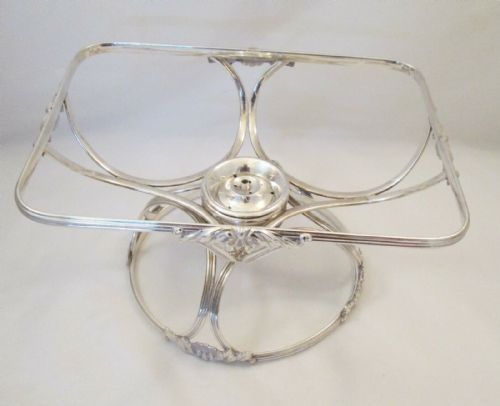
Silver Plated Chafing Dish
A silver plated chafing dish is a dining table warmer for keeping food hot, combining metalwork with practical service.
Silver Plated Chafing Dish
A silver plated chafing dish is designed for table service, keeping food warm during long meals through heated water pans or burners. These vessels serve as formal tableware, taking forms such as entree dishes, breakfast dishes, and warmers.
The pieces listed here emerge from periods spanning the Georgian era through the Victorian and Edwardian decades, alongside 19th-century examples. Most items on this page are silver plated wares made for serving food.
Forms include revolving breakfast dishes, double rollover dishes, and lidded tureens on original stands. Makers produced these serveware items in designs intended to sit centrally on the dining table.
How they were made
Makers constructed these dishes using silver plate, electroplated nickel silver, and Old Sheffield Plate over base metals like copper and nickel silver. Some examples incorporate ceramic inserts alongside metal bodies.
Techniques evolved from the fusion methods of Old Sheffield Plate to later electroplating processes on nickel silver. Workshops combined metalspinning, casting for handles and feet, and silver deposition to finish the tableware.
Object forms span food warmers, entree dishes, serving tureens, dish warmers, and specialised breakfast dishes.
What varies in quality
Quality separates mass-produced hotel ware from bespoke dining pieces made by established silversmiths. The weight of the metal base and the thickness of the plating dictate durability through decades of use.
Design complexity marks the higher tier of these pieces, seen in smooth revolving mechanisms, original stands with burners, and intact ceramic liners. The presence of maker marks from recognised firms distinguishes superior production.
Hamilton and Inches·Mappin and Webb·Walker and Hall·Dan Holy·Fenton Brothers
The Silver Plated Chafing Dish Glossary
- Silver Plate
- A thin layer of silver bonded or electroplated onto a base metal such as copper or nickel silver. This process provided the appearance of solid silver at a lower cost for large dining vessels.
- Old Sheffield Plate
- An early method of fusing a sheet of silver to a copper ingot before rolling them together into sheets for manufacturing. This technique produces a characteristic warm glow and occasional subtle copper showing at edges.
- Electroplated Nickel Silver
- Abbreviated as EPNS, this material uses a nickel silver alloy as the foundation for an electrochemically applied silver coating. It became the standard manufacturing method for tableware in the Victorian period.
- Entree Dish
- A lidded serving vessel designed to hold portions of food at the dining table. These pieces often fit into dedicated stands equipped with heating elements.
- Revolving Breakfast Dish
- A serving dish featuring a roll-over or rotating cylindrical lid that opens to reveal internal compartments. They were popular on formal breakfast tables for keeping various dishes warm.
Silver Plated Chafing Dish: Frequently Asked Questions
What is a chafing dish used for?
A chafing dish is used to keep food warm at the dining table during meals. These vessels utilise hot water pans or burners beneath the serving dish.
They appeared on formal tables for serving entrees, breakfast items, and heated courses.
How do I date a silver plated dish?
Dating involves examining the manufacturing technique, style, and any maker marks stamped into the metal base. Old Sheffield Plate indicates 18th or early 19th-century origins.
Victorian and Edwardian pieces often utilise electroplated nickel silver and display specific aesthetic movements or maker stamps.
What is Old Sheffield Plate?
Old Sheffield Plate is an early composite material made by fusing silver to a copper core. Craftsmen rolled these fused metals into sheets to create tableware.
This method predates electroplating and shows distinct characteristics along cut edges where the base metal appears.
Are ceramic liners original?
Many serving dishes and warmers include fitted ceramic inserts designed to hold food directly. These liners were standard components of breakfast dishes and entree warmers.
Survival of the original ceramic insert alongside the silver plated stand adds to the completeness of the piece.