



Silver Plated Dining Serveware
Silver plated dining serveware brings a century of formal table setting into your home, offering heavy-gauge metal and cut glass for daily use.
Silver Plated Dining Serveware
Silver plated dining serveware covers the large serving pieces used at the nineteenth and early twentieth century table, from meat domes to asparagus dishes. When you browse silver plated dining serveware on this page, you will encounter Victorian and Edwardian forms designed to keep food warm or present specific courses.
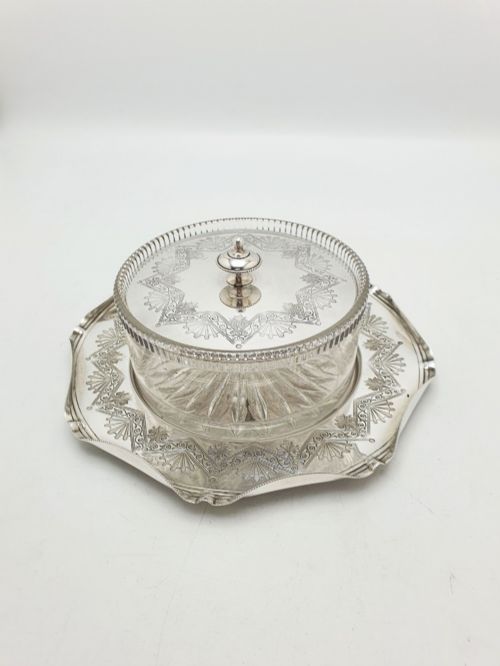
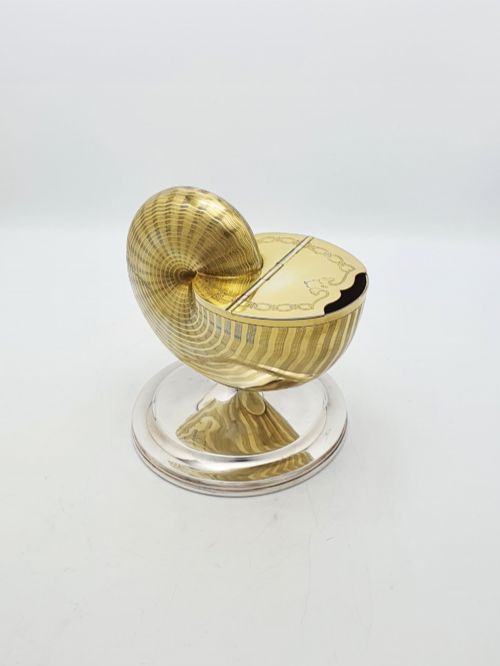
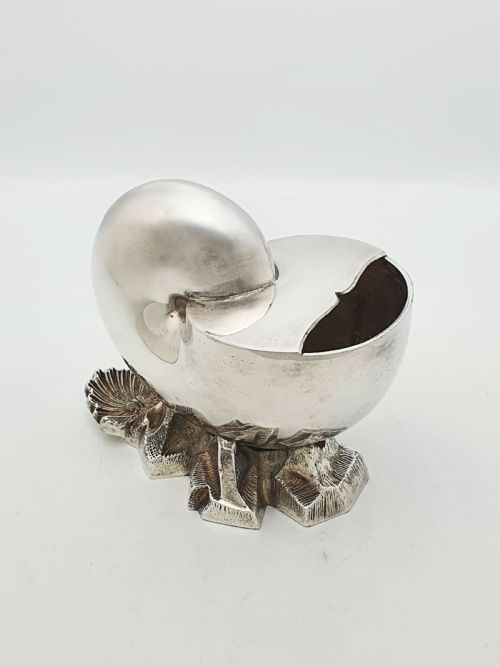
The objects span specialised dining items such as nautilus shell spoon warmers, toast racks, revolving breakfast dishes, and cheese scoops. Most pieces date from the Victorian and Edwardian eras, executed in styles ranging from robust nineteenth century interpretations to French Art Deco.
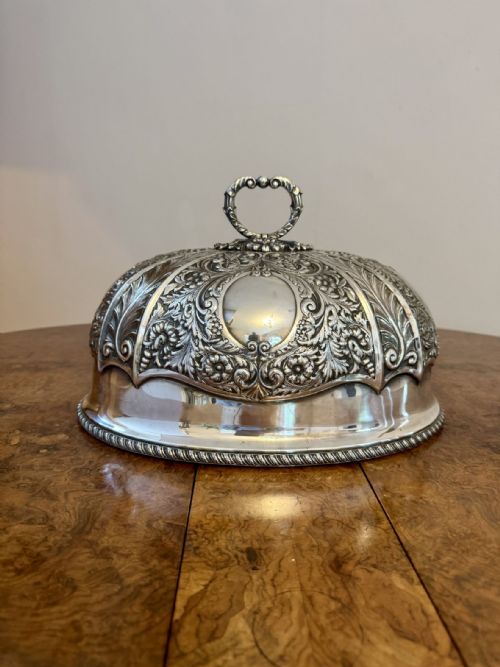
These items were manufactured for domestic dining rooms where formal courses required dedicated vessels. You will frequently find entree dishes and meat covers bearing the marks of prominent makers like Mappin and Webb or Elkington.
Materials and construction methods
The foundation of these pieces is typically base metal such as nickel silver or electroplated nickel silver, known as EPNS, which received a coating of silver through electroplating. Earlier items employ Old Sheffield Plate, fusing a thin sheet of silver to a copper core.
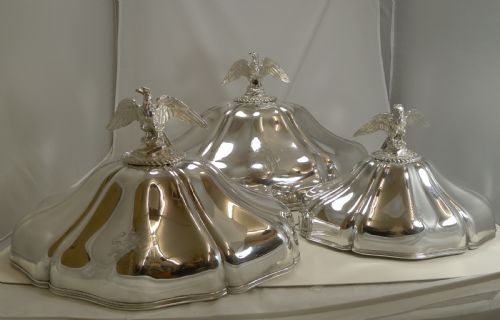
Many serveware pieces incorporate secondary materials like cut glass liners for butter dishes, bone handles for cheese scoops, and gilt metal interiors for spoon warmers. Makers also utilised wood and applied cast ornaments, such as eagles on meat domes, to enhance the visual weight of the service.
Victorian diners required dedicated vessels just to warm their spoons in hot water before serving.
Determinants of quality
Quality in these serveware pieces rests on the thickness of the silver deposit over the base metal and the crispness of the chased or engraved ornamentation. Superior examples retain their original plating without thin patches where the base metal shows through.
Construction integrity also separates standard utility items from finer workshop output, evident in how smoothly revolving mechanisms operate and how securely handles and feet are attached. Maker attribution, particularly pieces bearing marks from established firms like Elkington or Christofle, elevates the standing of an object.
Mappin and Webb·Elkington·Christofle·Gallia·Durand
The Silver Plated Dining Serveware Glossary
- EPNS
- Electroplated Nickel Silver. This denotes a base alloy of copper, nickel, and zinc coated with a layer of pure silver through an electrolytic process.
- Old Sheffield Plate
- An early method of fusing a sheet of silver to a thick copper ingot before rolling them into sheets. Edges often reveal the underlying copper stripe.
- Meat Dome
- A large domed cover designed to fit over a meat platter and retain heat during formal dining. These pieces often feature cast handles or finials.
- Spoon Warmer
- A Victorian vessel filled with hot water to warm serving spoons before they touched food. They frequently took whimsical shapes like nautilus shells.
- Entree Dish
- A lidded serving vessel used for individual courses at grand dinners. They often incorporate detachable handles to allow the base to function independently.
Silver Plated Dining Serveware: Frequently Asked Questions
How do I clean silver plated serveware?
Use a specialised silver polish and a soft cloth to remove tarnish gently, avoiding abrasive pads that wear away the thin plating.
Wash pieces in warm soapy water and dry them immediately to prevent water spots on the metal surface.
Can I use these vintage dishes for food?
Most silver plated dining serveware remains suitable for serving food, provided the underlying metal is not exposed through worn plating.
Items with glass liners or ceramic inserts offer a practical barrier for acidic foods like butter or asparagus.
How do I date an unmarked piece?
Examine the style of decoration, such as Victorian scrollwork or Art Deco geometric lines, alongside the weight and manufacturing technique.
Form also guides dating, as specialised items like revolving breakfast dishes and spoon warmers belong strictly to the nineteenth and early twentieth centuries.
What is the difference between EPNS and Old Sheffield Plate?
EPNS utilises an electrical process to bond silver to a white metal alloy base, a method introduced during the mid nineteenth century.
Old Sheffield Plate relies on a mechanical fusion of silver and copper sheets, which produces a distinctive copper edge line visible on older pieces.