



Antique Silver Domed Dish
An antique silver domed dish brings serious presence to a dining table, built to keep roast meats, butter or cheese warm in style.
Antique Silver Domed Dish
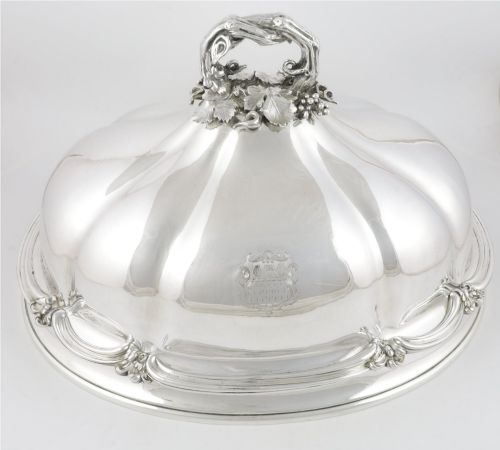
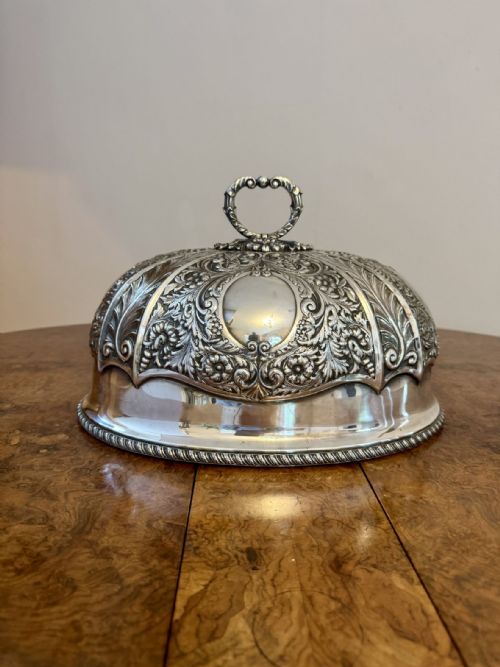
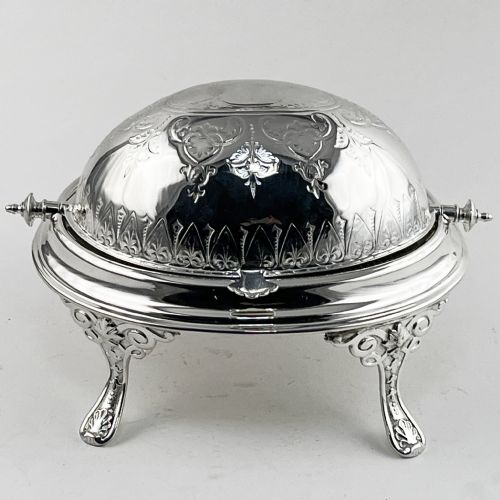
An antique silver domed dish spans grand meat covers, revolving breakfast dishes, entree dishes and cheese covers designed for formal dining. These pieces arrive from various eras including the Georgian, Victorian and Edwardian periods, alongside Old Sheffield Plate and silver plate examples.
The form is most frequently encountered as a large meat dome or cloche, often oval in shape to accommodate joints of meat or poultry. Smaller game covers and revolving butter dishes also appear across these listings, showing the diverse ways dining tables were set in the nineteenth and early twentieth centuries.
Makers and workshops utilised copper, silver plate and Old Sheffield Plate to shape these substantial serveware items. Pieces range from plain utility vessels to heavy, decorative covers bearing refined handles and subtle engraving.
How they were made
Old Sheffield Plate makers fused a thin sheet of silver onto a thicker copper base before shaping the metal into expansive domes. This demanding technique produced durable serveware that gained character as the underlying copper occasionally showed through the worn silver surface.
Victorian and Edwardian silversmiths relied on electroplating, known as EPNS or electroplated nickel silver, to coat base metals with a uniform layer of silver. This method allowed workshops to produce complex revolving mechanisms and ornate handles with greater speed and precision than earlier hand-hammered techniques.
What varies in quality
The gauge of the metal and the weight of the piece largely determine the quality of an antique silver domed dish. Heavier domes maintain their structure better over decades of use and retain a more substantial feel in the hand.
The integrity of the plating and the crispness of applied handles or crests separate standard production from superior work. Finer examples display smooth, even silver coverage and securely fitted revolving lids that operate without catching.
Roberts Cadman·Henry Wilkinson·Mappin and Webb·Boulton
The Antique Silver Domed Dish Glossary
- Old Sheffield Plate
- A method of fusing silver and copper together by heat and pressure before rolling them into sheets. This early technique predates electroplating and is prized for its soft lustre.
- EPNS
- Electroplated Nickel Silver, a common base metal coated in a layer of silver using an electrical current. It became widely used from the mid-nineteenth century onwards.
- Cloche
- A bell-shaped cover traditionally used to keep food warm on the table. The term applies to many of the dome-shaped meat and game covers found in these listings.
- Revolving Dish
- A serveware piece featuring a lid that rolls back into the body of the dish. These clever mechanisms were popular for breakfast and butter dishes in the Victorian and Edwardian eras.
- Entree Dish
- A shallow serving vessel with a matching lid, used for serving individual courses at the dining table. Pairs of these dishes often match larger meat domes in grand table settings.
Antique Silver Domed Dish: Frequently Asked Questions
What were antique silver domed dishes used for?
These dishes served a practical purpose in wealthier households by keeping roasted meats, game, fish and cheese warm as they travelled from the kitchen to the dining table.
The high domed covers trapped heat and steam, while revolving breakfast and butter dishes allowed diners to help themselves easily during morning meals.
How do I tell Old Sheffield Plate from later silver plate?
Old Sheffield Plate often reveals a subtle yellowish copper hue where the top layer of silver has worn thin along sharp edges and prominent ridges.
Later silver plate, including EPNS, usually shows a base metal of greyish nickel or a stark silver tone that wears down evenly rather than exposing a different metal underneath.
How should I clean and care for a silver domed dish?
Clean these pieces gently using a dedicated silver cloth or mild, non-abrasive polish designed for plated items. Avoid harsh chemical dips that can strip remaining silver or damage exposed copper on older pieces.
Store them in a dry environment away from direct sunlight and dampness to prevent excessive tarnishing and to preserve the integrity of the metal surface.
Can I use an antique meat dome for serving food today?
These pieces can still be used for formal dining and entertaining, provided the plating remains intact and clean. Many collectors use them for their original purpose during family dinners or festive gatherings.
Care should be taken with items featuring delicate mechanisms, such as revolving breakfast dishes, to ensure the moving parts continue to function smoothly.