
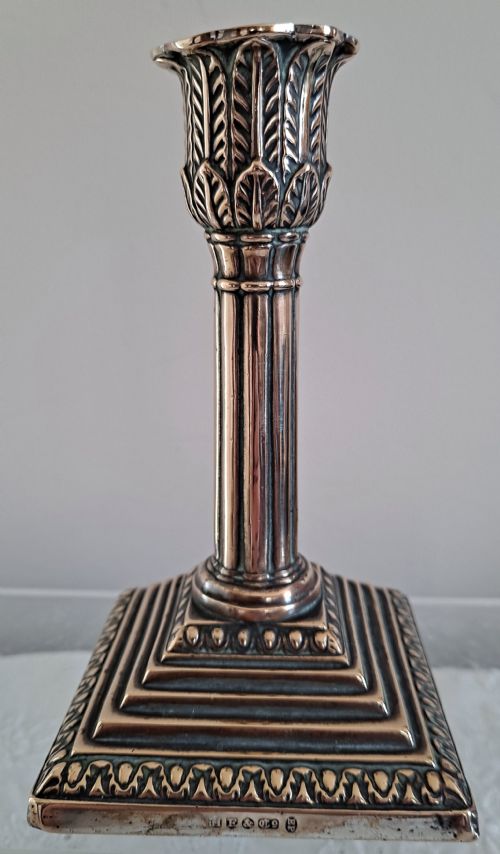
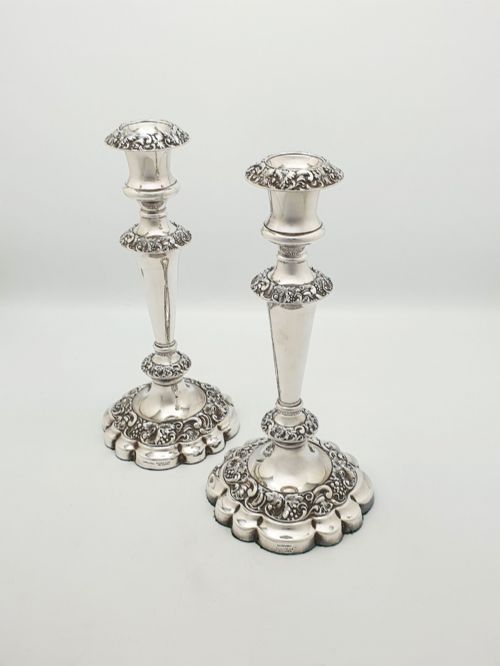


Silver Plated Candle Sticks
Silver plated candle sticks bring functional warmth and period design to a room, offering the visual weight of solid silver through inventive historical techniques.
Silver Plated Candle Sticks
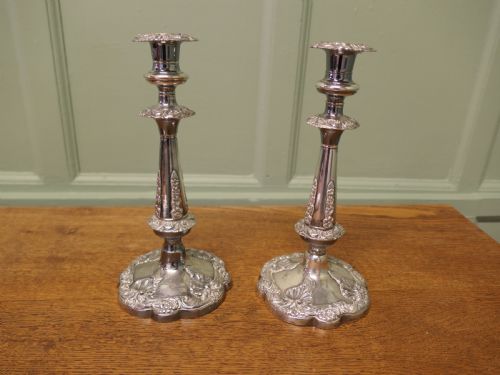
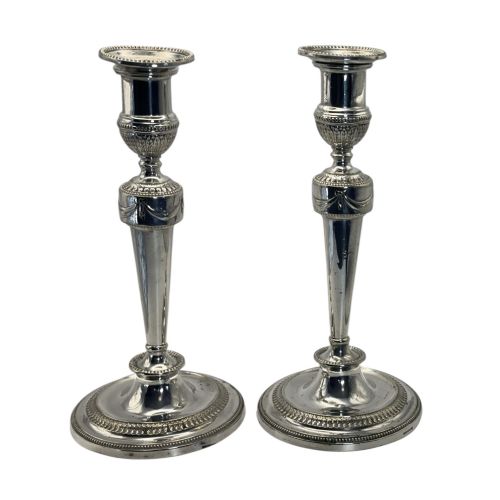
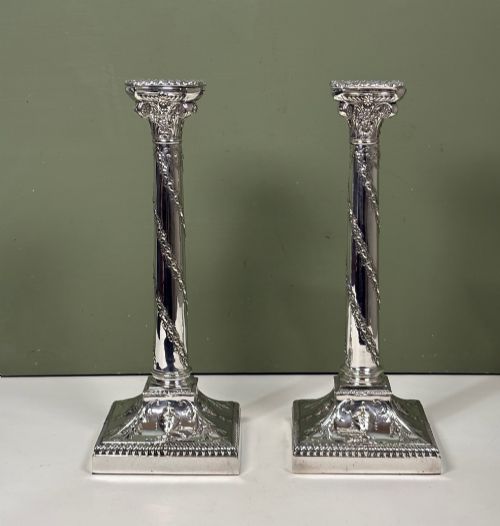
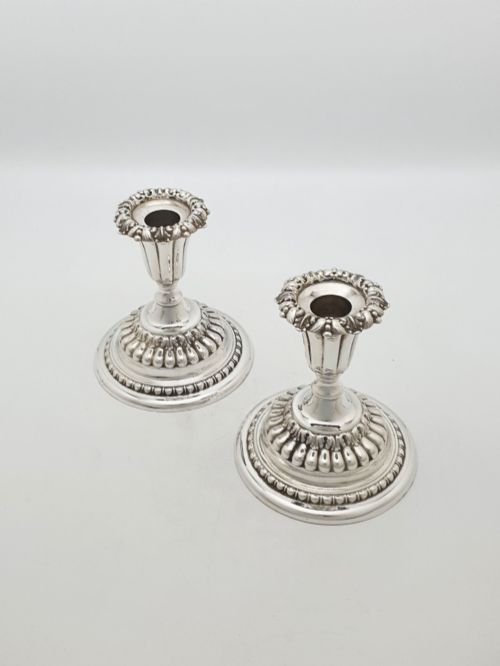
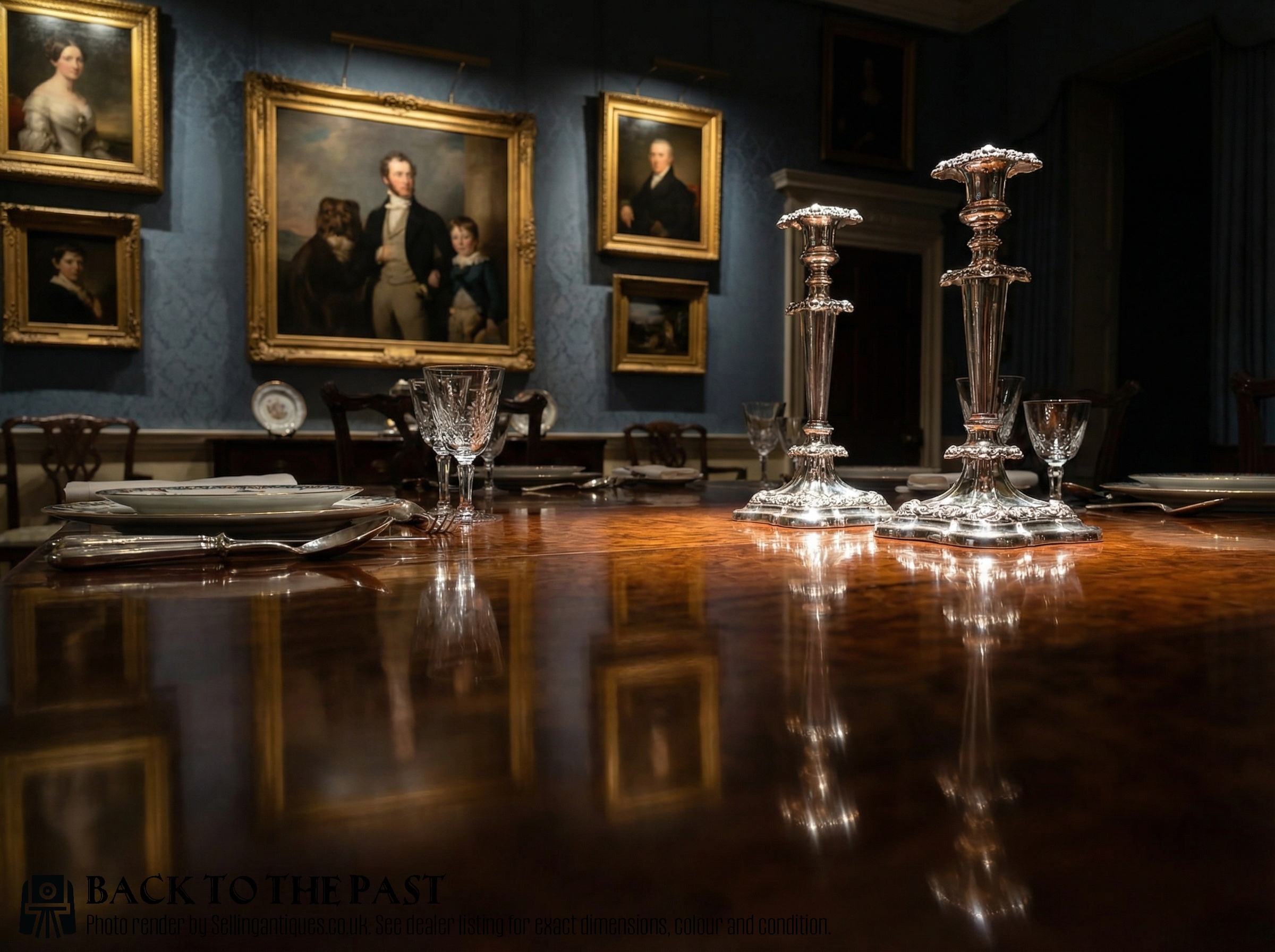
When searching for silver plated candle sticks, a buyer encounters domestic lighting accessories spanning the Georgian, Victorian, and Edwardian eras. These pieces include standard single holders, telescopic shafts, multi-light candelabra, and compact chambersticks fitted with extinguishers.
The inventory on this page draws heavily from nineteenth-century production, featuring classical column designs as well as ornate Rococo revival forms and flowing Art Nouveau contours. Matched pairs dominate the selection, alongside occasional sets of four intended for formal dining tables.
Materials and construction methods
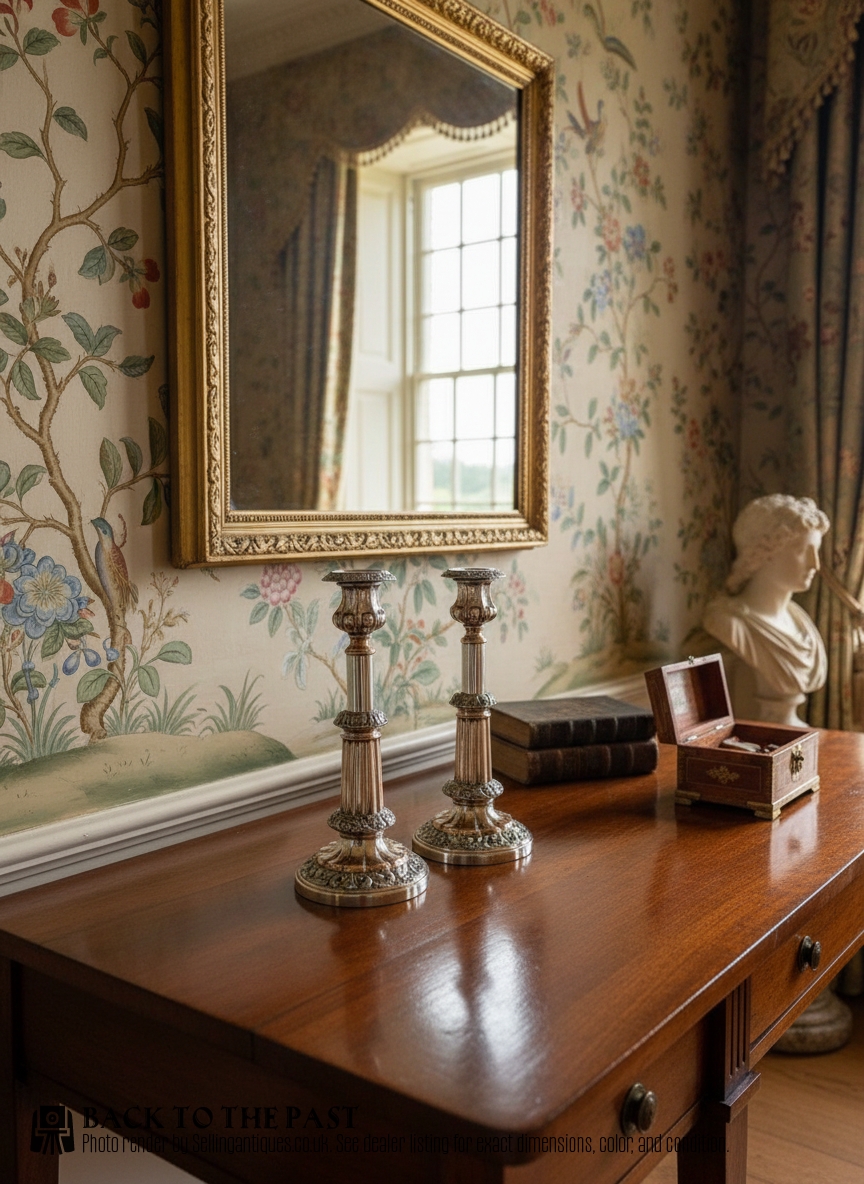
Early examples utilise Old Sheffield Plate, a process where a thin sheet of silver is fused to a thick copper base under high heat before rolling. This method leaves a characteristic trace of copper along exposed edges or worn high points.
Later Victorian and Edwardian manufacturing shifted toward electroplated nickel silver, known as EPNS, which applies a silver coating through an electrical current onto a durable white metal alloy base.
Miniature chambersticks made for tiny bedside flames prove that Georgian and Victorian households feared the dark just as much as we do.
Markers of superior craftsmanship
Quality rests in the crispness of the chased or cast ornament, where sharper botanical details or fluting indicate higher grade dies and skilled hand-finishing. Weight also distinguishes better examples, as sturdier base metals and loaded interiors provide greater stability.
Maker marks stamped into the metal point to reputable workshops, while the evenness of the silver layer and the structural integrity of removable drip pans or detachable sconces define the overall standard of survival.
Mappin & Webb·John Pound & Co·WMF·Barker Ellis·Walker & Hall·Elkington & Co·Richard Hodd & Son·Thomas Bradbury·Gibbons of Wolverhampton·William Hutton & Sons·Mappin Bros
The Silver Plated Candle Sticks Glossary
- Old Sheffield Plate
- An early fusing technique where a sheet of silver is bonded to a copper core. Items made this way often show subtle hints of copper beneath worn silver areas.
- Electroplated Nickel Silver
- A mid-nineteenth-century method using electricity to deposit silver onto a nickel brass alloy. This replaced the older fused plating technique in commercial workshops.
- Sconce
- The detachable nozzle or pan fitted at the top of a candlestick to catch melting wax. These pieces are frequently lost over time.
- Chamberstick
- A low, saucer-like candle holder featuring a loop handle and a spike or socket for the candle. They were designed for carrying through dark hallways at night.
- Telescopic
- A sliding shaft mechanism allowing the height of the candlestick to be adjusted. This clever engineering was popular in the Georgian and Victorian periods.
Silver Plated Candle Sticks: Frequently Asked Questions
How do I clean tarnished silver plate?
Use a soft cloth and a dedicated silver polish designed specifically for plated items. Avoid harsh abrasive cleaners that can wear away the thin silver layer.
Work gently around engraved crests and raised decorative motifs to preserve the underlying metal and maintain an even finish.
How can I tell old Sheffield plate from electroplate?
Look closely at the edges and high relief areas for a subtle reddish hue where the underlying copper shows through. Old Sheffield plate also tends to feel slightly heavier due to the thick copper sandwich.
Electroplated pieces generally reveal a greyish nickel alloy base when the silver coating wears away through heavy use.
Why do some candlesticks have weighted bases?
Weights inside the base provide essential stability for tall shafts and multi-light candelabra. Plated metal alone would make the top-heavy structures prone to tipping over during use.
These weighted interiors are typically lined underneath with green baize or felt to protect furniture surfaces.