



Silver Plated Barware Shaker
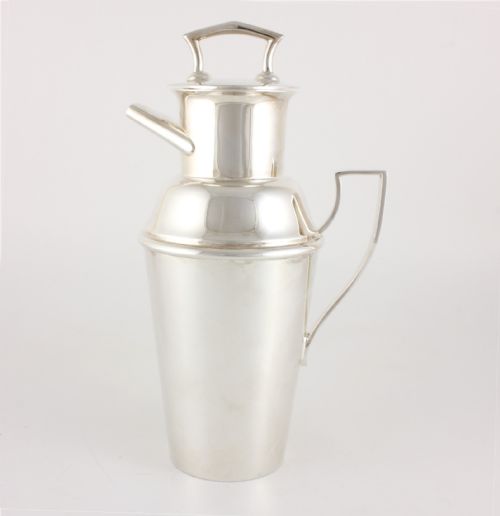
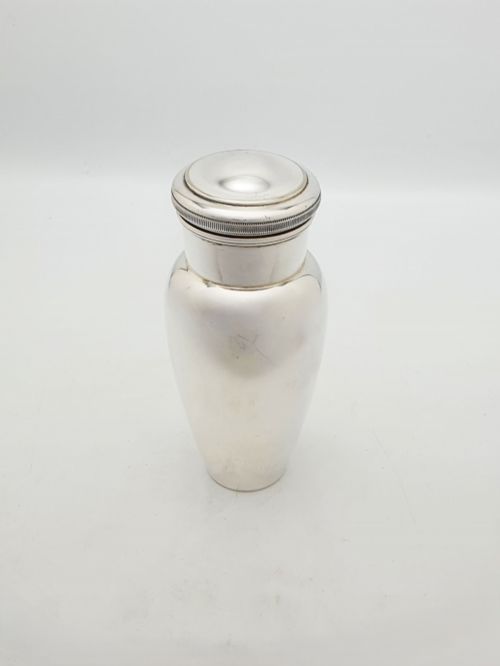
These silver plated barware shaker pieces bring twentieth-century cocktail culture to a modern home through polished metal and glass.
Silver Plated Barware Shaker
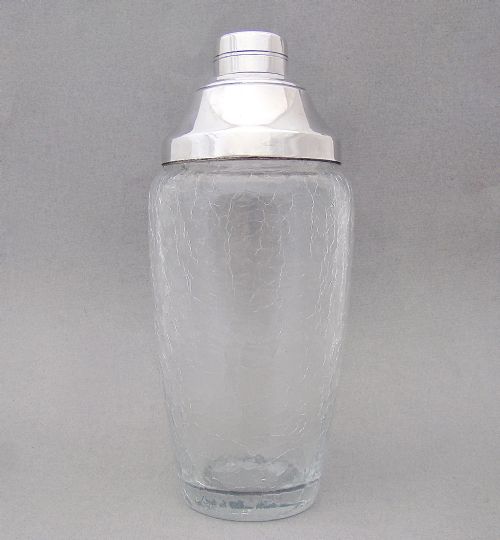
The selections span standard metal vessels alongside variants incorporating glass, crackle glass, and internal mechanisms such as lemon squeezers or ice breakers. Many items display the clean geometric lines characteristic of Art Deco design.
Origin points stretch across England, France, Italy, Germany, and Switzerland, showing distinct regional approaches to domestic barware. Plain cylinders sit alongside novelty forms like milk churns and rotating recipe cylinders.
How they were made
Manufacturing relies on silver plate, electroplated nickel silver, and EPNS applied over base metals, combined with glass components and cork stoppers. Workshops shaped these materials through spinning, stamping, and casting.
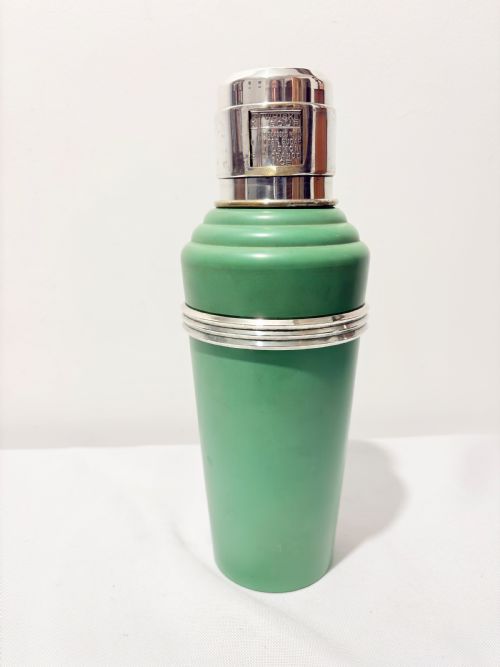
Surface decoration often involves engine turning, engraved recipes, or applied Bakelite details in contrasting colours. Specialised internal elements like built-in juicers demonstrate precision engineering within the vessel body.
Some models disguise themselves as miniature milk churns or feature rotating dials to instruct guests on mixing proportions.
What varies in quality
The retention of original silver plating across high-friction areas like rims and caps indicates how well a piece was maintained. Materials like crackle glass and coloured Bakelite introduce further divergence in fabrication standard.
Asprey & Co·Keith Murray·J. B. Chatterley & Sons·James Dixon & Sons·Lino Sabattini·William Suckling·Angelletti·Hukin & Heath·C S Green & Co·Adie Brothers·Maison Barra·Carl Deffner·William Hutton
The Silver Plated Barware Shaker Glossary
- EPNS
- Electroplated nickel silver forms the base metal composition for many silver plated items, providing a durable foundation beneath the silver coating.
- Engine turned
- A mechanical engraving technique producing intricate geometric patterns across the metal surface of the vessel.
- Crackle glass
- Glass deliberately fractured during manufacture and then reheated, creating a web-like internal texture popular in French barware.
- Bakelite
- An early synthetic thermosetting plastic utilised for handles, knobs, and decorative accents during the interwar period.
- Ice breaker
- A specialised internal spike or grid designed to fracture ice blocks as cocktails are shaken within the container.
Silver Plated Barware Shaker: Frequently Asked Questions
What periods do these shakers come from?
The selection spans primarily the 1920s, 1930s, and 1940s, with occasional mid-century examples from the 1950s and 1960s.
Most items align with the Art Deco aesthetic popular during the interwar years across Europe.
How do rotating recipe shakers work?
Rotating recipe shakers feature an outer sleeve or internal cylinder inscribed with cocktail formulas that align through manual turning.
Users twist the components to reveal ingredient proportions for traditional mixed drinks.
Are these shakers functional today?
Many silver plated shakers retain their structural integrity and watertight seals suitable for mixing beverages.
Inspectors should check cork stoppers and internal moving parts before utilising them for modern drink preparation.
What is the difference between EPNS and silver plate?
EPNS denotes electroplated nickel silver specifically, serving as the common metallic substrate beneath the outer silver layer.
General silver plate may utilise alternative base metals beneath the applied precious metal coating.