







French Deco Cocktail Shaker
A french deco cocktail shaker brings the bold geometry and polished elegance of mid-century Parisian bars directly to your home.
French Deco Cocktail Shaker
A french deco cocktail shaker is a metal or glass vessel designed for mixing drinks, emerging predominantly from the Art Deco and Modernist movements. These pieces range from simple individual vessels to elaborate cased sets complete with beakers.
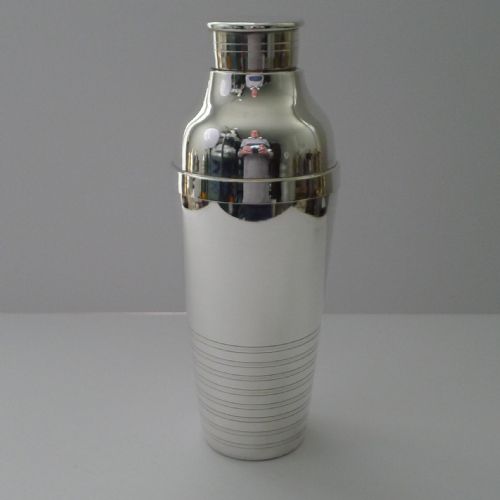
Most examples found here date from the 1930s, accompanied by pieces from the 1940s and 1960s. The most common form is a large silver plated container, often displaying stepped architectural lines or engine turned patterns.
Materials and construction
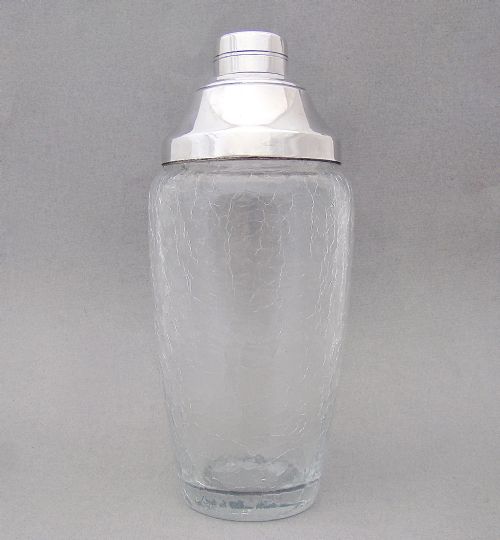
Silversmiths constructed these cocktail vessels primarily using silver plate over a base metal, frequently pairing the metal with crackle glass or crystal bodies. Surface decoration relied on mechanical techniques such as engine turning alongside applied floral motifs.
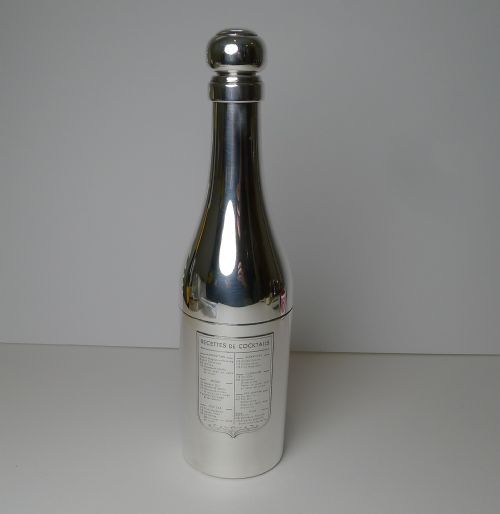
Manufacturers also integrated functional elements like built-in lemon reamers and recipe formulas directly onto the metal exterior. Sets often included matching beakers housed within fitted presentation cases lined with satin or velvet.
Listings span three distinct decades: the 1930s, the 1940s, and the 1960s.
Distinctions in craftsmanship
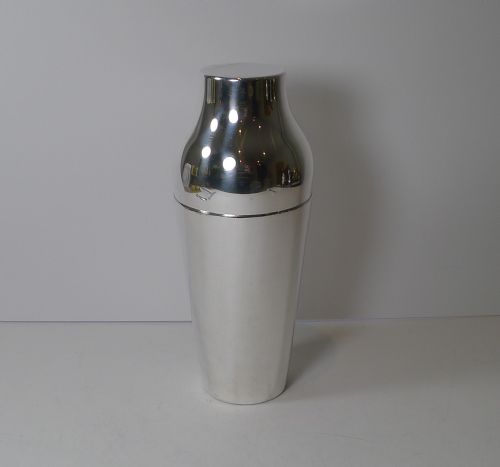
Quality separates standard production items from pieces produced by named Parisian ateliers through the weight of the metal and the precision of the mechanics. Smooth-fitting lids and well-balanced two-part or three-part joints indicate superior manufacturing.
The presence of specialised components, such as integrated recipe cylinders or associated beaker sets, elevates the scope of the object. Maker attribution and complex surface engraving like engine turning further distinguish individual pieces.
Maison Barra·St Medard Paris·Orfèvrerie Christofle·Roux-Marquiand·Orbrille Paris·Ercuis Paris
The French Deco Cocktail Shaker Glossary
- Silver Plate
- A base metal coated with a thin layer of silver. This technique allowed Parisian makers to achieve the look of solid silver at a lower production cost.
- Engine Turned
- A decorative mechanical process that etches precise geometric patterns into metal surfaces. This technique adds texture and catches the light on cocktail shaker bodies.
- Crackleglass
- Glass treated to create a network of fine internal fractures while remaining structurally sound. It provides a textural contrast to smooth silver plated mounts.
- Modernist
- A design style emphasising minimal ornament and functional form. Pieces from this movement often feature clean lines without traditional decorative motifs.
French Deco Cocktail Shaker: Frequently Asked Questions
How do I use a vintage cocktail shaker?
These historical barware items function much like modern shakers for blending and chilling ingredients with ice. Two-part and three-part designs separate to allow liquid pouring while retaining ice behind a built-in strainer.
Care should be taken when handling silver plated surfaces and glass components during washing. Hand cleaning helps preserve the original plating and any delicate decorative engraving.
How do I date these cocktail shakers?
Dating relies on stylistic markers such as stepped architectural forms typical of the 1930s and cleaner modernist lines associated with the 1940s and 1960s. Maker marks stamped into the metal base provide the most reliable chronological indicator.
Atelier stamps connect specific vessels to known Parisian workshops and silversmiths operating during the interwar period. Surviving fitted cases and companion beaker sets also help confirm the era of production.
What materials were used?
Silver plate over base metal is the predominant material seen across these Parisian barware items. Glass also appears frequently, particularly crackle glass and crystal body sections combined with metal mounts.
Interior components and fitted presentation boxes sometimes utilise textiles like satin and velvet. Specialised additions include integrated metal lemon reamers and recipe calculators.