







French Silver Plated Shaker
A French silver plated shaker is a barware staple that brings geometric elegance and period hospitality to a modern drinks trolley.
French Silver Plated Shaker
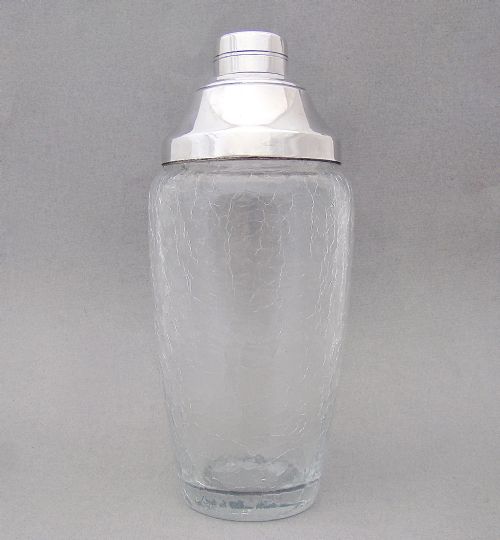
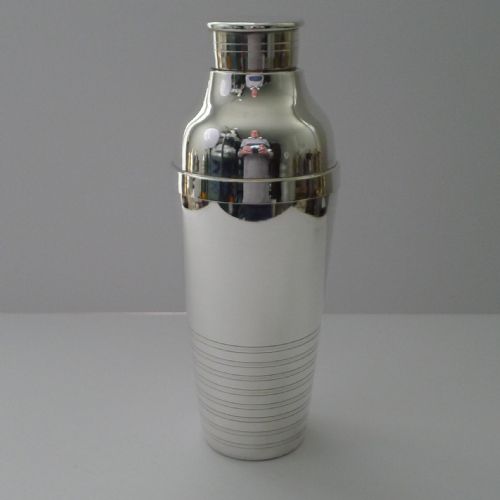
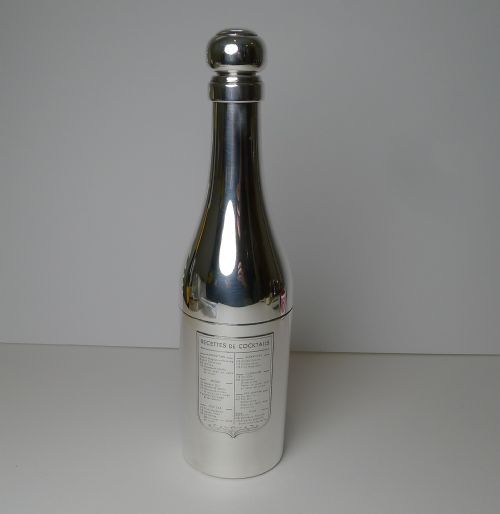
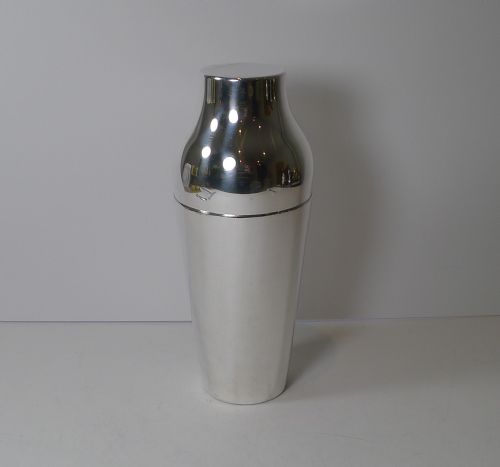
A french silver plated shaker is primarily discovered in bold Art Deco and Modernist silhouettes dating from the 1930s through to the 1960s. These barware pieces take various forms, ranging from standard cylindrical mixers to novelty champagne bottle recipes and vessels paired with lemon reamers.
Many examples arrive complete with matching beaker sets, trays, or fitted cases designed for entertaining. The aesthetic leans heavily into the geometric restraint of the interwar period, often employing stepped profiles and clean architectural lines.
Materials and Construction
Makers utilised a base metal foundation coated in a layer of silver plate, frequently combining the metalwork with crackle glass or crystal bodies. Surface decoration often involved precise engine turned patterns that caught the light during use.
Construction methods included two part and three part assemblies designed to seal liquids securely during mixing. Interior components sometimes integrated specialist elements like built-in strainers or companion stirring spoons.
Listings feature silver plate and metal combined with crackle glass, satin, and velvet across the 1930, 1940, and 1960 periods.
Assessing Quality and Manufacture
The distinction between standard commercial output and superior work rests on the weight of the metal, the crispness of the engine turning, and the presence of a recognised maker mark. Heavier gauge silver plate maintains its integrity better over decades of handling.
Pieces originating from established Parisian silversmiths display superior balance and tighter seals between sections. Associated sets including beakers or fitted presentation boxes elevate the completeness and standing of the object.
St Medard Paris·Orfèvrerie Christofle Paris·Maison Barra·Roux Marquiand·Lancel Paris
The French Silver Plated Shaker Glossary
- Silver Plate
- A base metal substrate coated with a thin layer of pure silver. This technique allowed manufacturers to produce substantial vessels with the appearance of solid silver at a lower cost.
- Engine Turned
- A precision decorative technique involving geometric patterns cut mechanically into the metal surface. It provides both visual texture and a tactile grip.
- Art Deco
- A design style dominant in the 1920s and 1930s characterised by sleek geometric shapes, streamlined forms, and stylised motifs. It defines the majority of these cocktail accessories.
- Modernist
- An architectural and decorative approach focusing on minimalism, function, and unornamented surfaces. It represents the later evolution seen in mid-century barware.
French Silver Plated Shaker: Frequently Asked Questions
How do I clean a silver plated shaker?
Wash the interior with warm soapy water and dry thoroughly after use. Apply a mild silver polish gently to the exterior to maintain the shine without wearing through the plated layer.
Avoid abrasive cloths or harsh chemical dips that can damage engine turned surfaces or crackle glass components.
Are these shakers still usable for mixing cocktails?
Most vintage examples remain fully functional for mixing drinks if the internal seals and fits remain secure. Test the two part or three part sections with cold water first to check for leaks.
Hand wash only immediately after mixing acidic ingredients like citrus juice to protect the metal finish.
How can I date a French cocktail shaker?
Examine the stylistic cues, such as stepped Art Deco silhouettes or later Modernist lines, pointing primarily to the 1930s and 1940s. Maker stamps and hallmarks stamped into the base provide further clues to the workshop origin.
Compare the construction style against documented timelines of known Parisian silversmiths from the period.
What is a champagne bottle recipe shaker?
This novelty form is shaped directly like a champagne bottle while functioning as a standard cocktail mixer. Some feature printed cocktail recipes directly on the exterior surface.
They represent a playful application of barware design popular during the interwar entertaining era.