




Large Silver Shaker
A large silver shaker brings substantial presence to a room, uniting barware utility with period design.
Large Silver Shaker
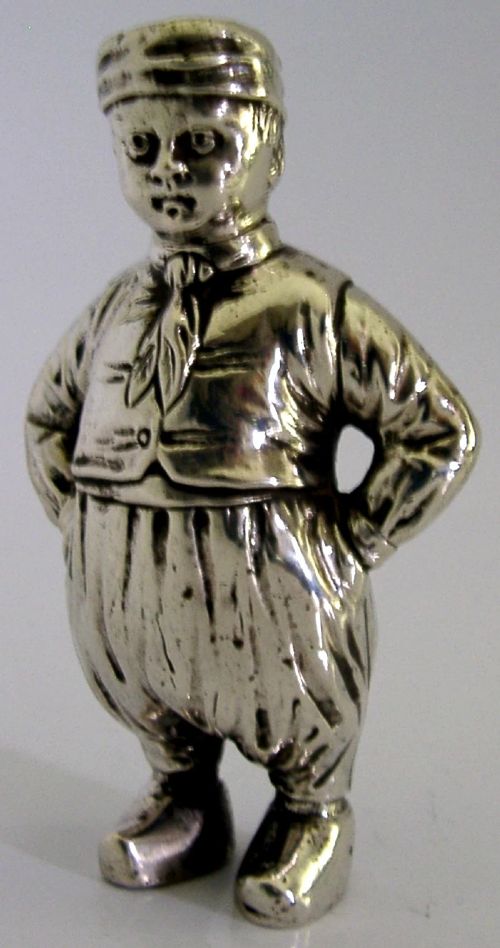
A large silver shaker spans several distinct forms, primarily tall cocktail mixers alongside traditional sugar casters and pepper pots. Cocktail vessels emerge prominently from the Art Deco period of the nineteen-thirties, while casters trace their roots through the Victorian and Georgian eras.
Buyers encounter Continental, American, and English origins across these pieces, with styles varying from clean modernist lines to ornate revival designs.
Materials and construction methods
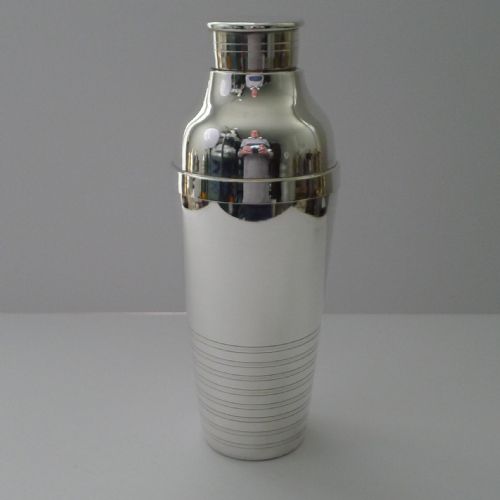
Silversmiths constructed solid pieces from sterling or 800 silver, whilst others applied silver plate over base metal or combined metal mounts with heavy cut glass bodies. Many cocktail mixers utilise engine turned decoration, creating repeating geometric patterns across the metal surface through machine lathe work.
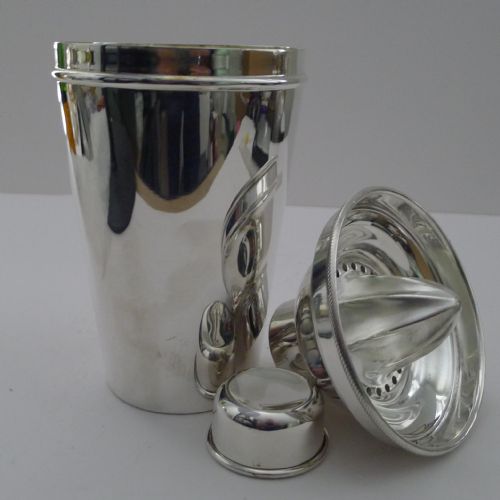
Pierced and chased techniques defined the tops of sugar casters, allowing fine distribution of contents through patterned holes. Components such as internal juicers, integral strainers, and screw-on caps required precise engineering to ensure secure liquid seals during vigorous shaking.
Materials range from solid sterling silver and 800 silver to silver plate, base metal, and cut glass.
Distinguishing quality across examples
Substance and balance distinguish superior pieces, often indicated by heavier gram weights or substantial pint capacities that provide a reassuring heft in the hand. The precision of the maker's fit between lids, collars, and bodies dictates mechanical excellence.
Artistic execution elevates certain items, seen in crisp engine turning, deeply embossed motifs, or specialised additions like engraved cocktail recipes and cockerel finials rather than plain production models.
J. B. Chatterley & Sons·Hukin & Heath·Mappin & Webb·Thomas Ross·James Dixon & Sons·Suckling Ltd.·P H Vogel & Co·Bernard Rice & Sons Inc Apollo USA
The Large Silver Shaker Glossary
- Sugar caster
- A tall container with a pierced dome top, designed for sprinkling sugar onto food. They often follow Georgian or Victorian silhouettes.
- Engine turned
- A decorative technique involving precise geometric patterns engraved into metal by a machine lathe. This method gained immense popularity during the Art Deco era.
- Silver plate
- A layer of silver bonded to a base metal foundation. It allowed manufacturers to produce robust barware at a different cost point than solid silver.
- Cruet set
- A matched group of condiment containers, often holding pepper pots, mustard pots, and casters on a shared tray. They appear frequently in Victorian table settings.
- Boston shaker
- A two-piece cocktail mixing vessel comprising a metal base paired with a glass or second metal cup. They represent a functional evolution in bar equipment.
Large Silver Shaker: Frequently Asked Questions
What is a large silver shaker used for?
These vessels serve dual purposes depending on their original era, acting either as cocktail mixers for bar service or as tall casters for dispensing sugar and spices at the dining table.
Cocktail versions often feature internal strainers and lemon squeezers, whilst Victorian and Georgian examples focus on refined condiment distribution.
How do I tell an Art Deco shaker apart?
Art Deco pieces typically display clean cylindrical or tapering lines, geometric engine turning, and streamlined handles. They frequently date from the nineteen-thirties and rely on silver plate over base metal.
Earlier Victorian and Georgian styles lean towards bulbous forms, embossed floral motifs, and solid sterling silver construction.
Are these shakers made of solid silver?
Materials vary significantly across the pieces, encompassing solid sterling silver, 800 silver, and heavy silver plate over base metal. Some cocktail shakers also incorporate thick cut glass bodies with metal mounts.
Weight and hallmarks generally indicate whether an item is solid silver or plated.
How should I clean my silver shaker?
Maintenance requires gentle cleaning with a specialised silver cloth or non-abrasive polish to preserve surface details like engine turning or engraved recipes. Harsh chemical dips can strip patination and damage plated layers.
Keeping the interior dry after use prevents tarnishing and protects mechanical components like screw threads.