


Silver Plated Barrel Caddy
These silver plated barrel caddy selections bring Victorian and Edwardian dining tables to life with practical charm.
Silver Plated Barrel Caddy
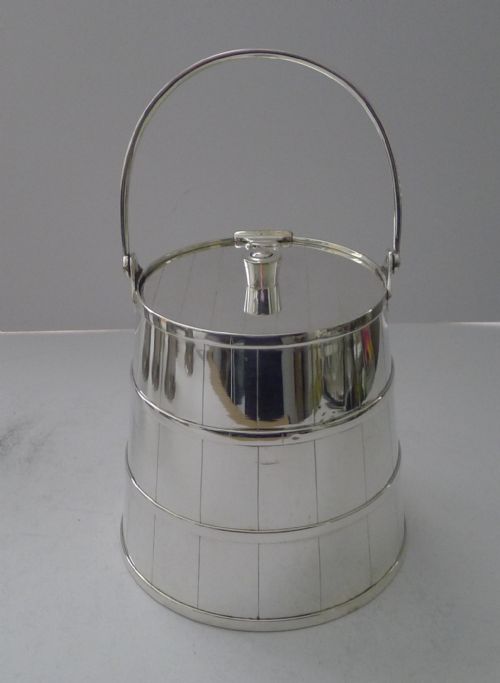
A silver plated barrel caddy or biscuit barrel sits firmly in late nineteenth and early twentieth century domestic history. These cylindrical containers served to keep dry goods fresh on the sideboard before formal packaging existed.
Most examples found on this page date from the Victorian and Edwardian eras, spanning the late eighteen hundreds to about nineteen twenty. Makers utilised familiar vessel forms alongside novelty shapes including weights and drum designs.
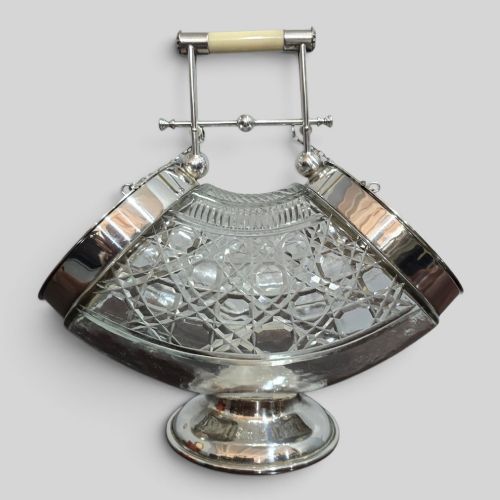
Materials vary widely beyond simple metalwork, incorporating oak staves, cut glass, earthenware, and stoneware liners. Buyers will encounter standard cylindrical barrels alongside more elaborate folding shell boxes and automated mechanisms.
Materials and construction
Makers combined electroplated nickel silver or standard silver plate with traditional timber framing, notably oak. Metal mounts secure the staves and form the hinged lids, handles, and rims.
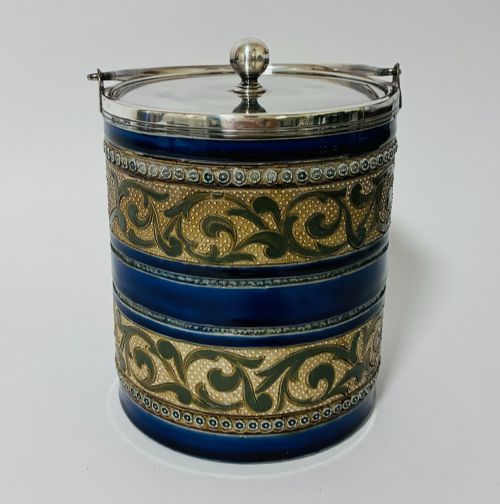
Inner containers rely on heavy moulded glass, hobnail cut crystal, or ceramic bodies such as Doulton Lambeth and Carlton Ware. These removable liners protected delicate biscuits from the metal and maintained proper hygiene.
Current listings feature oak, earthenware, and cut glass paired with silver plate across Victorian and Edwardian periods.
Assessing quality in design and execution
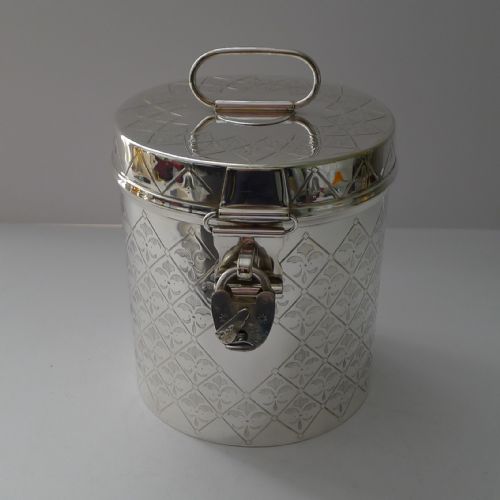
Execution ranges from straightforward domestic wares to heavy, ornate presentation pieces by notable firms. The crispness of the chasing on the silver plate and the precision of the piercing dictate the tier of the piece.
Mechanisms also separate standard items from superior productions, particularly in folding shells, locking actions, and automated lids. The depth and clarity of cut glass liners or the hand-painted details on earthenware bodies further distinguish finer examples.
Mappin and Webb·Robert and Belk·Elkington and Co·John Grinsell and Sons
The Silver Plated Barrel Caddy Glossary
- Electroplated nickel silver
- A base metal alloy coated with a layer of pure silver using an electrolytic process. This technique became widespread during the Victorian era for domestic tableware.
- Hobnail cut
- A decorative glass-cutting pattern featuring rows of small, pyramid-shaped facets. It reflects light brightly and adds tactile grip to barrel liners.
- Flow blue
- A ceramic glazing technique where cobalt blue bleeds slightly into the surrounding white glaze during firing. This creates a soft, hazy appearance on earthenware bodies.
- Doulton Lambeth
- A prominent British pottery known for salt-glazed stoneware and detailed decorative applications. Their work often forms the ceramic body of late Victorian barrels.
- Drum form
- A cylindrical container shape resembling a musical drum, frequently utilised for oak and silver plate biscuit boxes.
Silver Plated Barrel Caddy: Frequently Asked Questions
What were silver plated barrel caddies originally used for?
These containers were designed to hold dry biscuits and crispbreads on the dining table or sideboard. Households used them to protect perishable baked goods from moisture and air before mass-produced packaging arrived.
They also functioned as ice buckets or general table boxes in larger Victorian dining rooms. Their lidded designs kept contents secure until the host served guests.
How do I date a silver plated barrel caddy?
Dating relies heavily on stylistic cues, manufacturer marks, and the combination of materials used in the construction. Victorian examples often display heavier ornamentation, while Edwardian pieces lean towards simpler lines or flow blue ceramics.
Maker stamps stamped onto the base or rim provide a direct link to active production years. Examining the type of glass liner and the plating technique helps narrow the decade of manufacture.
Are glass liners original to these barrels?
Many surviving barrels retain their original cut glass, frosted crystal, or ceramic liners. Because these inner vessels suffered frequent breakage over the decades, replacement liners appear with regularity on the market.
Matching the diameter and rim shape confirms whether a liner fits the specific metal mount correctly. Original liners usually show minor signs of age consistent with the exterior silver plate.
How should I clean silver plated metal?
Maintenance requires gentle cleaning with a soft cloth and a specialised silver polish formulated for plated items. Harsh abrasives will wear away the thin silver layer and expose the base metal underneath.
Keeping the pieces away from damp environments prevents tarnishing and protects wooden elements like oak staves. Regular dusting preserves the surface finish without stripping the historical patina.