

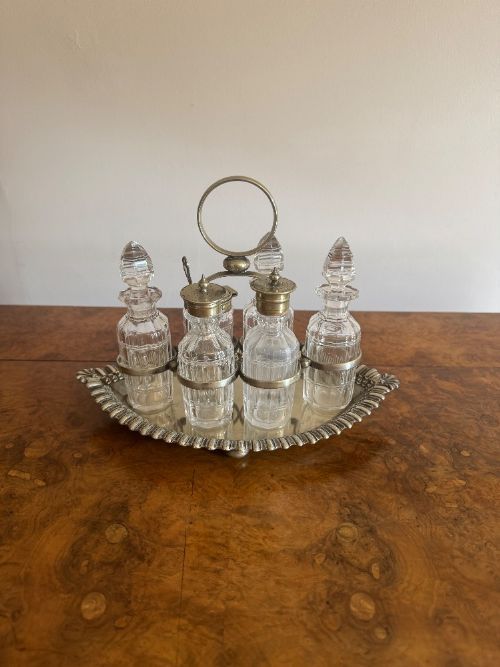
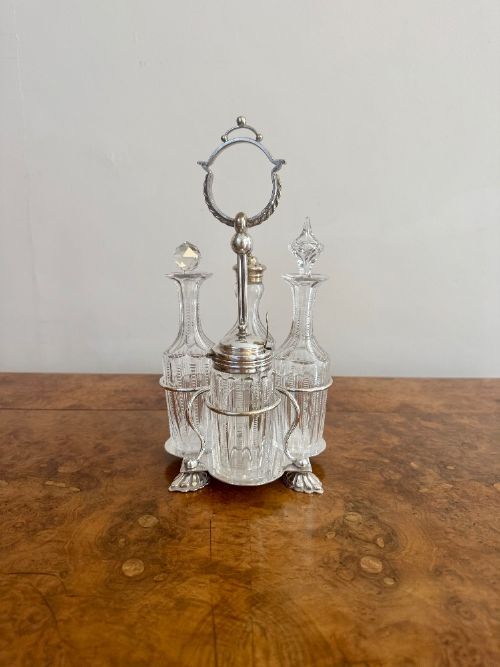


Silver Plate Vinegar Bottle
A silver plate vinegar bottle forms part of a traditional cruet set, offering a functional table accessory shaped by Victorian, Edwardian, and Georgian periods.
Silver Plate Vinegar Bottle
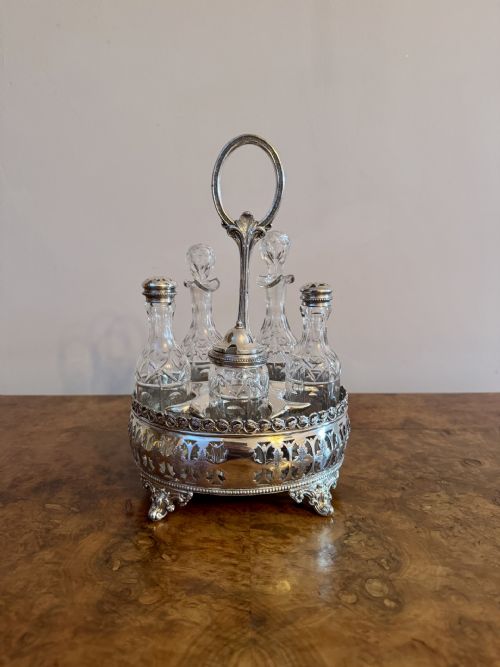
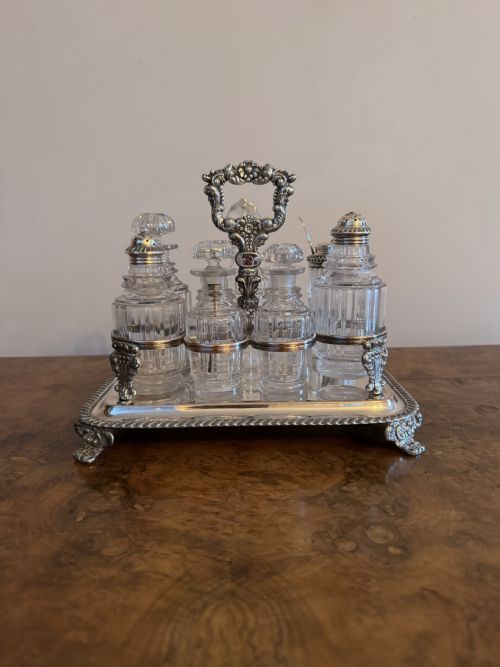
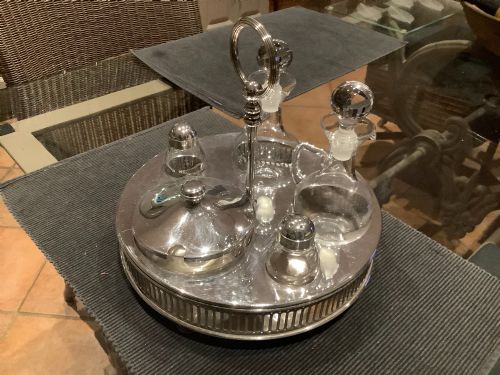
A silver plate vinegar bottle typically appears as part of a larger cruet set or condiment set rather than as a single standalone item. These table vessels serve dining rooms by holding liquids like oil and vinegar alongside mustard, pepper, and salt.
The pieces on this page span several distinct periods including Georgian, Victorian, Edwardian, and the mid-twentieth century. Buyers frequently encounter multi-bottle frames holding cut glass bottles fitted with silver plated mounts.
Makers and manufacturers produced these items in various configurations, ranging from compact bachelor sets to large seven-bottle and eight-piece frames. The overarching design reflects the formal dining habits of the nineteenth and twentieth centuries.
Materials and Construction
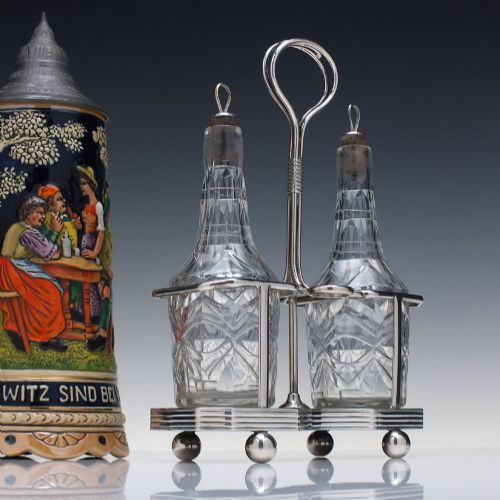
Silversmiths and manufacturers utilised silver plate over base metals to create durable metal frames and stands. These frames hold individual cut glass or plain glass bottles designed to contain liquids securely.
Corks frequently serve as stoppers within the bottle necks, sealing the contents inside the glass reservoirs. The integration of cut glass with silver plated metal represents the primary manufacturing technique across these periods.
Silver Plate Vinegar Bottle Retail Price Guide 2026
Typical asking prices for silver plate vinegar bottle among the pieces listed under this phrase on Sellingantiques today, from the lower quarter to the upper quarter. They describe what is for sale here now, not the wider market.
Some Victorian dining tables required a footman just to navigate the sheer weight of a fully loaded seven-bottle cruet set.
Factors That Influence Quality
The craftsmanship of the metal frame and the intricacy of the glass cutting determine the distinction between standard and superior pieces. Heavier frames with substantial silver plating and deeply faceted glass bottles demonstrate higher production standards.
The completeness of the set and the preservation of matching original bottles affect the overall character of an antique cruet. Pieces that retain their correct number of matching glass components indicate careful preservation over time.
Christofle·Walker & Hall·Wade Wingfield Wilkins
The Silver Plate Vinegar Bottle Glossary
- Cruet set
- A fitted stand holding multiple glass bottles for condiments, oil, and vinegar. These sets sit centrally on dining tables for easy access.
- Silver plate
- A layer of silver fused to a base metal foundation. This technique allowed manufacturers to produce decorative tableware at a lower cost than solid silver.
- Cut glass
- Glass decorated by cutting geometric or floral patterns into the surface with a wheel. This method adds weight and brilliance to condiment bottles.
- Condiment set
- A collection of small vessels designed for holding table seasonings and sauces. They appear in various configurations across Victorian and Edwardian dining wares.
Silver Plate Vinegar Bottle: Frequently Asked Questions
What is a silver plate vinegar bottle used for?
These bottles hold vinegar for table service, usually housed within a dedicated metal frame alongside other condiment containers.
They functioned during formal meals to allow diners to season their food at the table.
How do I identify the period of a cruet set?
Stylistic details in the metalwork and the depth of the glass cutting offer clues to the manufacturing era.
Georgian, Victorian, and Edwardian designs each display distinct aesthetic choices in their handles and frames.
Are the bottles always made of glass?
The containers generally consist of cut glass or moulded glass designed to withstand daily dining use.
Silver plated mounts and stoppers complete the assembly of each individual bottle.
How should I clean antique silver plate?
Gentle cleaning with appropriate silver care products helps maintain the metal surface without damaging the plating.
Avoid harsh abrasives that might wear away the silver layer over time.