



Silver Plate Teapot Set
A silver plate teapot set brings formal hospitality to the table, offering matched vessels shaped by decades of dining tradition.
Silver Plate Teapot Set
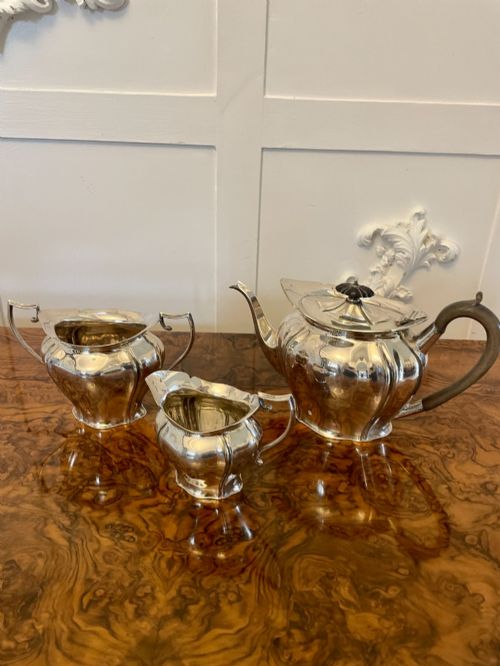
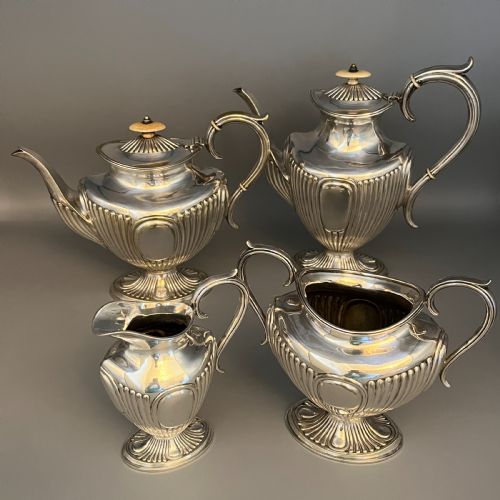
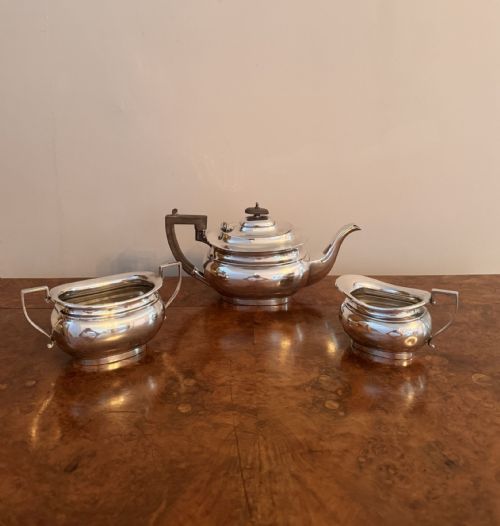
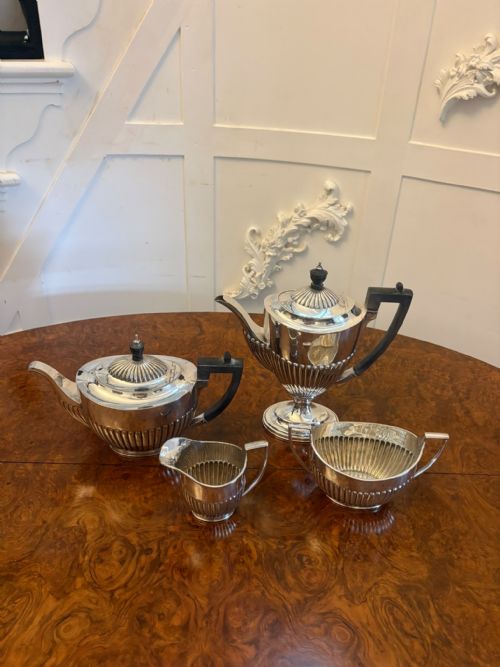
A silver plate teapot set consists of matched serving vessels designed for pouring tea and coffee, frequently appearing on this page in Edwardian and Victorian configurations. These groupings commonly include a teapot alongside a cream jug and sugar bowl, occasionally expanding to four or six pieces with the addition of a coffee pot or hot water kettle.
The Edwardian period dominates the selections here, often manifesting as ornate three or four piece ensembles stamped by notable makers. Victorian and later Art Deco examples also arise, shifting from heavily chased Rococo revival motifs toward cleaner geometric lines by nineteen thirty.
Materials and construction
Makers utilised electroplated nickel silver as the primary base metal for these services, applying a durable coating of silver over a sturdy alloy core. This technique allowed workshops to produce substantial domestic wares with the visual weight of solid silver at a fraction of the cost.
Handles and insulators incorporated alternative materials such as ebonised wood, ebony, and bone to prevent heat transfer during service. Metal bodies frequently received decorative chasing, embossing, or applied borders featuring grapevine detailing and rococo scrolls.
Silver Plate Teapot Set Retail Price Guide 2026
Typical asking prices for silver plate teapot set among the pieces listed under this phrase on Sellingantiques today, from the lower quarter to the upper quarter. They describe what is for sale here now, not the wider market.
Several teapots feature bone insulators shaped like tiny stacked biscuits to stop the handle from getting piping hot.
Markers of quality
Quality in these services rests upon the thickness of the applied silver plating and the crispness of the chased or embossed ornamentation. Superior sets maintain their plating evenly across high-wear areas like spout tips and handles, while lesser examples show base metal telegraphing through thin spots.
The weight and balance of individual pots distinguish finer workshop production from mass commercial output. Substantial metal gauges, well-fitted hinged lids, and secure handle attachments indicate higher grade manufacturing standards.
Walker and Hall·Goldsmiths and Silversmiths Co·WMF
The Silver Plate Teapot Set Glossary
- Electroplated Nickel Silver
- A base metal alloy of copper, nickel, and zinc coated with a layer of pure silver through an electrolytic process. This method became the standard industrial practice for producing durable domestic tableware during the nineteenth century.
- Edwardian Rococo Revival
- A decorative style popular in the early twentieth century that borrows heavily from eighteenth-century asymmetrical scrollwork and floral motifs. Pieces from this movement often feature lush relief work and C-scroll handles.
- Ebonised Wood
- Timber treated with a dark stain or finish to imitate true ebony. Makers selected this material for teapot handles and finials to withstand heat and provide a contrasting dark grip against bright silver surfaces.
- Tea Service
- A coordinated grouping of vessels intended for the preparation and consumption of tea. Standard components include the teapot, sugar bowl, and cream jug, sometimes accompanied by matching trays and coffee pots.
Silver Plate Teapot Set: Frequently Asked Questions
How many pieces make a complete set?
Complete sets typically comprise three to four principal vessels, most often a teapot, sugar bowl, and cream jug. Larger configurations frequently incorporate a matching coffee pot or hot water kettle.
Additional matching items like tea trays or waste bowls appear in larger ensembles, though many services survive as partial groupings gathered over time.
How do I clean silver plate safely?
Cleaning requires a soft cloth and a specialised silver polish formulated for plated items rather than solid metal. Gentle application prevents wearing down the thin layer of silver on raised details and edges.
Immersion dips should be avoided, particularly on pieces with ebonised wood or bone insulators, as harsh chemical solutions can damage organic components and adhesives.
Can I use these sets daily?
Daily use remains entirely practical provided the plating is intact and handles are secure. Warm water and mild soap suffice for routine maintenance between occasional polishings.
Care must be taken to hand wash every component, as automated dishwashers will strip the plating and ruin wooden or bone insulators.
What is the cube tea set?
The cube tea set represents a specialised compact design developed for tight spaces, often associated with early twentieth-century travel or small households. These sets pack multiple stacking vessels into a single geometric footprint.
Such designs prioritise space efficiency while retaining the standard functionality of a traditional multi-piece tea service.