




Silver Plate Taper Stands
Silver plate taper stands offer the warm gleam of silver without the heavier cost, making them a practical choice for lighting any room.
Silver Plate Taper Stands
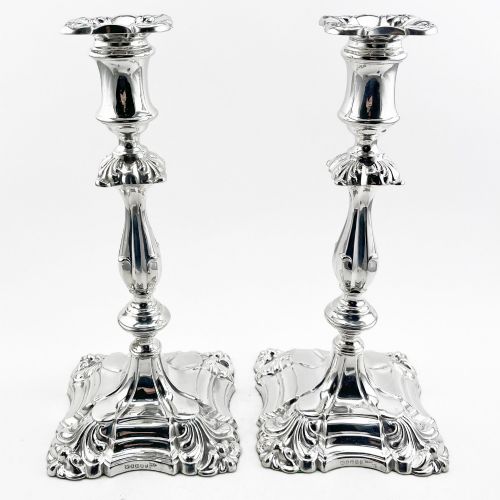
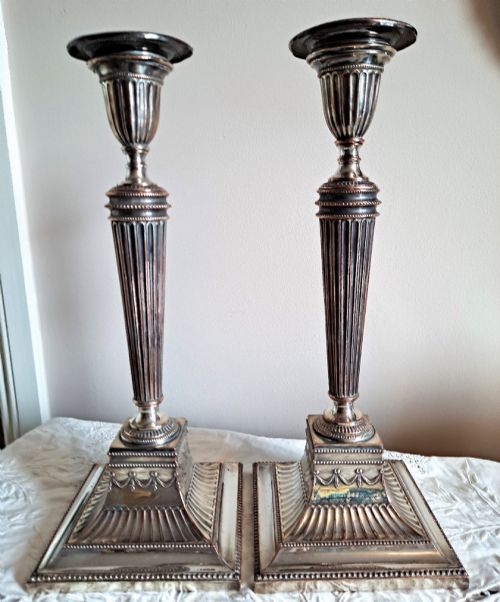
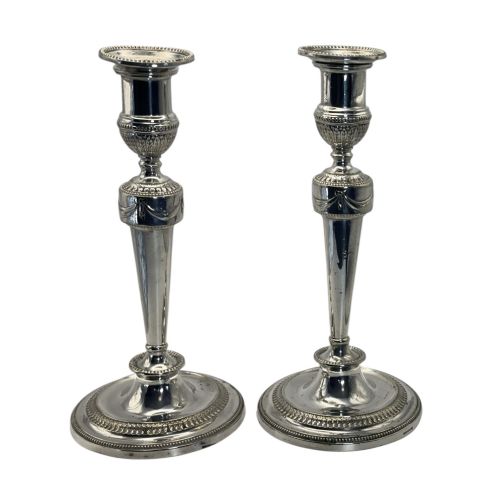
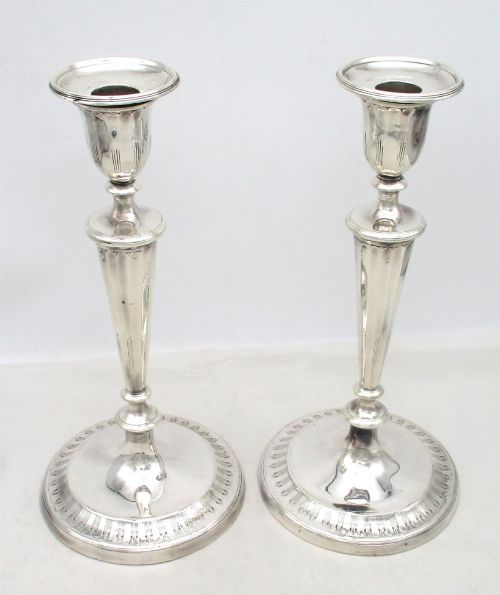
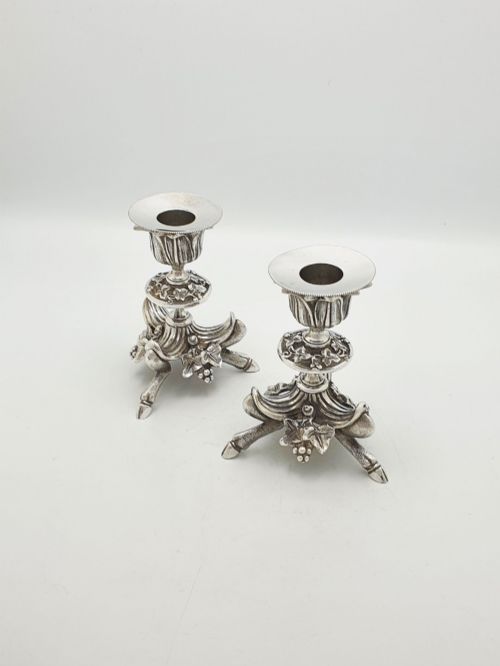
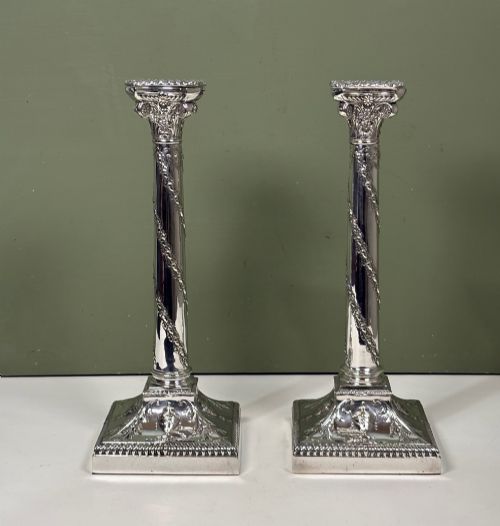
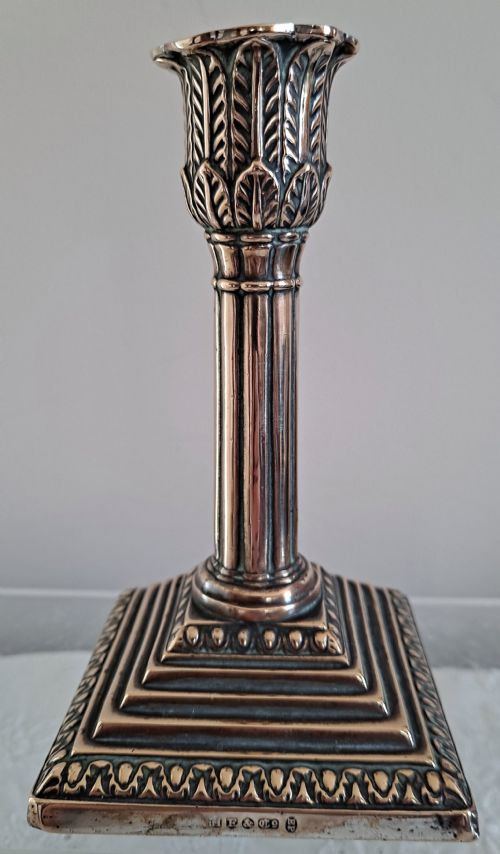
When you search for silver plate taper stands, you are looking at metal candlesticks designed to hold small candles, frequently appearing here as pairs from the Victorian, Edwardian, and Georgian periods. These pieces take the form of miniature candlesticks, desk candlesticks, and column candlesticks intended for intimate lighting on tables and mantels.
The versions most common on this page are Victorian and Edwardian examples made from silver plate over copper, nickel silver, or base metal. Makers such as Walker & Hall, Mappin & Webb, and Elkington produced these variations in styles ranging from Neoclassical to Rococo Revival.
Materials and construction methods
Makers formed these items using copper, nickel silver, or base metal as a foundation, applying a thin layer of silver over the surface through silver plating or electroplating techniques. Early examples utilise Old Sheffield Plate methods where a sheet of silver was fused to a copper core.
Later pieces often employ electroplated nickel silver, a process that allowed workshops to deposit a uniform coating of silver onto the base metal using an electrical current. Structural components frequently include weighted bases and glass elements combined with metal columns.
Silver Plate Taper Stands Retail Price Guide 2026
Typical asking prices for silver plate taper stands among the pieces listed under this phrase on Sellingantiques today, from the lower quarter to the upper quarter. They describe what is for sale here now, not the wider market.
Listings span from the 18th century through the 1930s, incorporating Victorian, Edwardian, and Georgian eras with materials including copper and nickel silver.
Determinants of quality
The thickness of the applied silver and the durability of the underlying metal foundation dictate the longevity of each piece. Superior items retain their plating evenly across high-relief ornamentation, whereas lesser examples show thin spots where the base metal beneath has begun to expose itself.
Execution of decorative details, from Neoclassical fluting to Rococo scrollwork, separates standard production items from finer workshop output. Well-defined casting and crisp chasing mark the work of established makers like Elkington or Mappin & Webb compared to unmarked baseline manufacturing.
Walker & Hall·Mappin & Webb·Elkington & Co·Barker Ellis
The Silver Plate Taper Stands Glossary
- Old Sheffield Plate
- An early form of silver plating created by fusing a thin sheet of silver to a thicker copper ingot before rolling them together into sheets. This technique often reveals a thin line of copper along cut edges.
- Electroplated Nickel Silver
- A method introduced in the nineteenth century where silver is electrically bonded to a nickel alloy base. It replaced older fusion methods and became standard for commercial silver plate.
- Neoclassical
- A decorative style inspired by classical Greece and Rome, characterised by clean lines, columns, urns, and symmetrical ornamentation. It appears frequently on Georgian and Victorian candlesticks.
- Rococo Revival
- A nineteenth-century style featuring exuberant, asymmetric scrolls, naturalistic floral motifs, and shell forms. This aesthetic is common on decorative Victorian lighting pieces.
Silver Plate Taper Stands: Frequently Asked Questions
How do I clean silver plate stands?
Use a soft cloth and a gentle silver polish specifically formulated for plated items. Avoid aggressive scrubbing that might wear through the thin silver layer.
Test any cleaning product on a small, hidden area first. Rinse with warm water and dry thoroughly to prevent tarnishing.
Are these stands made of solid silver?
No, these pieces consist of a base metal, copper, or nickel silver covered with a layer of silver. They use plating to achieve the appearance and lustre of solid silver at a different scale of production.
Examination of edges or worn spots will often reveal the darker base metal underneath the silver surface.
How can I tell a Georgian piece from a Victorian one?
Georgian pieces often display simpler, classical proportions associated with eighteenth-century design. Victorian examples frequently show heavier ornamentation or revival styles like Rococo and Neoclassical.
Maker marks and the type of metal base underneath can also provide clues to the manufacturing date.
Can I use modern candles in these?
Standard taper candles may require trimming at the base to fit older sockets securely. Measuring the nozzle diameter before purchasing candles ensures a stable fit.
Using dripless candles helps protect the metal surface from wax buildup during use.