
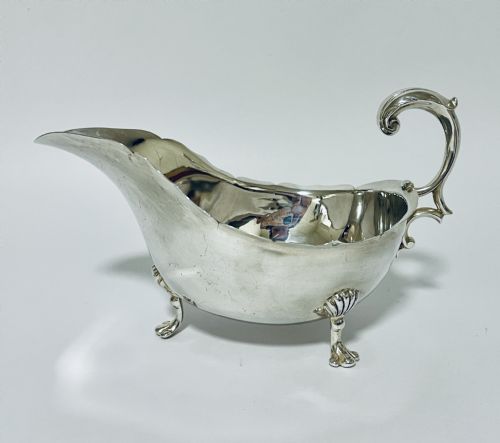


Silver Plate Sauce Boat
A silver plate sauce boat brings practical elegance to the dining table, offering a polished vessel for gravies and dressings.
Silver Plate Sauce Boat
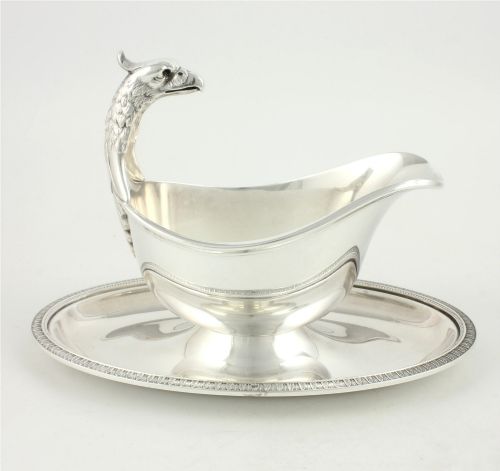
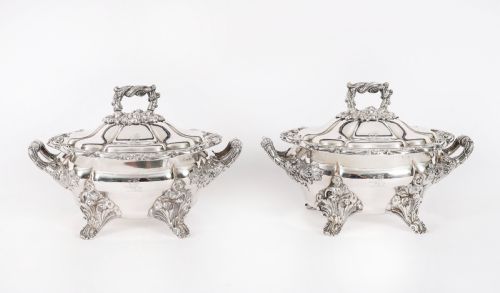
A silver plate sauce boat is a table vessel designed for serving gravies, sauces, and condiments during meals. These pieces appear in forms ranging from open boats on stands to lidded tureens and specialised warmers.
The selection includes examples from the eighteenth, nineteenth, and twentieth centuries, spanning periods such as Georgian, Victorian, and Edwardian. English and French workshops produced the majority of these serving items.
How they were made
Many early examples utilise Old Sheffield Plate, a method fusing a thin sheet of silver to a thicker copper base. Later pieces employ electroplated nickel silver or standard silver plate over a base metal core.
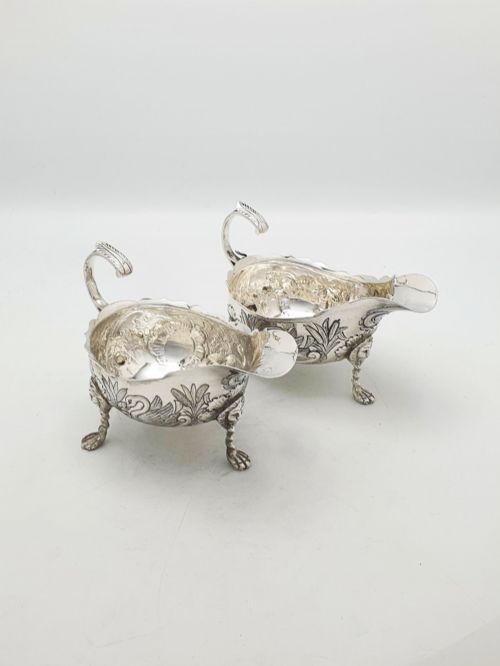
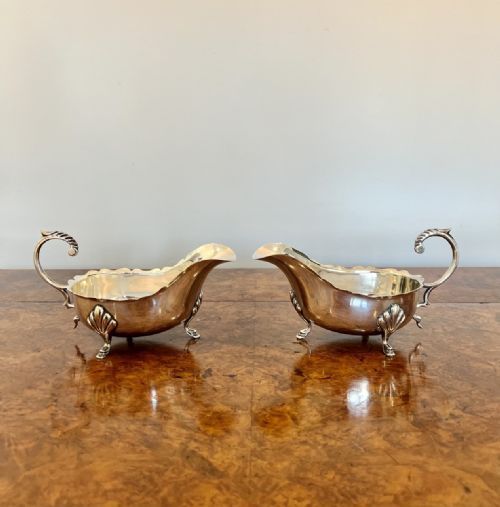
Silversmiths shaped the metal through hammering, casting, and soldering components together. Handles, feet, and rims often received cast ornamentation, including leaf detailing, shell motifs, and figural supports.
Engraving and crests were frequently added by hand to personalise the vessels for specific households. Lidded variants incorporated hinged mechanisms for practicality at the table.
Silver Plate Sauce Boat Retail Price Guide 2026
Typical asking prices for silver plate sauce boat among the pieces listed under this phrase on Sellingantiques today, from the lower quarter to the upper quarter. They describe what is for sale here now, not the wider market.
Some Victorian geese met their match in swan-necked sauce boats.
What varies in quality
The distinction between standard production and top-tier execution rests in the weight of the metal and the crispness of the cast details. Heavier gauge metal resists denting and provides a more substantial feel in the hand.
Makers known for high standards invested greater skill into chased ornamentation, balanced handles, and stable bases. The quality of the plating process determines how well the surface withstands decades of polishing.
Christofle Gallia·Padley Parkin and Staniforth·Mappin and Webb·Christofle of Paris·Walker and Hall·Marples and Co·James Dixon·William Hutton and Sons
The Silver Plate Sauce Boat Glossary
- Old Sheffield Plate
- A precursor to electroplating created by fusing silver and copper together under heat. This technique produces a characteristic warm glow and occasional hints of copper showing through worn edges.
- Argyll
- A type of gravy warmer featuring an internal compartment for hot water to keep sauces at serving temperature. These pieces often include a handle and a spout.
- Electroplated Nickel Silver
- A base metal alloy of copper, nickel, and zinc coated with a layer of pure silver using an electrical current. This process became the standard manufacturing method in the nineteenth century.
- Sauce Tureen
- A deep serving vessel with a fitted lid, designed to retain heat for thicker gravies and sauces. They frequently rest on fixed or matching stands.
Silver Plate Sauce Boat: Frequently Asked Questions
How do I clean a silver plate sauce boat?
Use a specialised silver polish and a soft cloth to remove tarnish gently, avoiding abrasive pads that can strip the thin silver layer.
Rinse the vessel in warm soapy water and dry it thoroughly with a lint-free cloth after polishing.
What is the difference between a sauce boat and a tureen?
A sauce boat is typically an open vessel with a spout and handle for pouring liquids directly onto food.
A tureen is deeper, includes a fitted lid, and often comes with a ladle for serving thicker gravies.
Can I use these sauce boats for daily dining?
These pieces function well for modern dining tables, provided you handle them with care during washing and serving.
Hand washing is essential to preserve the delicate silver plate and any engraved decoration over time.
How can I tell Old Sheffield Plate from later electroplate?
Old Sheffield Plate often reveals tiny streaks of copper along exposed rims where the silver layer has thinned through generations of polishing.
Electroplated pieces usually display a uniform silver surface and frequently bear nineteenth or twentieth-century manufacturer marks.