






Silver Plate Inkstand
A silver plate inkstand anchors the desk with polished metal and glass, keeping correspondence orderly and writing tools close at hand.
Silver Plate Inkstand
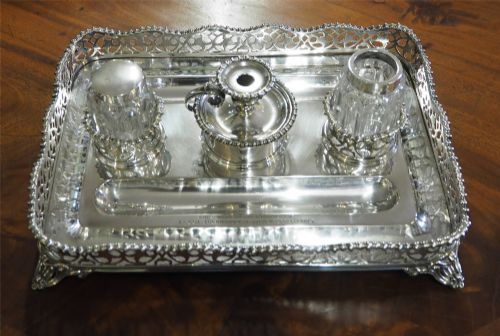
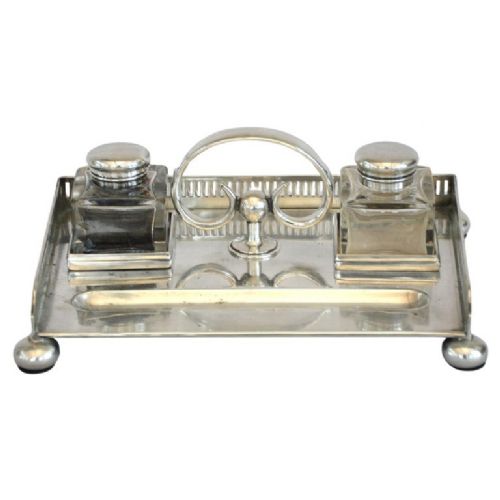
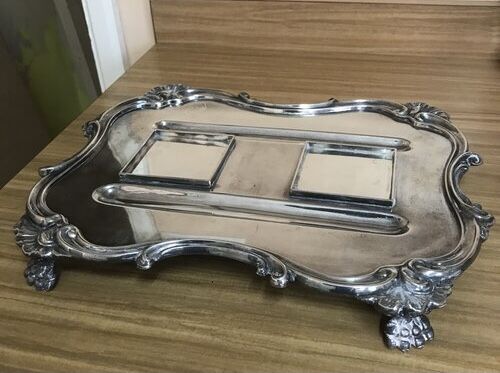
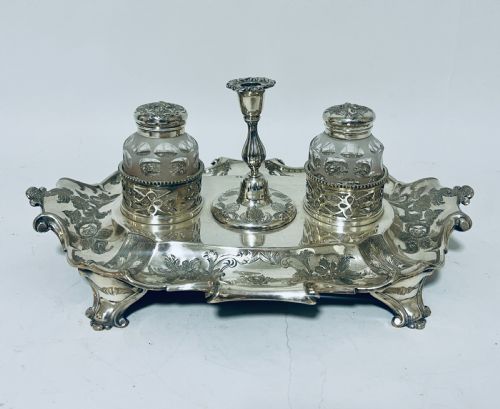
When you search for a silver plate inkstand, you encounter desk accessories designed to hold inkwells, pens, and sanders for a formal study or writing table. These pieces range from compact single inkwells to elaborate double stands fitted with cut glass bottles, bell pulls, and chambersticks.
The versions most frequently met on this page date from the Victorian and Edwardian periods, alongside earlier Georgian and Sheffield plate examples. They appear in silver plate on base metals, solid oak, horn, and cut crystal, reflecting the diverse writing habits of the nineteenth and early twentieth centuries.
Materials and Method
Maker workshops combined silver plate over copper, brass, or Britannia metal with heavy cut glass and crystal ink bottles. Sheffield plate pieces utilise an early fused technique where a sheet of silver is fused to a copper base before shaping.
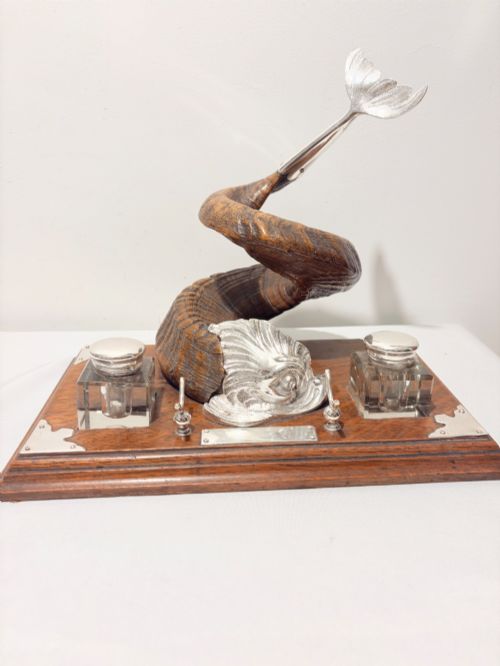
Organic elements such as cow horn, ram horn, and quarter-sawn oak provide contrast to the polished metal mounts and hinged lids. Metal components often feature cast handles, pen rests, and feet soldered directly to the main tray or standish.
Silver Plate Inkstand Retail Price Guide 2026
Typical asking prices for silver plate inkstand among the pieces listed under this phrase on Sellingantiques today, from the lower quarter to the upper quarter. They describe what is for sale here now, not the wider market.
Curling inkstands modelled after Scottish sports let nineteenth-century enthusiasts bring the ice rink directly onto the mahogany writing desk.
Defining Quality
The distinction between standard production items and finer examples rests on the weight of the metal, the crispness of cast ornamentation, and the preservation of the original plating. Superior pieces retain the heavy gauge base metal without base metal bleed through, while lesser items show thinning plate.
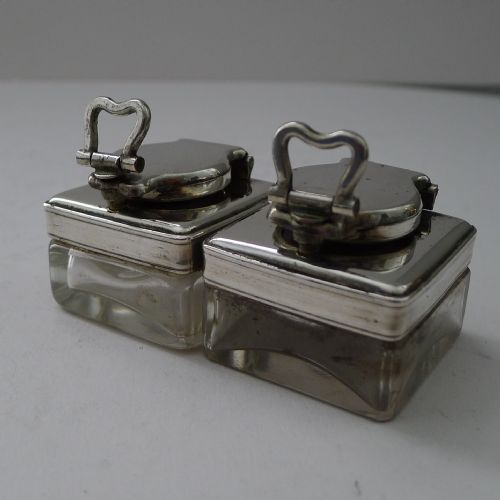
Fittings also dictate standing: matching cut glass or crystal inserts with undamaged collars and fully functioning hinged lids elevate a desk set. Integrated details like novelty figures, horn mounts, or maker marks from notable firms separate utilitarian desk tidies from showcase pieces.
Elkington and Company·Walker And Hall·Mappin and Webb·Wilkinson and Co·Daniel Holy of Sheffield·James Deakin·W M F
The Silver Plate Inkstand Glossary
- Standish
- A portable desk stand containing inkwells, pen trays, and sometimes a wafer box or bell. This term is frequently used interchangeably with inkstand.
- Sheffield Plate
- An early method of fusing a thin sheet of sterling silver to a thicker copper ingot. This technique was largely superseded by electroplating in the mid-nineteenth century.
- Desk Tidy
- A multipurpose desk accessory designed to hold stationery, pens, and inkwells in one organised frame. These items often include dedicated slots for envelopes and small office tools.
- Chamberstick
- A low portable candleholder fitted with a handle and saucer base. Some desk stands incorporate these to provide light for sealing wax after dark.
- Novelty Inkstand
- An inkwell or desk stand shaped to represent an animal, sport, or figurative scene. These pieces reflect Victorian taste for playful and imaginative desk ornaments.
Silver Plate Inkstand: Frequently Asked Questions
What is a silver plate inkstand?
A silver plate inkstand is a decorative desk tray fitted with one or more inkwells, pen rests, and sometimes accessory compartments for stamps and sealing wax. These pieces served as the centrepiece of a nineteenth-century writing desk.
Craftsmen produced them in various styles ranging from simple circular trays to elaborate figural designs incorporating horn and cut glass.
How do I clean my inkstand?
Cleaning requires warm water, a mild detergent, and a soft cloth applied gently to preserve the remaining silver plating. Avoid harsh chemical dips that strip the character from antique metal surfaces.
Glass inserts lift out easily for washing separately in lukewarm soapy water before being dried and returned to their collars.
Are the inkwells original?
Many surviving desk stands retain their original matching cut glass or crystal inkwells, often featuring faceted bodies and hinged metal collars. Replacement inserts appear frequently due to the fragile nature of glass over a century of use.
Matching the collar size and glass weight helps determine whether an insert belongs to the base.
How do I date an inkstand?
Dating relies on stylistic clues, construction methods, and registration diamond marks stamped into the metal. Georgian and early Sheffield plate pieces show fused edges, while Victorian examples often feature electroplating and registration numbers.
Maker marks stamped underneath the tray provide a direct link to the active years of the firm that produced it.