



Edwardian Oak Desk Set
These pieces form an edwardian oak desk set, offering practical writing accessories and seating built from solid timber to organise any study.
Edwardian Oak Desk Set
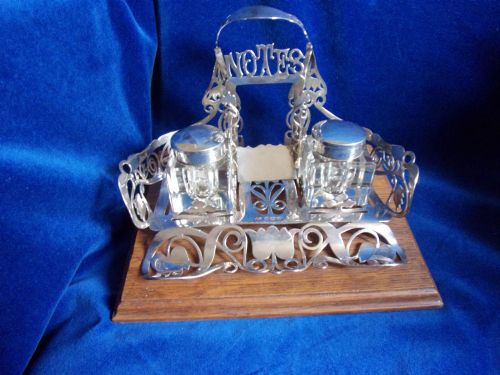
An edwardian oak desk set comprises the fitted stands, inkstands, and matched postal scales produced during the early twentieth century and late nineteenth century. These functional items bring together timber and metal to manage correspondence and keep writing instruments in order.
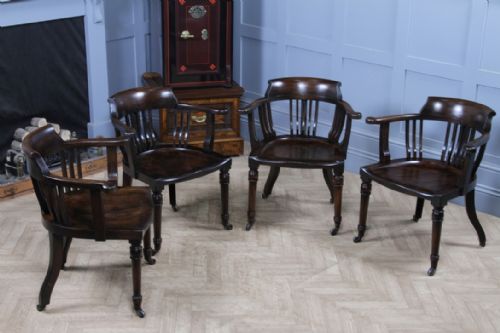
The objects span from solid oak inkstands and architectural desk clocks to sets of library armchairs and captains chairs intended for heavy daily use. Variations emerge across styles ranging from late Victorian country to Gothic Revival, reflecting the evolving tastes of the period.
Buyers encountering this group will find pieces predominantly dated around nineteen hundred alongside earlier nineteenth century examples. Each object serves a specific utilitarian purpose within a traditional study or office environment.
Materials and construction
Makers relied heavily on solid oak for the primary structures, combining the durable timber with brass fittings, cut glass inkwells, and silver mounts. Calico and iron also appear in supportive roles within the internal mechanisms and upholstery.
Joinery techniques display the robust standards of nineteenth and early twentieth century workshops, whether shaping heavy library armchairs or hand fretting silver stands on timber bases. The integration of glass and brass components required precise fitting to withstand daily handling.
Edwardian Oak Desk Set Retail Price Guide 2026
Typical asking prices for edwardian oak desk set among the pieces listed under this phrase on Sellingantiques today, from the lower quarter to the upper quarter. They describe what is for sale here now, not the wider market.
Judging quality in construction and design
Superior examples distinguish themselves through the weight of the timber and the integration of multiple instruments, such as combined clock and barometer sets or complete postal scales with matching weights. The crispness of architectural details on desk clocks and the gauge of brass mounts indicate the original workshop investment.
Chairs show differentiation in the turning of the spindles, the width of the arm bow, and the consistency of the grain across a matched set of four. Simpler utility pieces contrast with elaborate architectural stands that incorporate silver fretwork and heavy bevelled glass.
The Edwardian Oak Desk Set Glossary
- Standish
- A portable tray or stand fitted for inkwells, sand boxes, and penholders used on a writing desk. It serves as the central vessel for correspondence tools.
- Smoker's bow
- A low wooden armchair with a rounded back rail supported by turned spindles, commonly found around desks and tables. This form offers sturdy seating for study and office use.
- Postal scales
- A weighing device mounted on a wooden base with calibrated brass weights to determine postage costs. They reflect the administrative requirements of a Victorian or Edwardian office.
- Architectural clock
- A timepiece cased in miniature building facades or gables constructed from oak. These decorative objects display the stylistic influences of period architecture on everyday items.
- Weather station
- A combined instrument housing barometers, thermometers, and hygrometers within a timber case. They provided domestic and professional interiors with atmospheric readings.
Edwardian Oak Desk Set: Frequently Asked Questions
What items belong in a complete desk set?
A complete grouping typically includes an inkstand with glass wells, a pen tray, and sometimes matching blotters or postal scales.
Larger collections extend to architectural clocks and barometers designed to sit alongside writing equipment on a library table.
How do I date an oak desk accessory?
Dating relies on stylistic clues such as Gothic Revival motifs or Edwardian simplicity, alongside the presence of hallmarked silver mounts.
Construction methods like hand-fretted metalwork and the thickness of the oak boards also point towards late nineteenth or early twentieth-century production.
Were these pieces used in offices or homes?
These accessories served both commercial offices and private residential libraries where correspondence was managed daily.
Sturdy captain chairs and heavy inkstands were built to endure regular handling by professionals and writers alike.
How do I care for oak and brass accessories?
Maintain the timber by keeping it away from direct heat sources and applying appropriate wax polish sparingly to preserve the grain.
Brass mounts and cut glass inkwells benefit from gentle cleaning with soft cloths to remove dust without disturbing the original patina.