


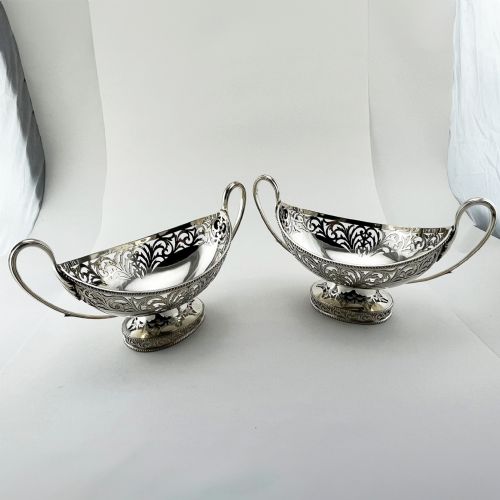


Silver Plate Fruit Dish
A silver plate fruit dish brings nineteenth and twentieth-century dining elegance directly to the table.
Silver Plate Fruit Dish
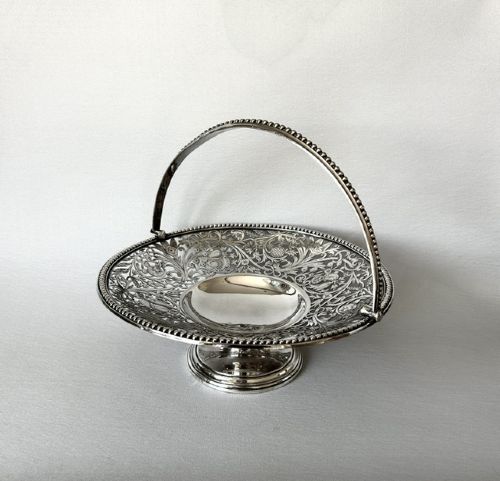
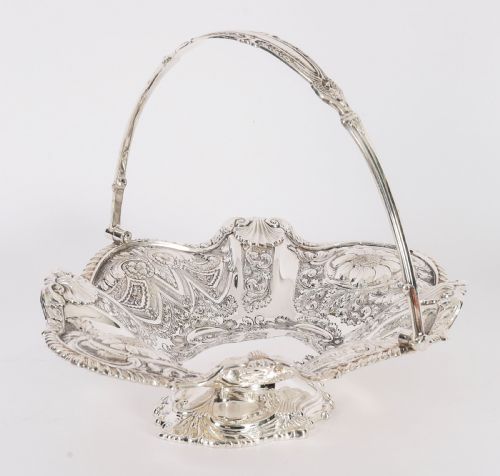
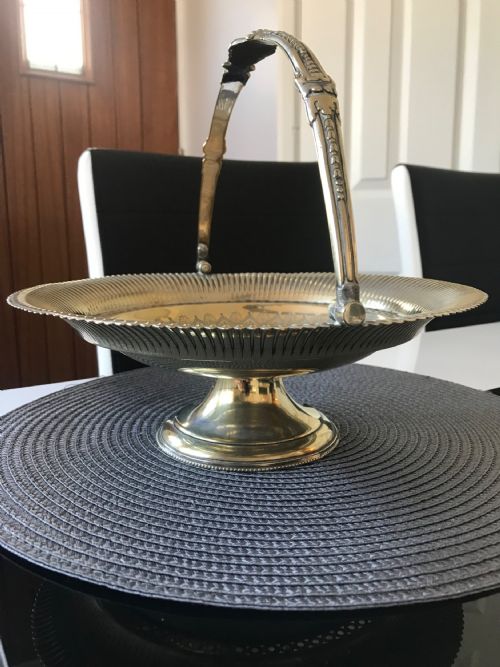
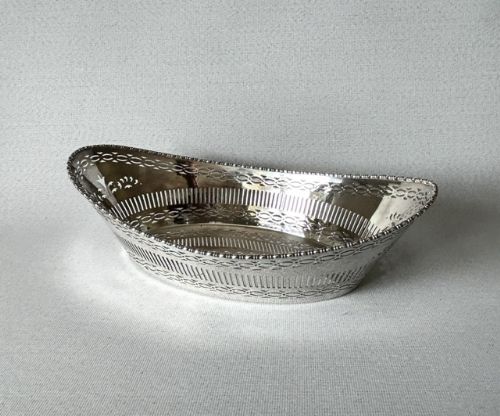
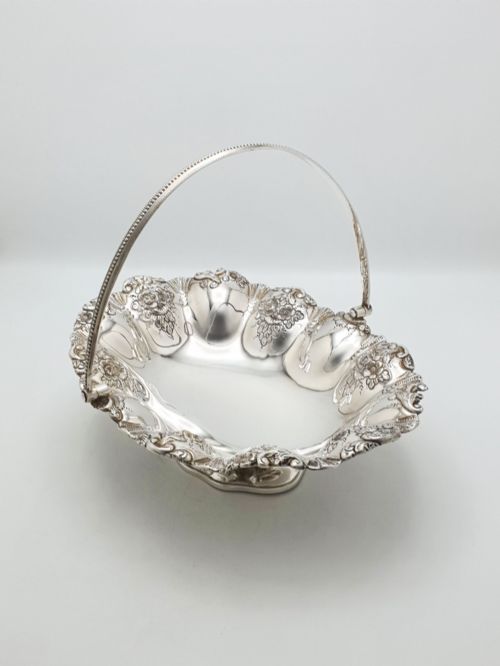
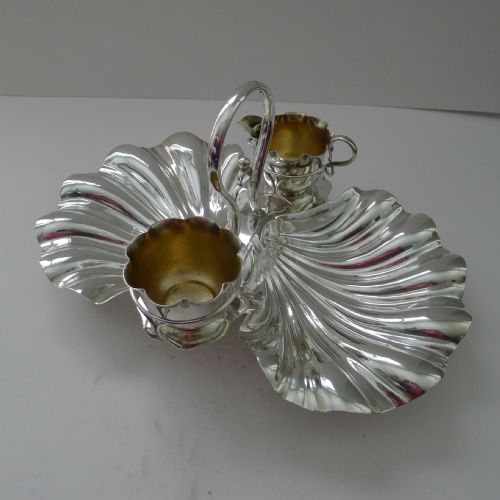
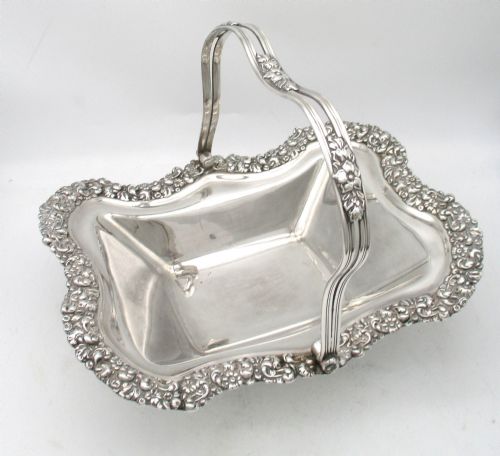
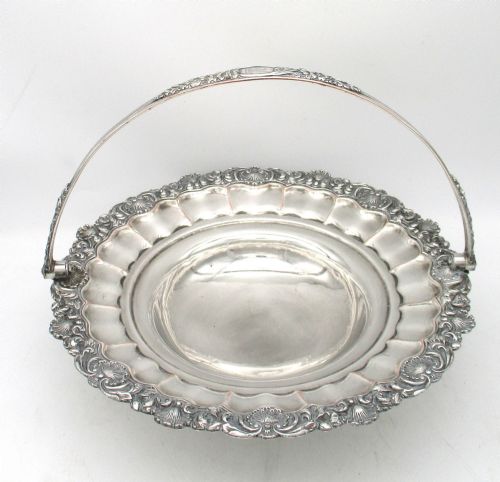
A silver plate fruit dish is a domestic vessel designed for presenting fruit, bread, or confectionery on the dining table or sideboard. These pieces range from simple serving dishes and bowls to elaborate centrepieces, pedestal stands, and swing-handled baskets.
The versions most commonly met on this page belong to the Victorian and Edwardian periods, alongside later Art Nouveau and Art Deco designs. Makers shaped these items in forms such as decorative baskets, tazzas, and strawberry sets, often combining silver plate with glass or ceramic liners.
How they were made
Makers utilised base metals like copper, brass, or nickel silver, applying methods such as electroplating or Old Sheffield plating to fuse a layer of silver to the surface. Old Sheffield pieces typically show a fused copper core visible at edges or wear points.
Craftsmen enriched these vessels through techniques including piercing, wirework, floral repoussé, hand chasing, and engraving. Many centrepieces and baskets also incorporate contrasting materials like cut crystal, opaline glass, green vaseline glass, or oak.
The listings on this site span materials from basic copper and brass to fine cut crystal, oak, and silver plate.
What varies in quality
Quality rests in the crispness of the hand-chased or repoussé ornament and the structural integrity of pierced wirework and swing handles. Pieces bearing clear maker marks from established firms display superior thickness and durability in the underlying metal.
The integration of secondary materials, such as heavy cut crystal liners or coloured art glass inserts, distinguishes finer production. Substantial weight and balanced proportion separate standard commercial serveware from exhibition-grade centrepieces.
George W. Scott & Sons Ltd·Mappin & Webb·Daniel Arter·Elkington·Thomas Bradbury·Walker & Hall·Tiffany & Co·James Deakin·Roberts and Belk
The Silver Plate Fruit Dish Glossary
- Electroplated Nickel Silver
- A method of coating a nickel silver alloy with a layer of pure silver using an electrical current. This process became the dominant manufacturing technique for silver plate from the mid-nineteenth century onward.
- Old Sheffield Plate
- An earlier technique involving the fusion of a thin sheet of silver to a thicker copper core before shaping the metal. This material is identifiable by the subtle reddish tint of copper showing through areas of heavy wear.
- Repoussé
- A metalworking technique where the artisan hammers the design from the reverse side to form a raised relief on the front. It frequently appears on Victorian and Edwardian floral rims.
- Tazza
- An Italian term for a shallow bowl or saucer raised on a pillar and foot, used for serving fruit or sweetmeats. These pedestals stand as prominent focal points on dining tables.
Silver Plate Fruit Dish: Frequently Asked Questions
How were these dishes used originally?
These vessels held fresh fruit, bread, or cakes for formal dining and drawing-room entertaining. Servants brought them to the table as centrepieces or passed them during dessert courses.
They functioned both as utilitarian tableware and as decorative centrepieces meant to display household wealth and taste.
How do I clean silver plate?
Wash the dish gently in warm, soapy water using a soft cloth, then dry it thoroughly with a lint-free towel. Avoid abrasive cleaners or harsh scrubbing that can wear away the thin silver layer.
Apply a dedicated silver polish sparingly only when necessary, avoiding areas with dark patination intended to highlight engraved details.
How can I tell the period?
Examine the decorative style, manufacturing marks, and accompanying materials to estimate the date of manufacture. Victorian pieces often feature heavy floral repoussé and grape borders, while Edwardian items lean toward lighter openwork and Art Nouveau or Neoclassical motifs.
Art Deco examples introduce geometric lines, and twentieth-century items frequently rely on electroplating stamps rather than Old Sheffield fusion seams.
Can I use these for food today?
These dishes remain suitable for serving dry foods, whole fruits, or breads during meals. Items featuring glass or ceramic inserts hold moist foods safely without direct contact with the metal.
Avoid leaving acidic foods like citrus fruit sitting on exposed silver plate for extended periods to prevent tarnishing or surface pitting.