
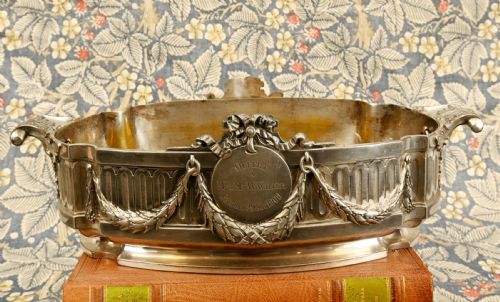


Edwardian Metal Centrepiece
An Edwardian metal centrepiece brings sculptural presence to a dining table, combining period craftsmanship with functional display.
Edwardian Metal Centrepiece
An edwardian metal centrepiece serves as a decorative focal point for a dining table or sideboard, taking the form of open bowls, pedestal dishes, and figural stands. These pieces emerge from periods spanning the late nineteenth century through the early decades of the twentieth, reflecting the aesthetic shifts of their time.
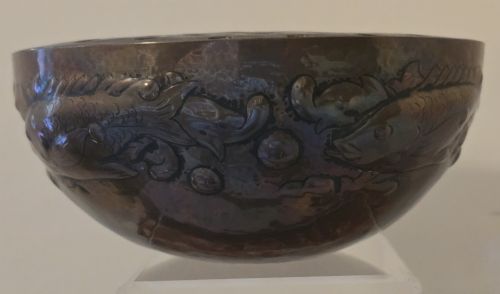
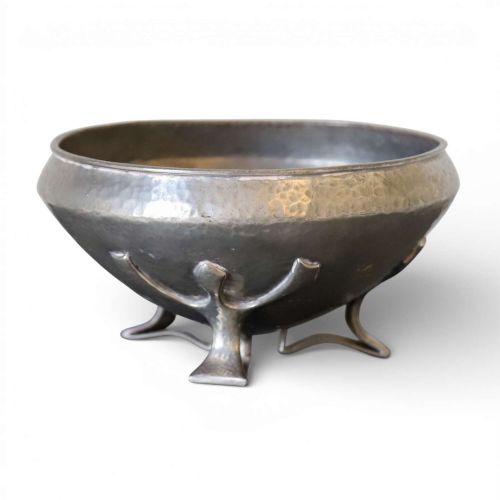
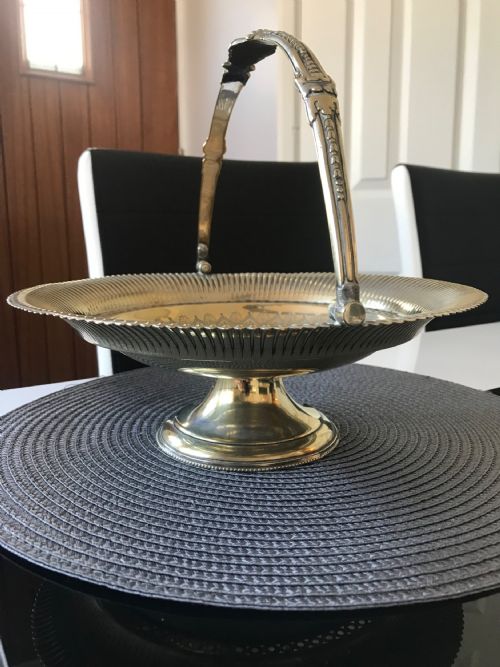
The versions most commonly met on this page showcase the flowing, organic lines of Art Nouveau and the honest, hand-worked construction of the Arts and Crafts movement. Formats range from simple copper bowls to elaborate silver-plated stands complete with glass liners and swing handles.
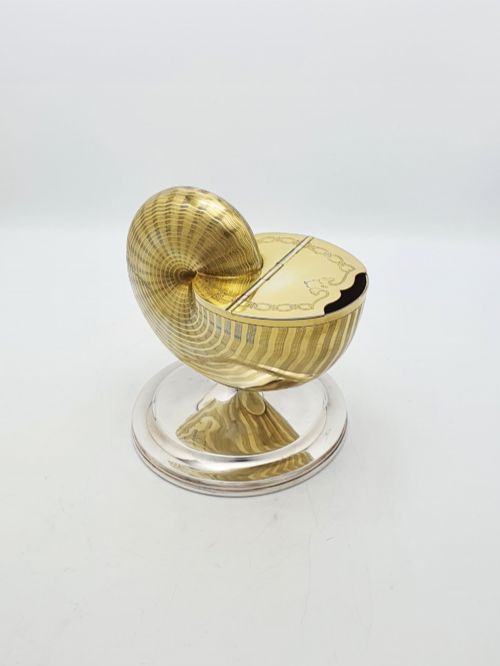
Makers and designers of the period utilised varied metals to achieve distinct visual effects, pairing polished silver plate with neoclassical motifs or dark patinated copper with coloured cabochons. Each object balances utility with ornamental ambition, designed to hold fruit, flowers, or confectionery.
How they were made
Makers utilised techniques such as electroplating base metals like nickel silver or Britannia metal to create a durable, lustrous surface finish. Other pieces relied on the manipulation of solid copper and pewter, shaped by hand-beaming or casting to produce robust, tactile vessels.
Decorative elements often involved piercing, embossing, and riveting, alongside the integration of contrasting materials like pressed glass liners and ceramic or enamel cabochons. Brass and gilt metal components were frequently assembled from multiple cast parts, secured with threaded pins and screws.
What varies in quality
The distinction between ordinary and exceptional examples rests upon the harmony of proportion, the crispness of applied ornament, and the integrity of the original surface finish. Pieces bearing identifiable studio or factory marks generally command greater interest due to documented authorship and superior execution.
Subtleties in hand-finishing, such as the depth of the planishing marks on copper or the complexity of pierced metalwork, separate mass-produced items from studio-led commissions. The retention of original components, including glass liners and matching lids, preserves the design intent and structural completeness.
Liberty & Co·Oliver Baker·Archibold Knox·Newlyn Copper·WMF
The Edwardian Metal Centrepiece Glossary
- Cabochon
- A polished, convex gem or enamel stone that is not faceted. These are frequently set into the metal bodies of Arts and Crafts metalwork to provide colour and contrast.
- Planishing
- A metalsmithing technique involving systematic hammer blows to smooth and shape a metal surface. This process leaves subtle, decorative facets across copper and pewter bowls.
- Tudric
- The trade name used by Liberty & Co for their range of pewter ware produced during the early twentieth century. Many of these items were designed by notable artists associated with the British art movements.
- Pedestal stand
- A raised vessel elevated upon a central foot or stem. This form lifts fruit or floral arrangements above the surface of the table.
- Electroplated nickel silver
- A base alloy of copper, nickel, and zinc coated with a thin layer of silver through an electrolytic process. It provided a brilliant finish at a lower cost than solid silver.
Edwardian Metal Centrepiece: Frequently Asked Questions
What is an edwardian metal centrepiece used for?
These pieces functioned primarily as ornamental focal points on dining tables, often holding fruit, flowers, or sweetmeats during formal meals. Their architectural and sculptural qualities allowed them to dominate the centre of a room even when empty.
Over time, many adapted to serve as general decorative vessels, holding dried arrangements or simply standing alone as examples of period metalwork.
How do I clean antique silver plate?
Silver-plated items require gentle cleaning with a specialist non-abrasive polish to preserve the thin metallic layer over the base metal. Excessive rubbing can wear through the plating, exposing the underlying nickel silver or brass.
Frequent, light dusting and occasional washing in warm soapy water usually suffice for everyday maintenance of stable pieces.
What is the difference between Art Nouveau and Arts and Crafts?
Art Nouveau design favours asymmetrical, whiplash lines inspired by natural plant forms, often rendered in smooth, reflective silver plate. The aesthetic prioritises flowing movement and decorative grace.
Arts and Crafts objects emphasise visible hand-craftsmanship, simple construction, and honest materials like hammered copper and pewter, frequently featuring cabochon stones.
Are glass liners original?
Original glass liners were custom-blown or pressed to fit the exact contours of the metal frames that hold them. Finding a liner that sits flush without excessive movement suggests it belongs to the piece.
Replacements are common due to the fragile nature of glass, so matching the colour and period style remains an important consideration.