


Silver Plate Bottle Stand
When you search for a silver plate bottle stand, you are looking at functional dining metalwork designed to hold decanters, wine bottles, and cruets securely on the table.

Silver Plate Bottle Stand
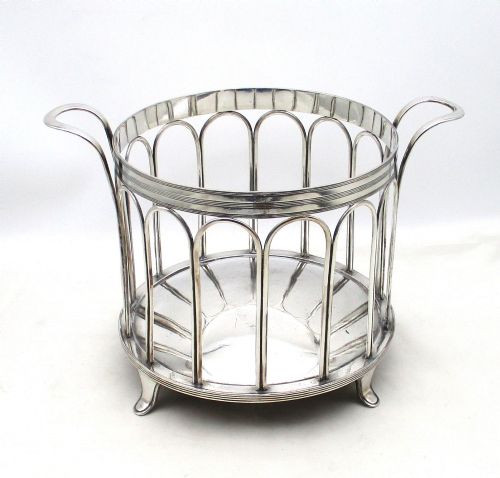
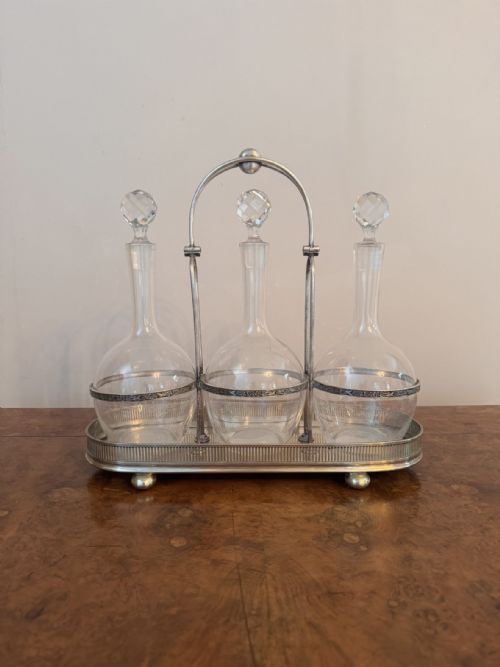
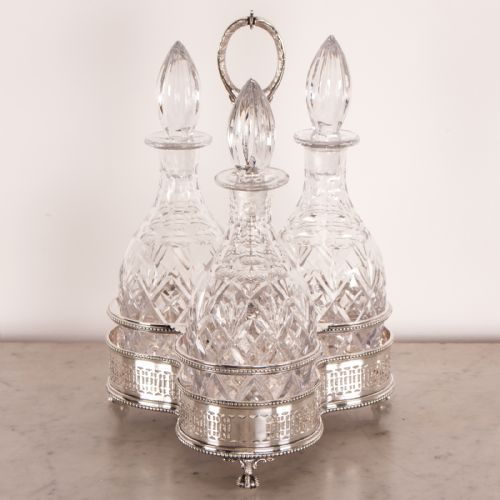
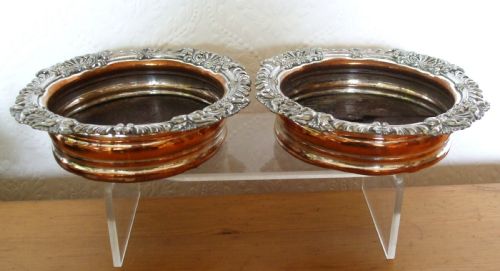
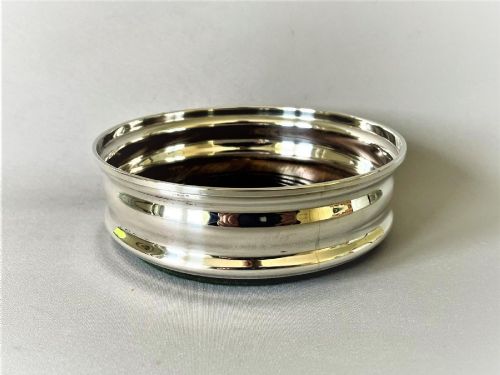
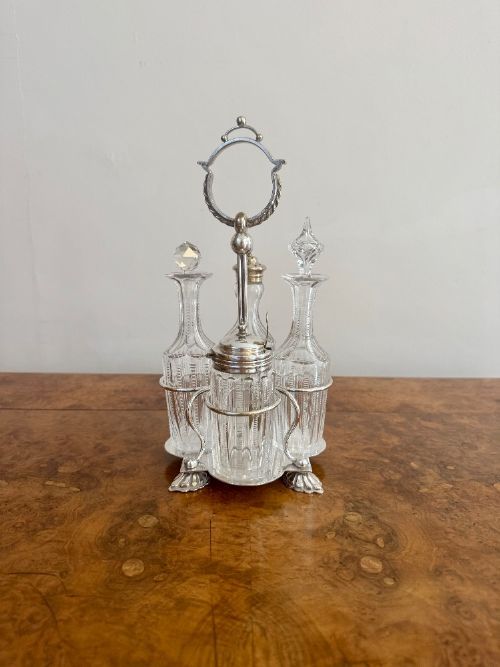
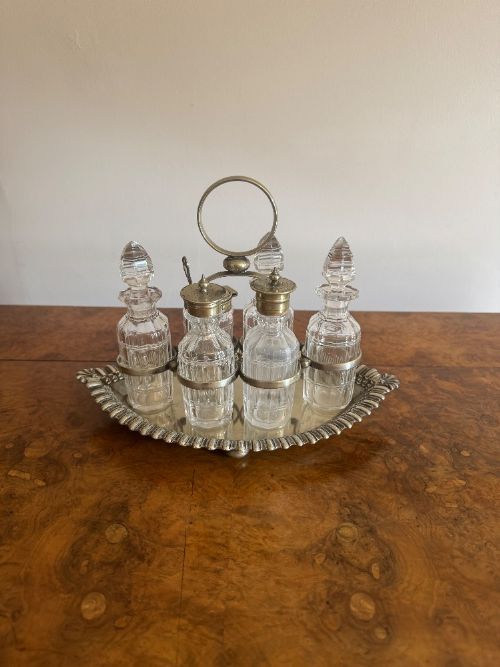
A silver plate bottle stand encompasses single wine coasters, multi-bottle cruet sets, tantalus frames, and syphon holders originating from the Georgian period through to the Edwardian era and the early twentieth century. The most common examples you will encounter on this page are Edwardian multi-bottle cruet sets and nineteenth-century single or paired wine coasters.
The forms range from simple circular coasters with wooden bases to elaborate frame structures holding cut glass decanters or mineral water bottles.
Makers adapted these pieces for dining rooms, sideboards, and bars, creating variations that held anywhere from a single champagne magnum to seven distinct condiment bottles.
Materials and construction
The foundational framework combines a metal base, typically copper or a base metal alloy, fused or electroplated with a layer of silver. This is frequently paired with turned wood inserts, particularly mahogany, and heavy cut glass or cut crystal bottles.
Victorian and Edwardian silversmiths utilised techniques such as piercing, stamping, and casting to produce decorative borders, swing handles, and lion mask loops. Old Sheffield plate examples from the Georgian period rely on an earlier fusion method where a sheet of silver is fused to a copper ingot before rolling.
Listings feature pieces spanning the Georgian, Victorian, Edwardian, and Art Deco periods, utilising silver plate, cut glass, mahogany, and copper.
Evaluating the craftsmanship
The distinction between ordinary and superior pieces rests on the crispness of the chased or pierced decoration, the weight and clarity of the original cut glass inserts, and the structural integrity of the silver plate over its base metal. Retaining the matching set of original cut glass decanters or cruet bottles elevates a stand considerably.
Subtleties in manufacturing, such as hand-soldered joints, substantial gauge metal, and intact maker marks from recognised workshops, separate mass-produced items from high-end dining accessories.
Walker & Hall·Brook & Son·Christofle·Elkington·Mappin & Webb·Martin Hall & Co
The Silver Plate Bottle Stand Glossary
- Old Sheffield Plate
- An early method of fusing silver to a copper core before rolling into sheets, used primarily before the invention of electroplating. Pieces from this method often show subtle copper undertones along edges.
- Cruet Set
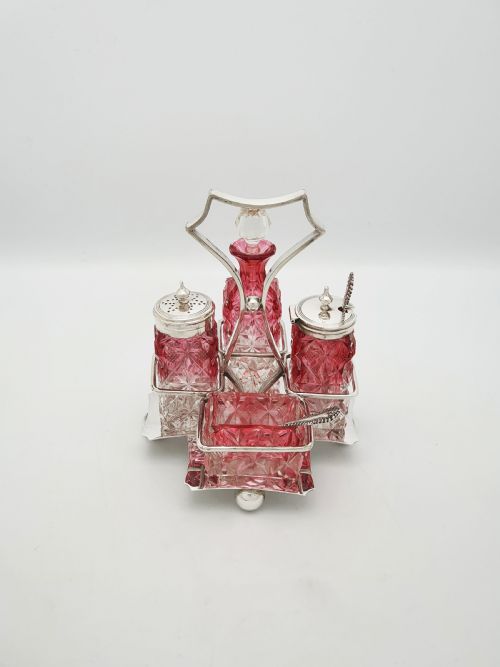
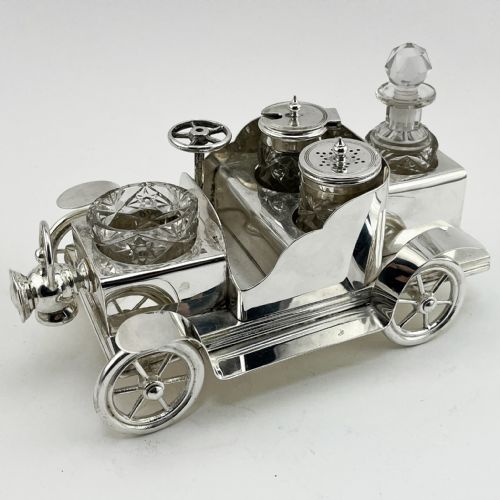
- A fitted stand holding multiple small bottles or jars for condiments, oil, vinegar, salt, and pepper. These often feature three to seven matching cut glass bottles.
- Tantalus
- A locking drink stand that secures decanters within a metal frame to prevent unauthorised access while displaying the contents. The mechanism typically locks the stoppers in place until a key is released.
- Coaster
- A small circular tray or stand designed to hold a wine bottle or decanter, protecting the dining table from condensation and spills. Many feature wooden bases with green baize underneath.
- Syphon Stand
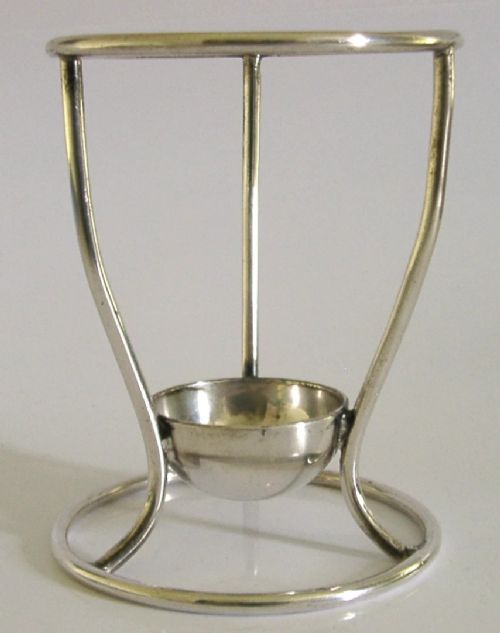
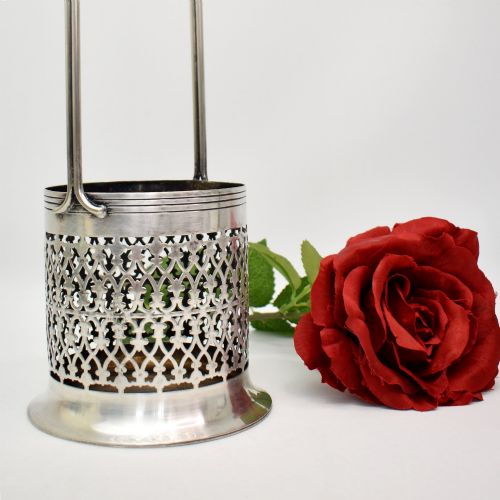
- A specialised metal holder designed to support a soda water syphon or mineral water bottle during the Victorian and Edwardian periods. They often incorporate ring handles and pierced galleries.
Silver Plate Bottle Stand: Frequently Asked Questions
What is a silver plate bottle stand used for?
These pieces were created to hold, transport, and present wine bottles, decanters, or condiment cruets safely during meals. They protected polished dining tables from rings and spills while keeping drinks or sauces close at hand.
Over time, their roles expanded to include holding soda syphons and barware on sideboards, combining utility with decorative display.
How do I distinguish Old Sheffield Plate from later silver plate?
Old Sheffield plate relies on a fused sheet of silver over copper, which often reveals a thin copper line along exposed edges or wear points. Electroplated wares, introduced in the mid-nineteenth century, tend to show a more uniform coating.
Examining the manufacturing seams and weight helps identify the earlier fusion technique used before chemical plating became standard.
Are the glass bottles usually original to the stand?
Many surviving stands retain their original cut glass or cut crystal decanters and cruet bottles, often evidenced by matching numbers or exact fits within the frame. Due to accidental breakage over the centuries, replacement bottles do occur in some instances.
Matching cut patterns, glass colour, and wear marks on the base of both the bottle and the stand help determine if they started together.
How should I care for a silver plated bottle stand?
Maintenance involves gentle cleaning with a soft cloth and a reputable silver polish formulated to preserve thin plating layers. Avoid harsh abrasive cleaners that can strip the silver coating from the underlying base metal.
If the stand includes a wooden base or glass inserts, clean those materials separately to avoid exposing the wood or cement to excess moisture.