
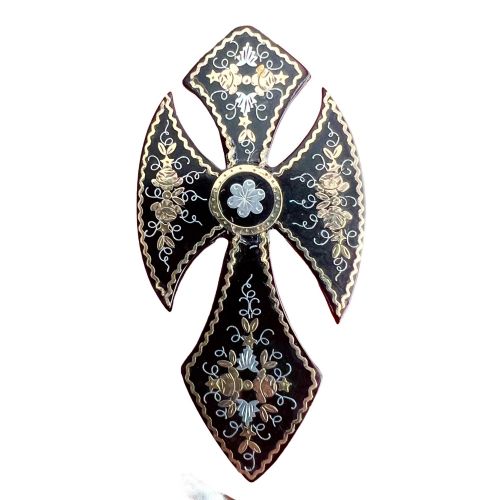


Silver Pique Tortoiseshell
Silver pique tortoiseshell brings together translucent shell and precious metals to form vanity boxes, scent bottles and small personal items designed to catch the light.
Silver Pique Tortoiseshell
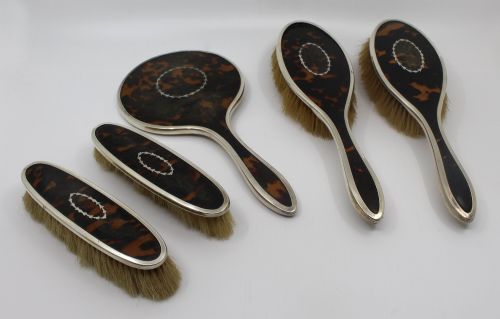
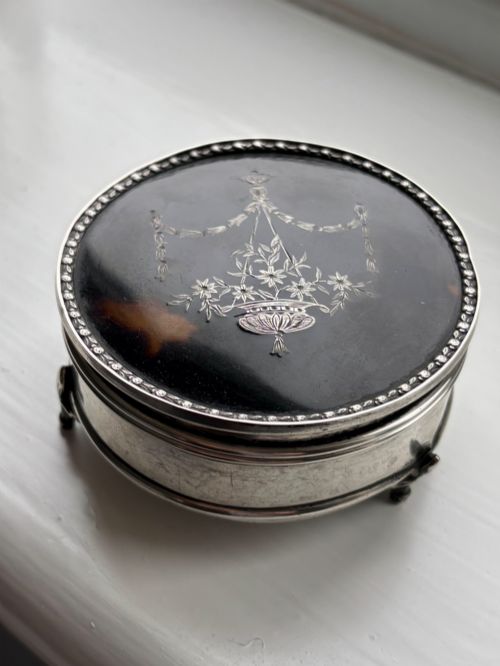
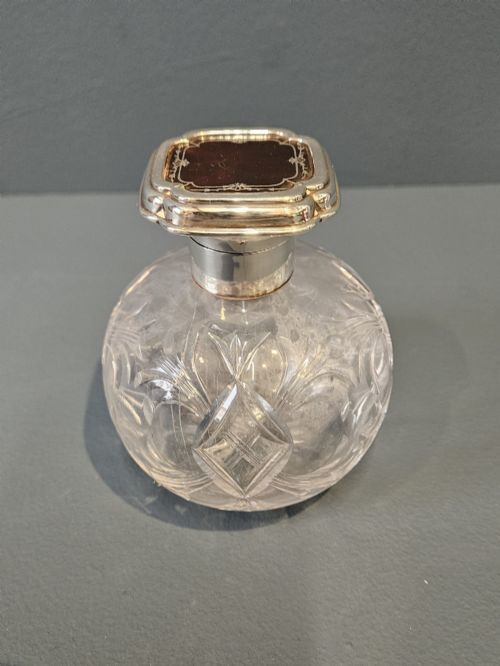
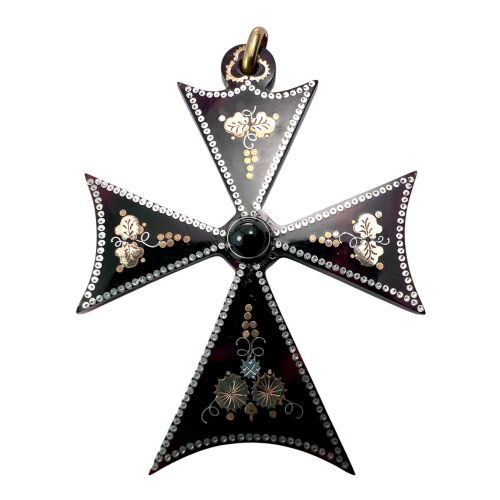
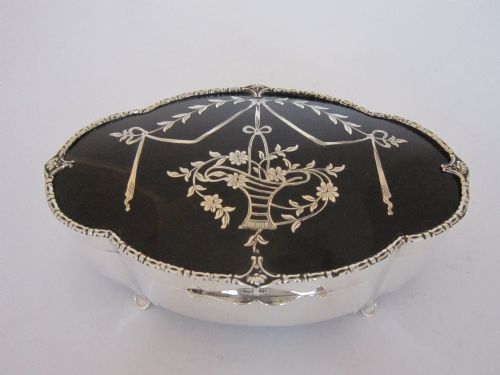
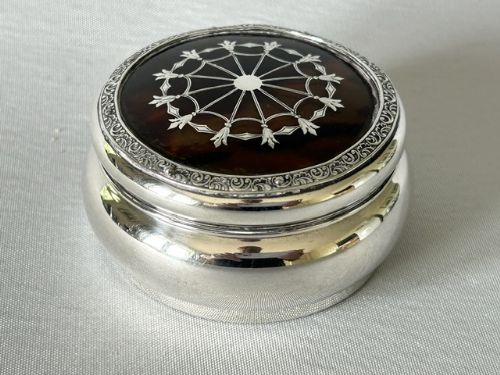
When searching for silver pique tortoiseshell, a buyer encounters dressing table wares and small personal accessories created from the Victorian era through the Art Deco period. The selections here centre on trinket boxes, jewellery boxes, scent bottles, and brooches that combine natural shell with metallic inlay.
The most common versions met on this page date from the Edwardian and George V periods, featuring sterling silver mounts and inlaid pins or plates. Earlier Victorian and Georgian examples also appear, alongside occasional pieces utilising faux tortoiseshell or cut crystal.
These items served practical purposes on dressing tables and writing desks while acting as personal ornaments. Their survival depends upon the durability of the metal inlay combined with the underlying organic material.
Materials and Technique
The technique relies on pressing heated silver or gold pins, wires, and thin sheet motifs directly into softened tortoiseshell. As the shell cools and hardens, it grips the metal inlay securely without adhesives.
Craftsmen paired sterling silver and gold with genuine hawksbill turtle shell, though later periods introduced faux tortoiseshell compounds. Mounts of solid silver were often cast or stamped separately before being fitted to boxes and bottles.
Desk accessories included match box covers and magnifying glasses, proving that even lighting a cigar required intricate silver inlay.
Distinctions in Quality
The standard of execution rests upon the density, precision, and intricacy of the metal inlay pattern. Elaborate floral or geometric pique work requires steady hands and precise placement into the shell.
The weight and gauge of the sterling silver mounts also determine distinction. Heavier silver hinges, collars, and maker-stamped frames elevate a piece above simpler mass-produced alternatives.
Ollivant and Botsford·Henry Matthews·Asprey and Co·Boardman Glossop and Co·The Corke Brothers and Co·Adie Brothers·William Comyns·Mappin and Webb·Thomas Henry Blake·Charles Boyton·Levi and Salaman·Collett and Anderson·S. Blanckensee and Sons
The Silver Pique Tortoiseshell Glossary
- Pique
- A decorative technique involving the insertion of gold or silver pins and strips into tortoiseshell or ivory. The metal creates delicate patterns across the dark surface.
- Tortoiseshell
- The mottled brown and amber keratin shell of the hawksbill turtle, utilised for decorative objects. It softens under heat, allowing metal inlay.
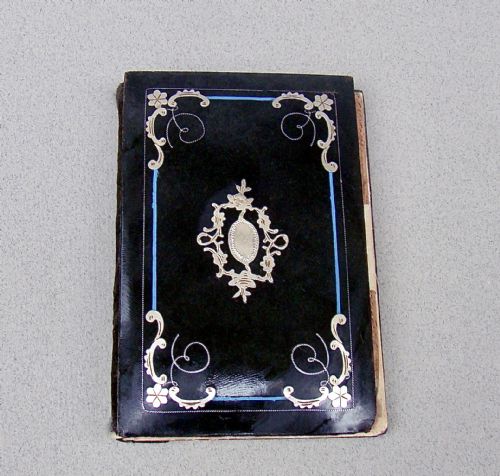
- Aide-Memoire
- A small pocket notebook or memorandum case fitted with leaves and a pencil. These often featured silver mounts and pique covers.
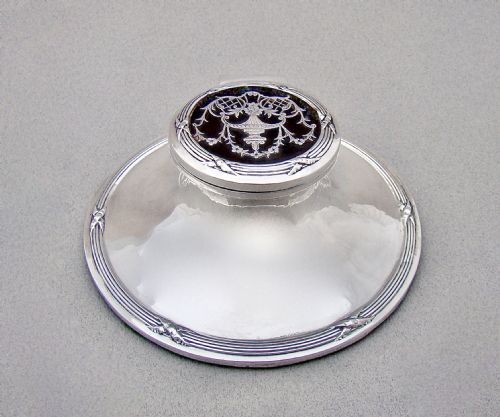
- Capstan Inkwell
- A desk inkwell shaped like a ship's capstan, featuring a wide base that tapers upwards. Many Edwardian examples paired this form with a silver and tortoiseshell lid.
- Etui
- A small ornamental case used for holding needles, cosmetics, or small tools. Georgian and Victorian versions frequently employed pique work on shell.
Silver Pique Tortoiseshell: Frequently Asked Questions
How do I clean silver pique tortoiseshell?
Dust the surface gently with a soft, dry microfibre cloth to remove particles. Avoid liquid cleaners, alcohol, or harsh chemicals, as these damage both the silver and the organic shell.
Polish the sterling silver mounts carefully with a specialist silver cloth while taking care not to catch or bend the delicate pique pins embedded in the shell.
Is tortoiseshell jewellery fragile?
Tortoiseshell is an organic material that can dry out, warp, or crack if exposed to direct sunlight, extreme heat, or sudden humidity changes. Handle pieces with care and store them away from radiators.
The metal pique inlay adds structural stability to the surface, but dropping a box or brooch can still cause the brittle shell to fracture.
How can I date these pieces?
Look for British hallmarks stamped on the sterling silver mounts, which indicate the assay office, standard mark, and date letter. Birmingham, London, and Chester offices handled many of these items.
Stylistic cues also help, as Victorian pieces often feature heavy scrollwork or Aesthetic movement designs, whereas Edwardian and George V items lean towards lighter neoclassical motifs.
What is faux tortoiseshell?
Faux tortoiseshell is an artificial substitute, often made from early plastics like celluloid or specialised horn compounds, designed to mimic the mottled amber appearance of genuine shell.
While genuine shell displays natural layers and organic irregularities under magnification, synthetic alternatives maintain a uniform texture and lack the warmth of real material.