


.JPG)
Silver Pepper Sifter
A silver pepper sifter brings genuine weight to the table, offering a refined way to season food using solid silver or silver-gilt work.
Silver Pepper Sifter
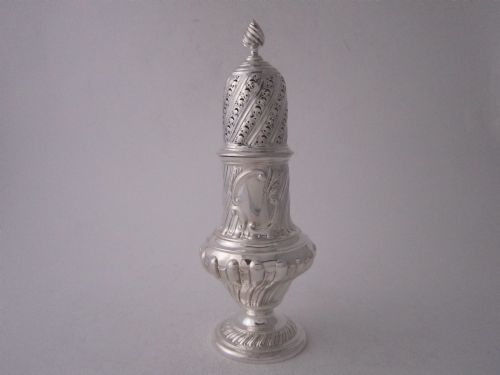
When you search for a silver pepper sifter, you are examining functional tableware designed to dispense dry seasonings or sugar at the dining table. The pieces available here span several distinct eras, incorporating terms such as sugar casters, dredgers, and muffineers alongside classic shaker forms.
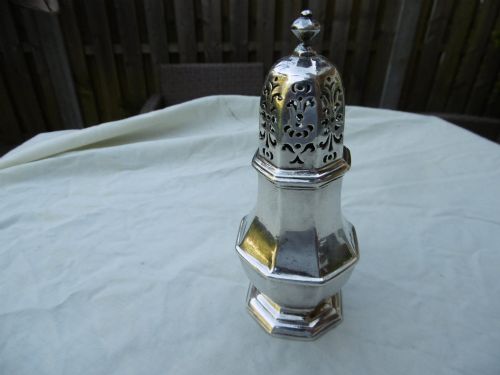
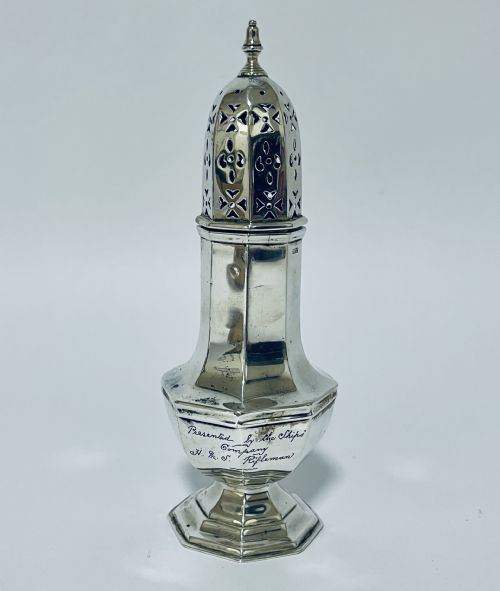
The objects you are most likely to meet on this page include Georgian examples, Edwardian pieces, and mid-twentieth century items. Formats range from traditional octagonal shapes to unusual lighthouse designs that pair solid silver with cut glass.
Makers and silversmiths utilised varied stylistic revivals, producing Georgian style and Georgian revival pieces well into the twentieth century. Each version demonstrates the specific domestic requirements of its original period of manufacture.
Materials and construction methods
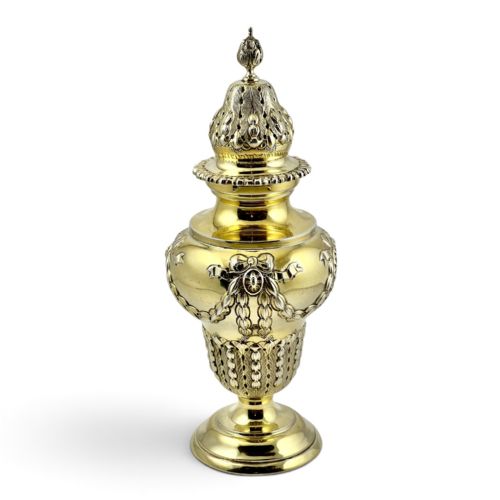
These items are constructed predominantly from sterling silver and solid silver, occasionally featuring interior silver-gilt finishes that provide a rich gold-coloured sheen against the polished exterior. Metalsmiths shaped these materials through traditional silversmithing techniques, creating sturdy bodies designed for regular handling.
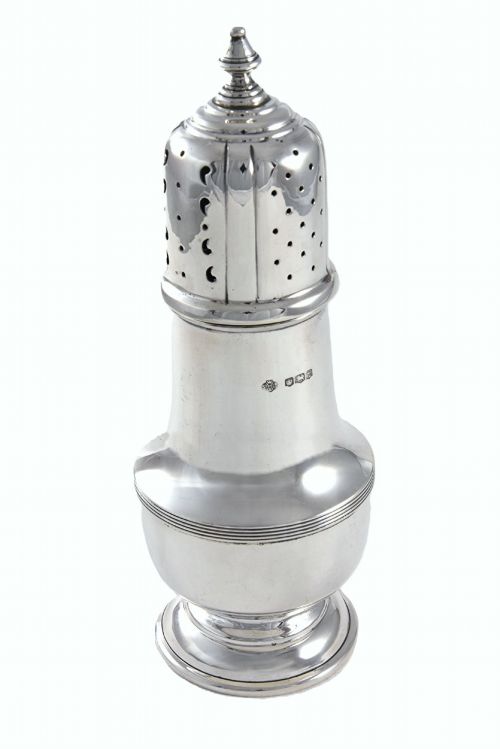
Pierced lids form an essential technical feature, punched or drilled with patterns that allow contents to shake through evenly. Certain twentieth-century pieces incorporate cut glass bodies mounted with silver collars and pierced tops, combining glass-cutting craft with metal smithing.
Some nineteenth-century diners required an entire suite of matching tabletop shakers just to keep up with changing culinary fashions.
Distinctions in quality and execution
The caliber of a piece rests heavily on the crispness of the piercing across the lid and the weight of the metal utilised in the body. Finer examples display clean, exact perforation patterns that remain sharp to the touch, whereas lesser execution yields softer edges and uneven spacing.
Proportion and structural balance distinguish superior items from standard production. A well-made caster maintains a steady centre of gravity and a secure fitting between the pierced cap and the main body.
Stephen Adams·The Barker Brothers·James Dixon & Sons Ltd
The Silver Pepper Sifter Glossary
- Caster
- A small container with a pierced top used for sprinkling sugar, spices, or pepper over food. They appeared in various forms across the eighteenth and nineteenth centuries.
- Muffineer
- A specific type of caster historically used for dusting sugar or salt onto hot muffins. It shares the same fundamental perforated-lid design as a pepper sifter.
- Silver-Gilt
- Silver that has been coated with a thin layer of gold on its surface. This technique protects the underlying metal from tarnishing while adding a warm decorative tone.
Silver Pepper Sifter: Frequently Asked Questions
What is a silver pepper sifter used for?
These vessels serve to hold and distribute dry condiments or sugar during meals. Their perforated lids allow contents to fall in a controlled sprinkle.
Historically, they sat upon dining tables as both functional implements and decorative objects reflecting the owner's status.
How do I identify the date of a caster?
British pieces typically bear hallmarks stamped into the metal, indicating the assay office, the maker, and a date letter corresponding to the year of manufacture.
Examining the style, such as an octagonal Georgian profile or an Art Deco lighthouse form, also provides a strong visual guide to the era.
Can I use these shakers for daily dining?
Solid silver items are durable enough for regular use provided they receive gentle hand washing and appropriate care. Avoid abrasive cleaners that might wear away crisp hallmark details.
Many collectors enjoy integrating antique tableware into modern meals, letting functional history take part in contemporary dining.
What does silver-gilt mean on a caster?
Silver-gilt describes silver pieces that have undergone a gilding process to cover the interior or exterior with a thin layer of gold. This gives the metal a rich, two-tone appearance.
Historically, gilding protected the silver from the corrosive effects of certain acidic spices or sugars placed inside.