


.JPG)
Table Sugar Shaker
A table sugar shaker is a functional vessel for dispensing sugar, prized for its craftsmanship and historical silver or brass work.
Table Sugar Shaker
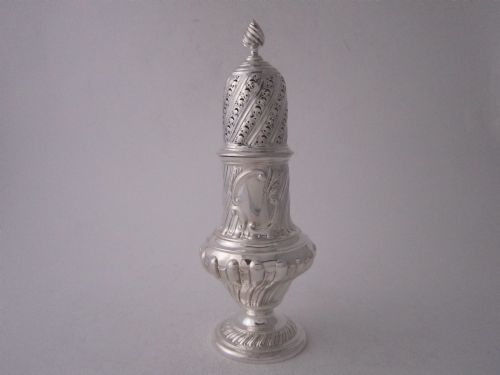
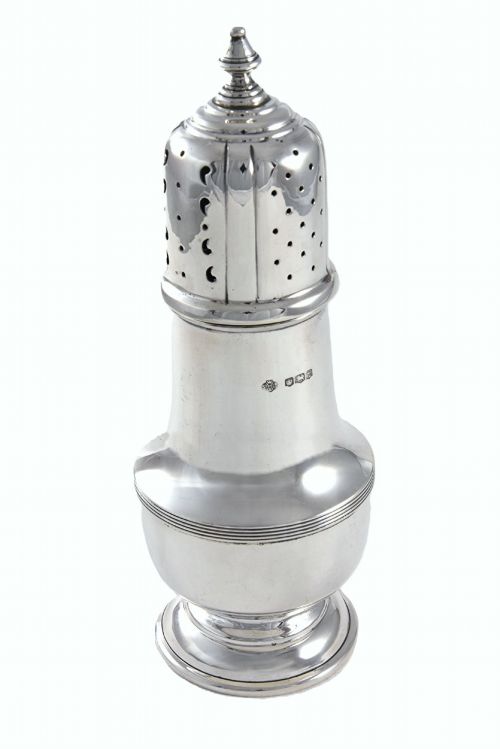
When you search for a table sugar shaker, you encounter functional dining implements designed to sprinkle sugar over food. These items appear in various forms, including traditional casters and spice dredgers.
The selections available include pieces originating from the eighteenth, nineteenth, and twentieth centuries. Styles range from Georgian and Victorian designs to later Art Deco interpretations.
How they were made
Silversmiths utilised sterling silver and solid silver, sometimes applying silver gilt finishes for a decorative effect. Others employed brass or combined cut glass bodies with silver tops.
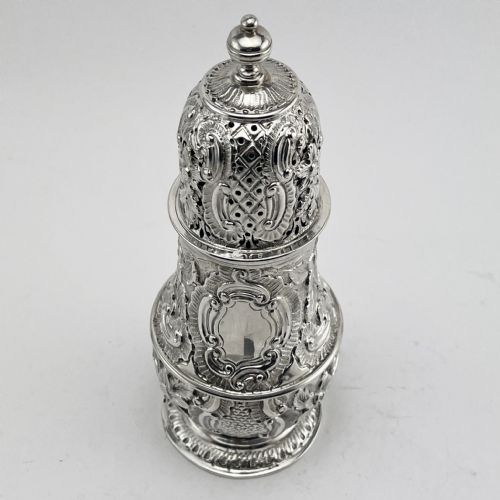
Techniques involved shaping metal into polygons, round tops, or lighthouse forms, alongside detailed piercing and engraving on the lids. Makers produced cast components for the decorative bodies of Victorian and Georgian designs.
One brass spice dredger survived from the 18th Century to share dining tables with sleek Art Deco lighthouse shakers.
What varies in quality
The standard of a table sugar shaker depends on the crispness of the piercing on the lid and the weight of the metal used in its construction. Heavier solid silver and sterling silver examples demonstrate superior substance.
Artistry in form separates standard utility wares from pieces featuring distinct architectural shapes like polygon sides or cornucopia motifs. The definition and clarity of hallmarks further indicate the origin and maker's skill.
The Barker Brothers·Horace Woodward and Co Ltd·Roberts and Belk·Charles Alchorne·Berthold Muller Hanau
The Table Sugar Shaker Glossary
- Sugar caster
- A container with a perforated top used for sprinkling sugar onto food. This term is frequently used interchangeably with sugar shaker.
- Sterling silver
- An alloy of silver containing ninety-two point five percent silver by mass. It forms the primary material for many antique table shakers.
- Silver gilt
- Silver that has been plated with a thin layer of gold on its surface. This technique provides a rich two-tone appearance.
- Dredger
- A small cylindrical container with a perforated lid traditionally used for dispensing spices or sugar. Early brass examples often carry this designation.
Table Sugar Shaker: Frequently Asked Questions
What is a table sugar shaker?
A table sugar shaker is a perforated vessel designed for sprinkling sugar onto food at the dining table.
These pieces emerged in various forms across the eighteenth, nineteenth, and twentieth centuries, utilising materials like sterling silver, brass, and cut glass.
How were table sugar shakers used?
People used these vessels to dispense fine sugar over desserts, pastries, or drinks during formal meals.
The pierced lid allowed the user to control the flow of sugar evenly across the plate.
How do I identify a Victorian shaker?
Victorian shakers often display ornamentation characteristic of the nineteenth century, including cornucopia motifs or heavy cast silver bodies.
Examining the hallmarks and consulting recorded dates helps confirm the period of manufacture.
What materials are common?
Sterling silver and solid silver appear most frequently among the surviving examples on this page.
Brass and cut glass combined with silver tops also represent common materials from the eighteenth and twentieth centuries.