


Silver Pedestal Tazza
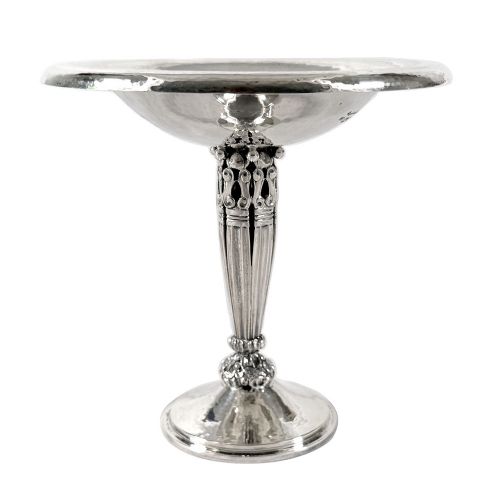
A silver pedestal tazza is a raised footed dish that elevates fruit, sweets or floral displays on any formal table.
Silver Pedestal Tazza
When you search for a silver pedestal tazza, you find footed serving vessels designed to raise fruit, sweets, cakes or floral arrangements above the surface of a table. These pieces take the form of bowls, dishes, compotes and cake stands mounted on stems or feet.
The selections available here span from the 18th century through the Victorian, Edwardian, Arts and Crafts, Art Nouveau and Art Deco periods. You are most likely to encounter Edwardian and 19th-century examples in sterling silver or silver plate, alongside pieces incorporating glass and bronze.
Makers and workshops across England, Scotland, Europe and Asia shaped these pedestal dishes to serve functional and decorative roles in domestic dining. Their forms range from simple hammered bowls on three legs to pierced centrepieces and lattice-detailed fruit dishes.
Materials and construction
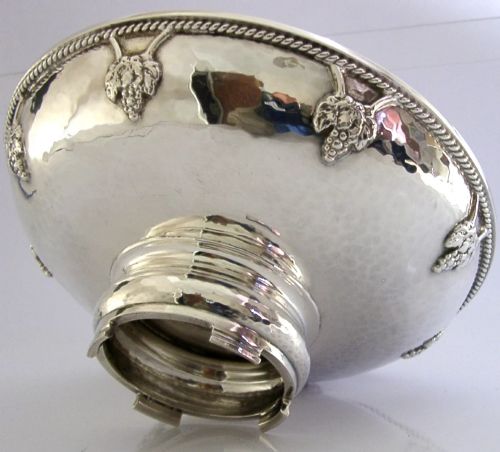
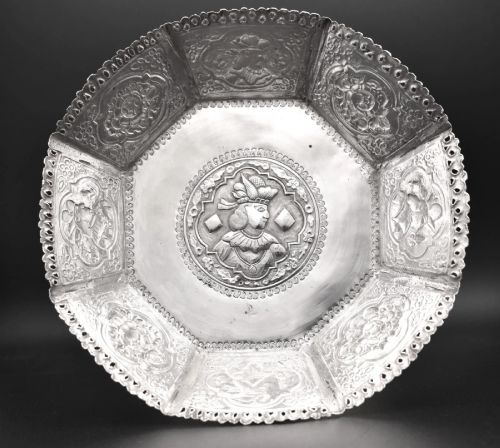
Makers shaped these vessels using sterling silver, silver plate, EPNS, chrome, bronze and vermeil, frequently combining metals with cut glass and crystal in centrepieces and compotes. Workshops employed techniques such as repoussé, hammering, piercing and wirework to texture and ornament the surfaces.
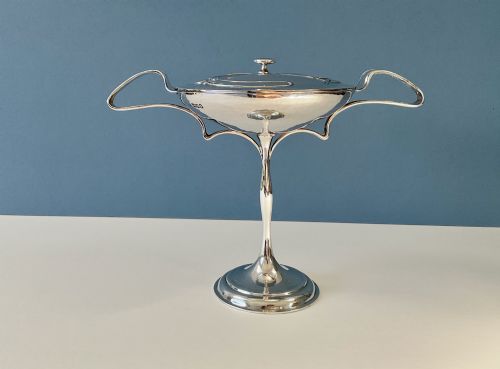
Designers from the Arts and Crafts movement utilised hand-hammered finishes and visible construction marks, while Art Nouveau and Art Deco pieces display flowing organic curves or geometric modernist lines. Silvered bronze, gilt interiors and applied lattice detail further diversify the manufacturing methods recorded in the evidence.
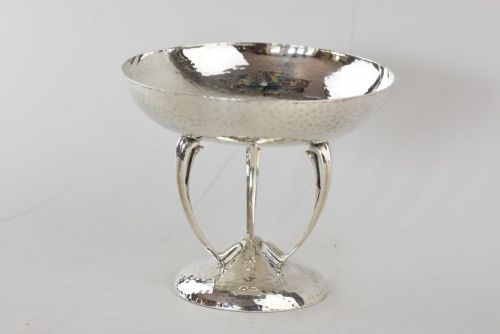
One exceptional 19th-century offering manages to stand tall on three delicate silver legs while balancing a heavily hammered bowl.
Judgements of quality
The standard of a silver pedestal tazza rests on the crispness of its repoussé or pierced decoration, the structural integrity of its stem and foot, and the harmony of its proportions. Pieces with substantial weight, such as heavier sterling silver and solid silver wirework, command greater attention than lighter plated wares.
Attribution to known makers like Walker & Hall, Mappin and Webb, or A E Jones elevates a piece, as does documented provenance from regional assay offices in London, Sheffield or Edinburgh. The retention of original gilt interiors, matching glass liners, or paired formats differentiates standard domestic items from exceptional tabletop works.
A E Jones·Goldsmiths and Silversmiths Company·Charles Boyton·Mappin and Webb·Walker & Hall·WMF·James Dixon & Sons·Christofle et Cie·Fenton Russell
The Silver Pedestal Tazza Glossary
- Tazza
- A shallow bowl or dish mounted on a stem and foot, used historically for serving wine, fruit or sweetmeats. The form originates from Renaissance Italy.
- Comport
- An ornamental dish on a foot or pedestal, typically placed on a dining table for fruit or confections. It is synonymous with many pedestal bowls and tazzas.
- Repoussé
- A metalworking technique where the artisan hammers the design from the reverse side to form a raised pattern in relief on the front. This creates textured floral or abstract motifs.
- EPNS
- Electroplated Nickel Silver, a composite material formed by fusing a layer of silver onto a base metal core of nickel silver. It provided an accessible alternative to solid sterling silver.
- Pierced
- Metalwork perforated with decorative cut-out patterns, frequently utilised on Edwardian centrepieces and baskets to lighten the visual weight of the object.
Silver Pedestal Tazza: Frequently Asked Questions
What was a silver pedestal tazza used for?
These elevated vessels served fruit, cakes, sweetmeats and small confections during formal dining and afternoon tea. They placed food at varying heights to create structured table arrangements.
In grander settings, larger examples acted as centrepieces or floral compotes. Their elevated design kept delicate items clear of crowded table runners and dinner services.
How do I date a silver pedestal tazza?
Dating relies on maker marks, town marks, and date letters stamped into the metal by official assay offices. Comparing the decorative style against known periods helps narrow down the timeframe.
Arts and Crafts pieces often feature hand-hammered surfaces from the early twentieth century, whereas Art Nouveau and Art Deco items display distinct period motifs. Plated wares and unmarked pieces are dated through stylistic markers and manufacturing techniques.
Are these pieces solid silver or plated?
The listings include both solid sterling silver and various plated compositions such as silver plate, EPNS, and silvered bronze. Each piece is marked accordingly to indicate its metallic composition.
Heavier items often indicate solid silver or weighted construction, while plated alternatives offered durable elegance for domestic households. Makers frequently stamped their base metal specifications alongside their corporate trademarks.
How should I display a pedestal tazza at home?
A pedestal tazza works well as a focal point on a dining table, sideboard or mantlepiece. You can leave it empty to showcase pierced metalwork or repoussé detail.
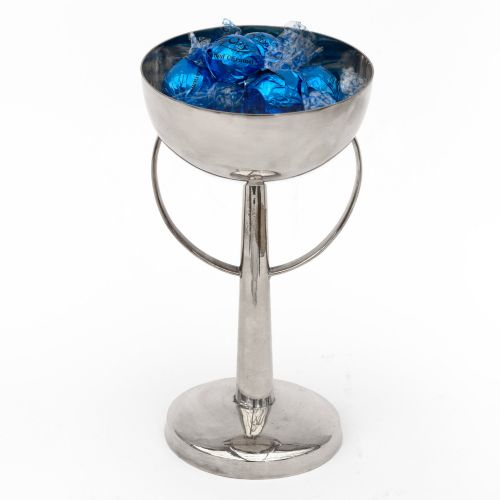
Alternatively, fill the bowl with seasonal fruit, glass spheres, or floral arrangements to utilise its original serving function. The raised foot naturally draws the eye upward and adds dimension to interior displays.